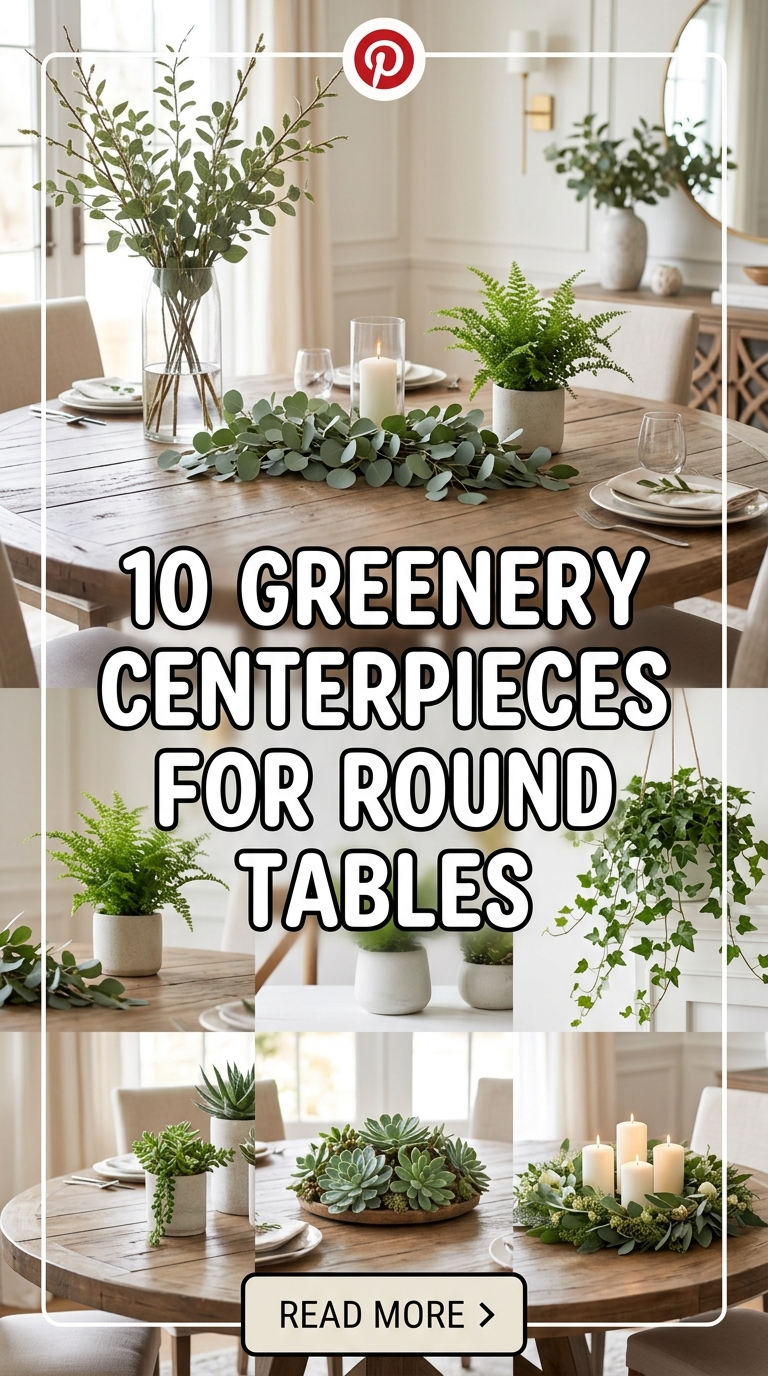
Greenery centerpieces for round tables are widely featured in Pinterest ideas for weddings, dining decor, and elegant event styling. Round tables create a central focal point where decorative elements must be balanced from every viewing angle. Because guests are seated evenly around the table, the centerpiece must remain visually appealing while allowing clear sightlines and comfortable conversation.
Greenery centerpieces solve this challenge by offering natural texture and structured organization without occupying excessive space. Leaves, branches, and vines introduce an organic aesthetic that complements modern design trends while maintaining simplicity.
This article presents a complete guide to creating greenery centerpieces designed specifically for round tables. Readers will learn how to arrange natural materials, select appropriate containers, and organize decorative elements so the centerpiece remains balanced from all sides. Each idea explains the design concept followed by a practical step by step process that can be recreated using accessible materials. These creative ideas focus on beginner friendly DIY methods that maintain an elegant aesthetic suitable for weddings, dining spaces, and event decoration. By understanding structure, layering, and visual balance, anyone can transform simple greenery into a refined centerpiece that enhances round table styling.
Why This Idea Is Trending or Useful
Greenery centerpieces are trending ideas on Pinterest because they reflect modern preferences for natural materials and minimalist style decoration. Many event planners and homeowners choose greenery because it adds texture and visual depth without creating clutter. Round tables especially benefit from greenery arrangements because leaves can be distributed evenly around the center of the table. This creates a balanced aesthetic where every guest sees a consistent decorative view.

Another reason these centerpieces remain popular is their flexibility. Greenery works with a wide range of decorative themes including rustic weddings, modern dining tables, garden events, and minimalist home decor. The same basic materials can be arranged in bowls, trays, rings, lantern displays, or layered garlands. Pinterest users often search for creative ideas that allow personalization while remaining practical and visually cohesive. Greenery centerpieces provide this opportunity because they combine accessible materials with flexible design methods.
These arrangements also appeal to beginners because they require minimal tools and simple planning. A basic DIY tutorial can guide the entire process. Greenery stems are easier to shape than delicate flowers, making them ideal for beginner friendly creative projects. With careful organization and spacing, a round table centerpiece can become an elegant decorative element that enhances the entire table setting.
Materials and Preparation
Preparation is an essential step when designing greenery centerpieces for round tables. The most common materials include fresh or artificial greenery, candles if lighting elements are used, a container or tray, floral wire or tape, scissors, and optional decorative fillers such as stones or wooden beads. Greenery options may include eucalyptus, olive branches, fern leaves, ivy vines, or other flexible stems that can be shaped easily during the arrangement process.
Choosing the correct container is important because it determines the structure of the centerpiece. Bowls, trays, lanterns, or circular bases are frequently used since they naturally complement the shape of a round table. The container should remain stable and proportionate to the table size so the centerpiece does not appear oversized. Trimming greenery stems in advance makes the arrangement process more efficient and allows leaves to be layered evenly.

Planning the layout before assembling the centerpiece ensures the design remains balanced from every viewing angle. Candles or decorative elements should be placed first to establish the focal point. Greenery can then be arranged around these elements to create a circular composition. Ensuring proper spacing between candles and leaves is essential for safety and visual clarity. With materials prepared and layout planned, the DIY process becomes organized and easier to complete.
MAIN IDEAS
Idea 1: Circular Eucalyptus Candle Centerpiece
How to Create
A circular eucalyptus centerpiece is designed to complement the natural symmetry of a round table. The arrangement forms a complete ring of greenery surrounding a candle cluster placed in the center. This style highlights the natural shape of the table and creates a balanced decorative focal point that remains visually consistent from all directions. Eucalyptus branches are commonly used for this design because their soft green color and flexible stems allow them to be shaped into smooth circular arrangements.
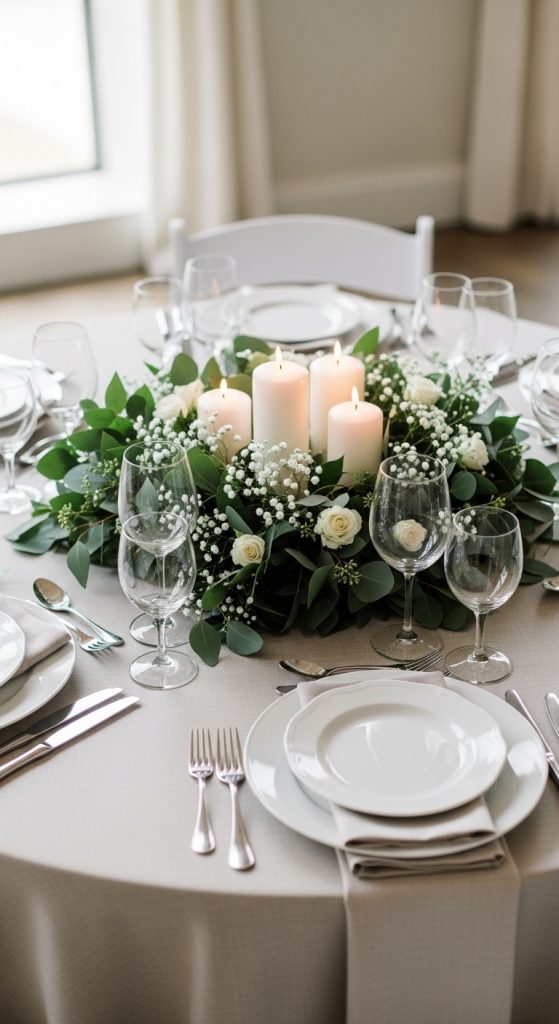
The greenery ring provides texture while maintaining a minimalist style that aligns with modern decor trends. The central candle cluster adds height and illumination without overwhelming the arrangement. Because the leaves spread outward from the center, the centerpiece maintains a clear and organized structure that allows table settings to remain visible. This type of arrangement appears frequently in Pinterest inspiration boards because it demonstrates how simple materials can create a refined decorative effect.
To assemble the centerpiece, begin by trimming eucalyptus stems into equal lengths. Arrange the stems in a circular pattern on a tray or decorative plate placed at the center of the table. Overlap the stems slightly so the leaves form a continuous ring. Secure the structure using floral wire if necessary.

Next, place two or three pillar candles in the middle of the greenery ring. Adjust the leaves so they frame the candles while leaving sufficient space around the flames. The greenery should extend evenly around the candles to maintain circular balance. This step by step method produces a natural centerpiece that enhances the symmetry of a round table.
Idea 2: Greenery Bowl Centerpiece
How to Make
A greenery bowl centerpiece creates a contained arrangement that resembles a miniature decorative garden placed in the center of a round table. The bowl structure keeps the greenery organized while allowing leaves to spread naturally within the container. This design is particularly useful for round tables because it concentrates the decoration in a single location without interfering with place settings.
The arrangement emphasizes layering. Greenery forms the base layer while candles or decorative elements rise slightly above the leaves. This layered design creates visual depth and texture while maintaining a clean aesthetic. Bowls made from ceramic, glass, or stone work well because they provide stability and a refined appearance suitable for event decoration.
To create the centerpiece, begin by placing decorative filler such as moss or small stones at the bottom of the bowl. This base layer stabilizes the greenery stems and keeps them from shifting. Next, trim greenery branches into shorter sections and place them across the filler layer so the leaves spread evenly throughout the container.

Once the greenery base is complete, add candles or small decorative accents within the bowl. Tea lights or short pillar candles are commonly used because they remain stable in the container. Adjust the leaves so they frame the candles while leaving open space for the flame. This step by step process produces a balanced centerpiece suitable for round tables.
Idea 3: Lantern Greenery Round Table Centerpiece
Setup Method
A lantern centerpiece introduces a structured decorative element that adds height and visual focus to the center of a round table. The lantern acts as the central feature while greenery arranged around its base softens the structure and introduces natural texture. This design works well for wedding receptions, evening dinners, and elegant table styling where candlelight contributes to the atmosphere.
The contrast between the geometric lantern shape and the organic greenery creates visual balance. Candlelight inside the lantern illuminates the surrounding leaves, producing a warm decorative effect that enhances the overall table setting. This combination of structure and natural elements makes the design a popular choice among Pinterest decoration ideas.
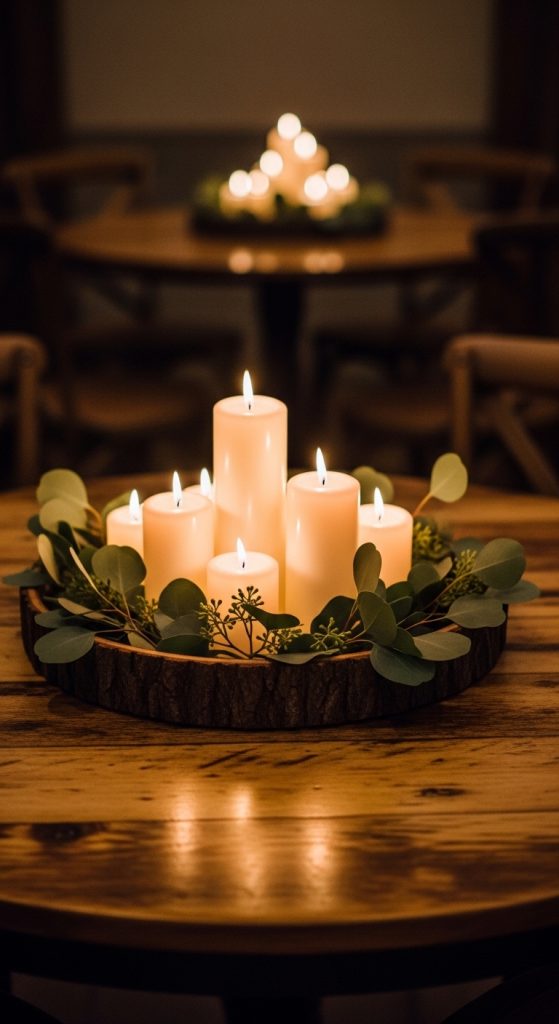
To create the centerpiece, place a lantern at the center of the round table or on a decorative tray. Insert a pillar candle inside the lantern so the light is visible through the glass panels. Next, trim greenery stems into smaller sections suitable for layering around the lantern base.

Arrange the greenery in a circular pattern around the lantern. Begin with a thin layer of leaves and gradually add more stems to build depth. The leaves should extend outward slightly to create a natural flow around the centerpiece. This setup method produces a balanced arrangement that integrates candlelight with natural greenery.
Idea 4: Minimalist Greenery Ring Centerpiece
How to Create
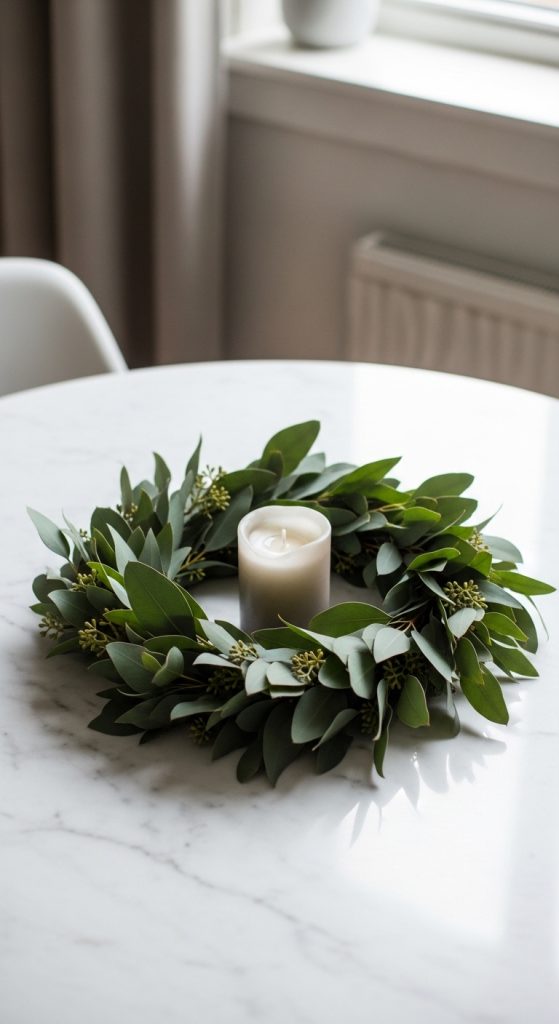
A minimalist greenery ring centerpiece is designed to emphasize clean structure and balanced composition for round tables. The arrangement uses a circular ring of greenery placed around a small decorative focal point such as a candle or glass container. Because round tables naturally draw attention toward the center, the ring format reinforces this shape and creates a symmetrical visual layout. The design remains simple yet effective, which is why it appears frequently in Pinterest ideas focused on minimalist style home decor and modern event decoration.
Greenery types such as eucalyptus, ivy, or olive branches work well for this concept because their stems are flexible and can be shaped into a circular form without breaking. The leaves spread outward from the center, producing a soft natural texture that contrasts with the smooth surface of the table. The simplicity of the arrangement allows other decorative elements, including table linens and place settings, to remain visible and balanced. This structure is particularly useful for weddings and dinner tables where the centerpiece should enhance the setting without obstructing conversation between guests.
To assemble the centerpiece, begin by trimming greenery stems into medium lengths. Arrange the stems into a circular shape on a plate, tray, or wooden base positioned at the center of the table. Slightly overlap the stems so the leaves create a continuous ring. Secure the stems with floral wire if additional stability is required.

After forming the greenery ring, place a candle or small glass container at the center of the arrangement. Adjust the leaves so they spread evenly around the focal element. The greenery should appear balanced from every viewing angle. This step-by-step method creates a refined centerpiece that highlights the natural symmetry of a round table.
Idea 5: Floating Candle Greenery Bowl
Step-by-Step Guide
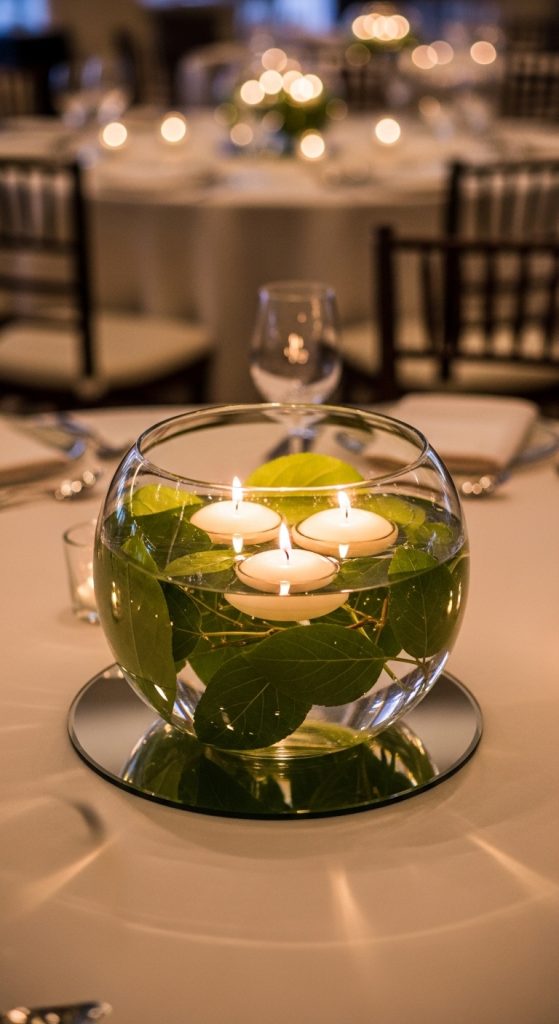
A floating candle greenery bowl centerpiece introduces water and light into the decoration while maintaining the organic appearance of natural leaves. The design relies on a glass bowl filled with water, where greenery is placed beneath floating candles to create a layered visual effect. This arrangement is particularly suitable for round tables because the bowl shape mirrors the table’s circular form. The reflective surface of the water enhances the candlelight and adds depth to the centerpiece.
Greenery inside the bowl provides subtle color and texture while allowing the candle to remain the main focal point. Leaves placed beneath the floating candle create a decorative background that becomes visible through the transparent glass container. The combination of water, greenery, and candlelight produces a calm aesthetic that aligns with many modern design trends. Pinterest inspiration boards frequently highlight this idea because it combines elegant appearance with simple DIY assembly.
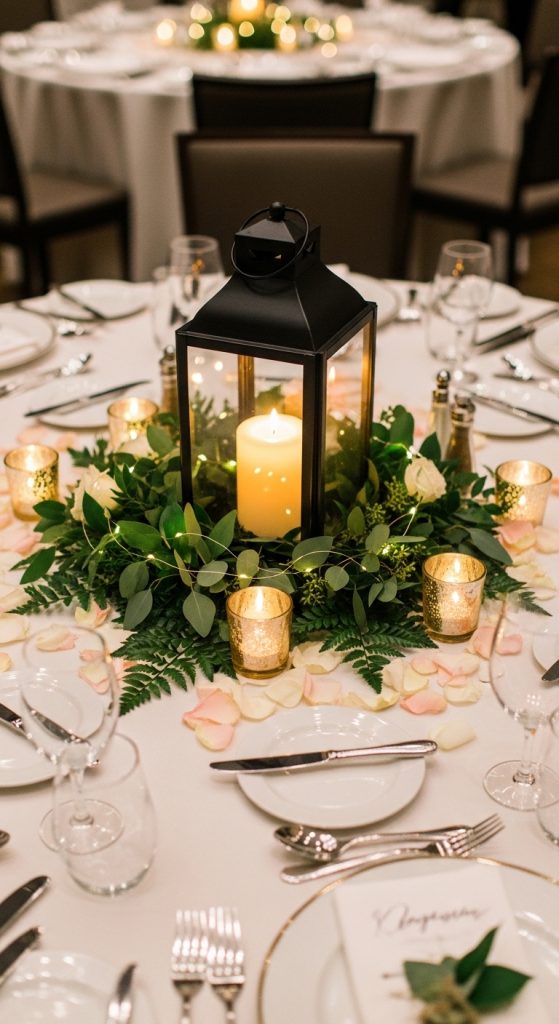
To create the centerpiece, begin by selecting a clear glass bowl large enough to serve as the focal decoration for the table. Fill the bowl with clean water until it reaches approximately three quarters of the container height. Next, trim greenery stems into short pieces and gently place them in the water so they spread evenly across the bottom of the bowl.

After arranging the greenery layer, carefully place one or two floating candles on the water surface. Ensure the candles remain centered and stable. Adjust the greenery if necessary so the leaves remain visible beneath the water. This step-by-step process produces a visually layered centerpiece that enhances round table decoration.
Idea 6: Rustic Wooden Tray Greenery Display
How to Make
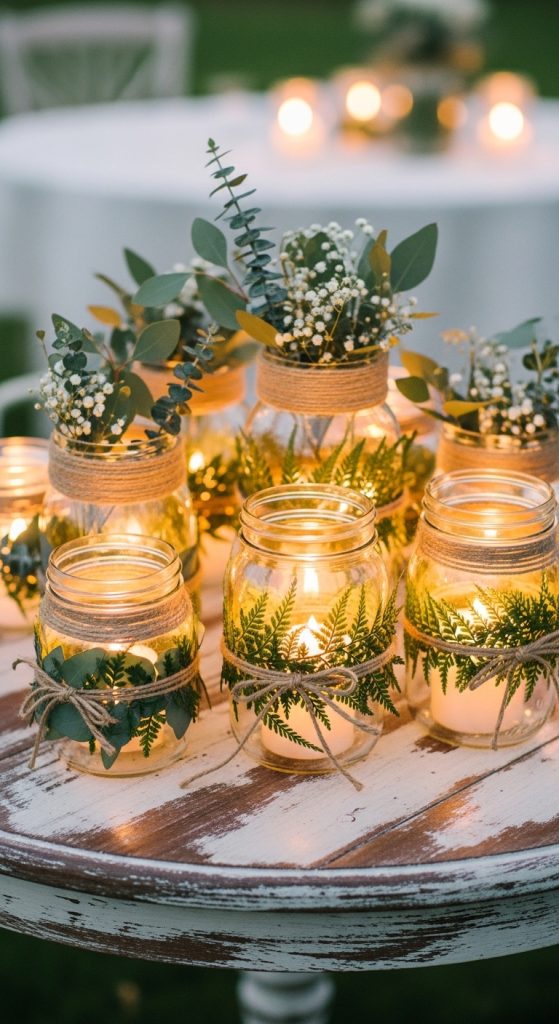
A rustic wooden tray centerpiece provides a structured base that organizes greenery and candles within a defined decorative space. This design works particularly well for round tables because the tray creates a contained arrangement that prevents decorative elements from spreading too far across the table surface. The natural wood texture complements greenery and introduces a rustic aesthetic often seen in Pinterest wedding decor and farmhouse-style table settings.
The tray allows multiple decorative components to be grouped together while maintaining a cohesive appearance. Candles placed inside the tray serve as focal points while greenery fills the surrounding space with natural texture. Because the arrangement remains contained within the tray, it becomes easy to transport and reposition during table setup. This practical feature makes the design suitable for both home decor and event decoration.
To assemble the centerpiece, begin by placing a round or square wooden tray at the center of the table. Position two or three pillar candles evenly within the tray to establish the main visual structure. The candles should be spaced so they form a balanced arrangement within the tray.
Next, trim greenery stems into shorter sections and arrange them around the candles. The stems should overlap slightly to create depth while maintaining visible spacing around the candles. Decorative fillers such as small stones or wooden beads can be added to stabilize the arrangement. Adjust the greenery so the leaves extend naturally across the tray surface. This step-by-step method creates a rustic centerpiece that complements round table styling.
Idea 7: Mason Jar Greenery Cluster
How to Create
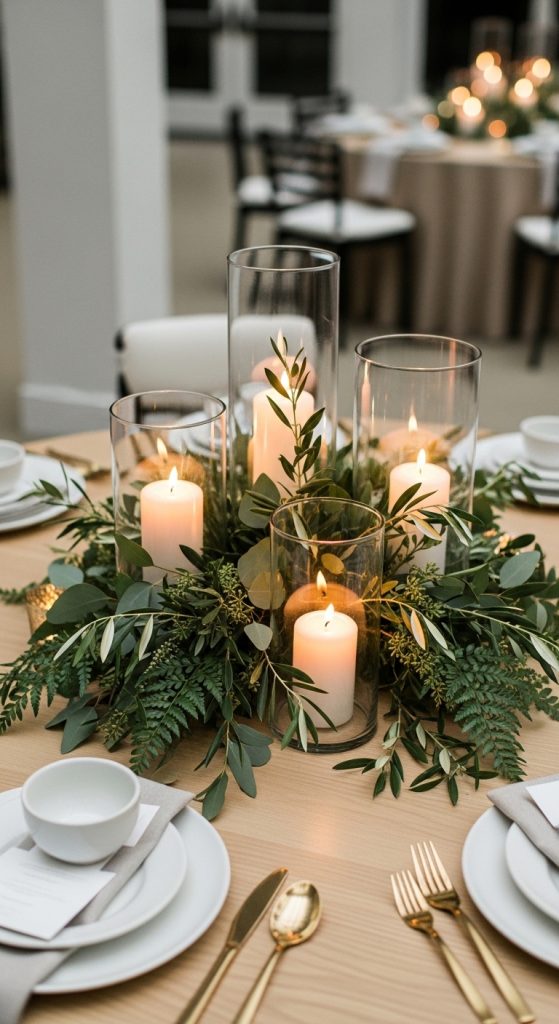
A mason jar greenery cluster centerpiece uses multiple small containers arranged together to create a balanced decoration at the center of a round table. Instead of relying on a single large arrangement, this concept distributes greenery and candles across several jars that form a compact cluster. The group arrangement maintains visual interest while allowing each element to remain visible from all sides of the table.
Glass jars work well for this design because they allow candlelight to shine through the container while greenery wrapped around the exterior adds texture. When the jars are grouped together, they create a layered decorative effect that appears cohesive and organized. This design frequently appears in Pinterest DIY tutorials because the materials are accessible and the assembly process remains beginner friendly.
To create the centerpiece, begin by placing tea light candles inside three or five glass jars. Ensure the candles sit flat at the base of each jar for stability. Next, trim greenery stems and wrap them loosely around the outside of the jars using twine or floral wire.

Arrange the jars in a small circular cluster at the center of the table. The jars should be spaced evenly so they form a balanced composition. Adjust the greenery so the leaves spread naturally around each container. This step-by-step method produces a simple yet elegant centerpiece suitable for round table decoration.
Idea 8: Tiered Greenery Candle Stand
Setup Method
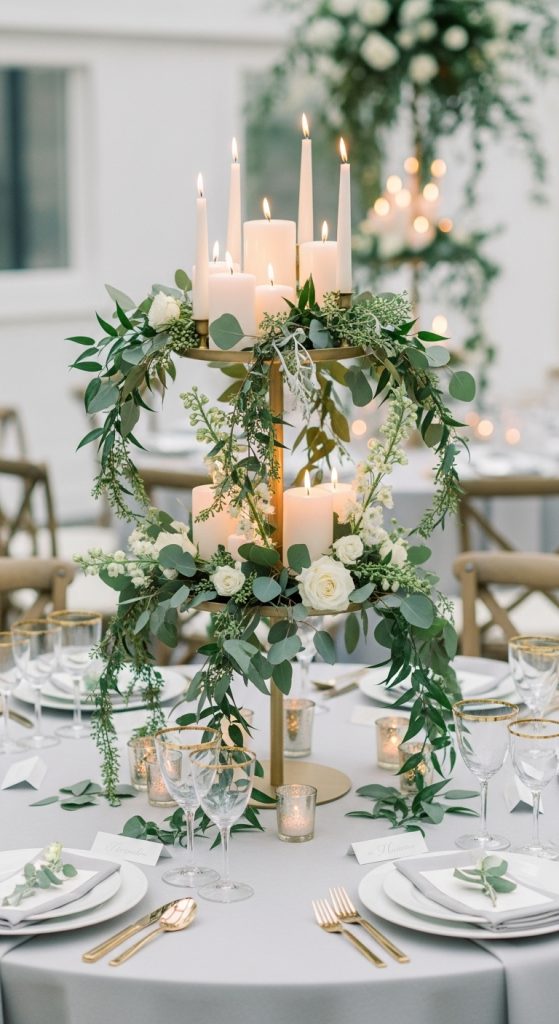
A tiered greenery centerpiece introduces vertical dimension by arranging candles and leaves across multiple levels. This design is useful for larger round tables where a single flat centerpiece may appear too small. By using stacked trays or decorative stands, the arrangement creates height variation while maintaining a cohesive structure.
Greenery placed along the edges of each tier softens the structure and connects the layers visually. The leaves help create a continuous flow between the levels, ensuring the centerpiece appears natural rather than rigid. This layered design adds depth and movement to the decoration while maintaining an organized layout.
To build the arrangement, begin by placing a tiered stand at the center of the table. Position candles on each level of the stand, ensuring that the heights gradually increase from bottom to top. This arrangement creates visual balance and guides the viewer’s attention upward.

Next, place greenery stems around the base of each candle. Allow some leaves to extend slightly over the edges of the stand to soften the structure. Adjust the stems until the greenery appears evenly distributed across all levels. This setup method produces a centerpiece that adds height and dimension to round table styling.
Idea 9: Ivy Vine Circular Garland
How to Create
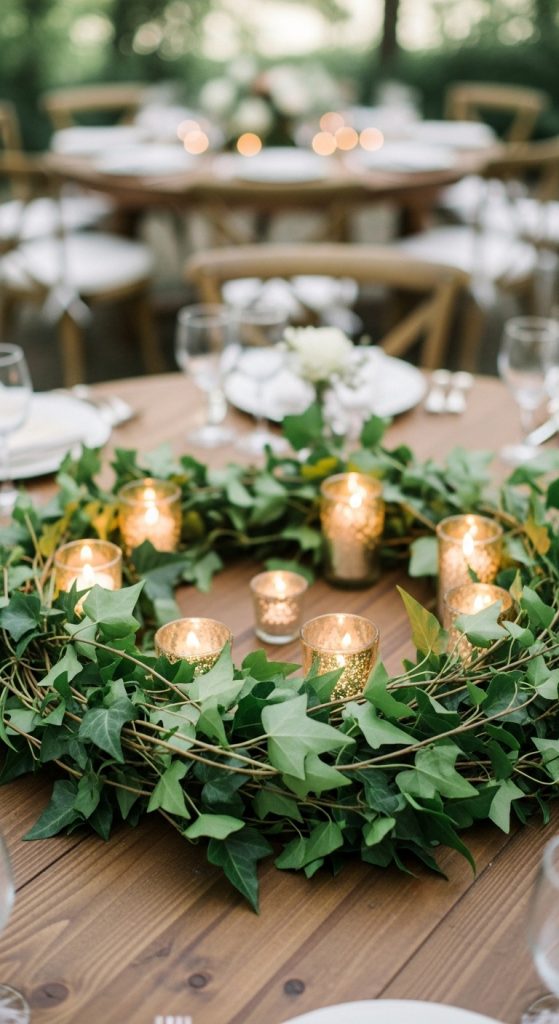
An ivy vine garland centerpiece emphasizes flowing greenery arranged in a circular shape around the center of the table. Ivy vines are particularly suitable for this design because their long flexible stems allow them to be shaped easily into curved arrangements. The vines create a natural decorative ring that highlights the center of the table while maintaining a soft organic appearance.
The garland style keeps the centerpiece low in height, which is beneficial for dining tables where guests should be able to see each other clearly. The flowing vines also introduce movement into the arrangement, creating a relaxed aesthetic that complements garden-themed events or casual home decor.
To assemble the centerpiece, begin by placing a circular base or tray at the center of the round table. Lay the ivy vines along the edge of the base so they form a continuous circular garland. Overlap the stems slightly to ensure the greenery appears full and evenly distributed.

Next, add small candles or decorative accents within the center of the garland. Adjust the vines so the leaves frame the central elements without covering them. The final arrangement should appear balanced from every direction. This step-by-step process creates a natural greenery centerpiece that complements round table decoration.
Idea 10: Pine and Olive Greenery Arrangement
Execution Process
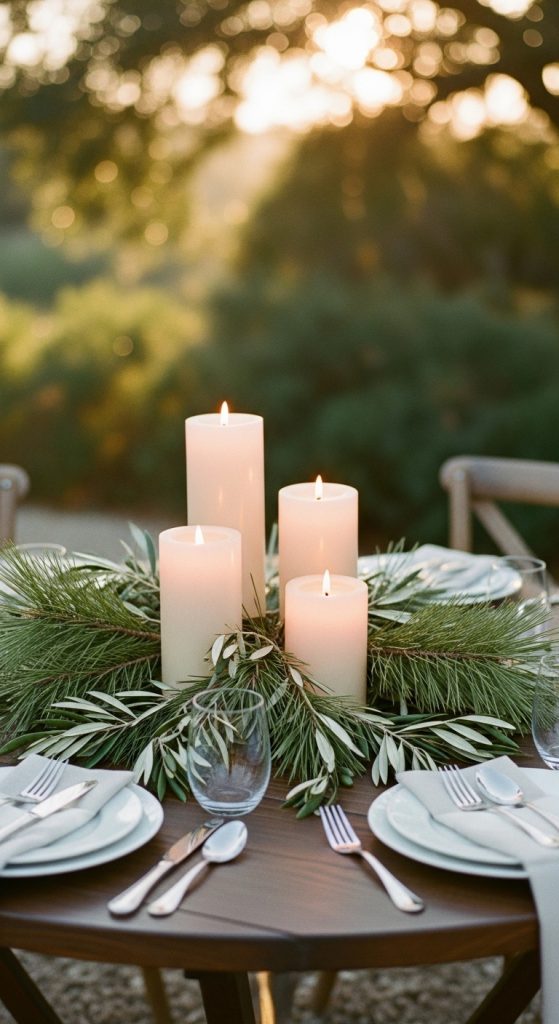
A pine and olive greenery centerpiece combines dense foliage with delicate leaf textures to create a visually layered decoration. Pine branches provide fullness and structure, while olive leaves introduce lighter tones and more delicate shapes. The combination creates contrast that enhances the overall arrangement while maintaining a natural aesthetic suitable for weddings and formal events.
This design is particularly effective for round tables because the branches can be arranged radially outward from the center. The layered greenery spreads evenly across the table surface while candles placed within the foliage provide illumination. The mixture of textures creates depth and visual interest without requiring additional decorative elements.
To create the centerpiece, begin by placing several pine branches at the center of the table or inside a shallow tray. Arrange the branches so they spread outward in a circular formation. The pine needles create a dense base layer that supports additional greenery.

Next, insert olive branches between the pine stems to introduce variation in color and leaf shape. Place pillar candles evenly throughout the arrangement so they remain visible above the greenery. Adjust the branches until the centerpiece appears balanced from all angles. This execution process produces a full greenery centerpiece that enhances the natural symmetry of a round table.