

Bay windows are architectural features that extend outward from a wall, creating additional interior space and allowing more natural light to enter a room. They are commonly found in living rooms, bedrooms, and reading areas, and they offer both functional and decorative value. On Pinterest, bay window ideas are widely explored because they combine design flexibility with practical use, making them suitable for a variety of home decor styles.
This article provides a complete guide to transforming bay windows into purposeful and aesthetically pleasing areas. Readers will learn how to approach design, choose materials, and execute projects step by step. Each idea focuses on a specific use, such as seating, storage, or decoration, while maintaining a modern design and minimalist style where possible.
These creative ideas are especially useful for those looking to enhance their home without major renovations. Whether the goal is organization, relaxation, or visual improvement, bay windows offer a versatile opportunity. The ideas presented are beginner friendly and structured to help readers complete each DIY project with clarity and confidence.
Why This Idea Is Trending or Useful
Bay window transformations are trending ideas on Pinterest because they align with current preferences for multifunctional spaces and efficient home design. Many homeowners are looking for ways to maximize natural light while also improving organization and comfort. Bay windows provide a built-in structure that can be adapted into seating, storage, or decorative focal points without requiring structural changes.

The appeal of these projects lies in their accessibility. Most designs can be completed with basic materials and tools, making them suitable for beginners interested in DIY projects. Additionally, the aesthetic value of a well-designed bay window contributes to the overall ambiance of a room, supporting minimalist style or more detailed decoration approaches depending on the design choices.
From a practical perspective, these ideas help optimize unused or underutilized space. Instead of leaving the bay window empty or cluttered, it can be transformed into a functional feature that supports daily activities such as reading, relaxing, or organizing items. This combination of practicality and visual appeal makes bay window projects a consistent source of inspiration across Pinterest.
Materials and Preparation
Before starting any bay window project, proper planning and preparation are essential to ensure efficient execution and durable results. The first step involves measuring the bay window area accurately, including width, depth, and height. These measurements guide material selection and prevent errors during construction.
Common materials include wood panels, cushions, foam padding, fabric, paint, brackets, and storage bins. Tools such as measuring tape, a saw, drill, screws, and adhesive are typically required for most projects. For decorative elements, items like curtains, plants, lighting fixtures, and decorative pillows may also be used depending on the design goal.
Preparation also includes deciding the function of the bay window space. Whether it will serve as seating, storage, or display, this decision influences the structure and materials needed. Cleaning the area and ensuring a smooth surface is important before installation begins.
Planning should also consider budget ideas and time availability. Breaking the project into manageable steps allows for better organization and reduces the likelihood of mistakes. With proper preparation, each creative project becomes easier to execute and results in a more polished and professional outcome.
MAIN IDEAS
Idea 1: Cozy Reading Nook
How to Create
A cozy reading nook transforms a bay window into a comfortable and inviting space dedicated to relaxation. This idea focuses on maximizing natural light while creating a quiet environment for reading or reflection. The design typically includes a cushioned seat, soft textiles, and minimal distractions to maintain a calming atmosphere. A neutral color palette supports a minimalist style, while layered textures add warmth and depth.
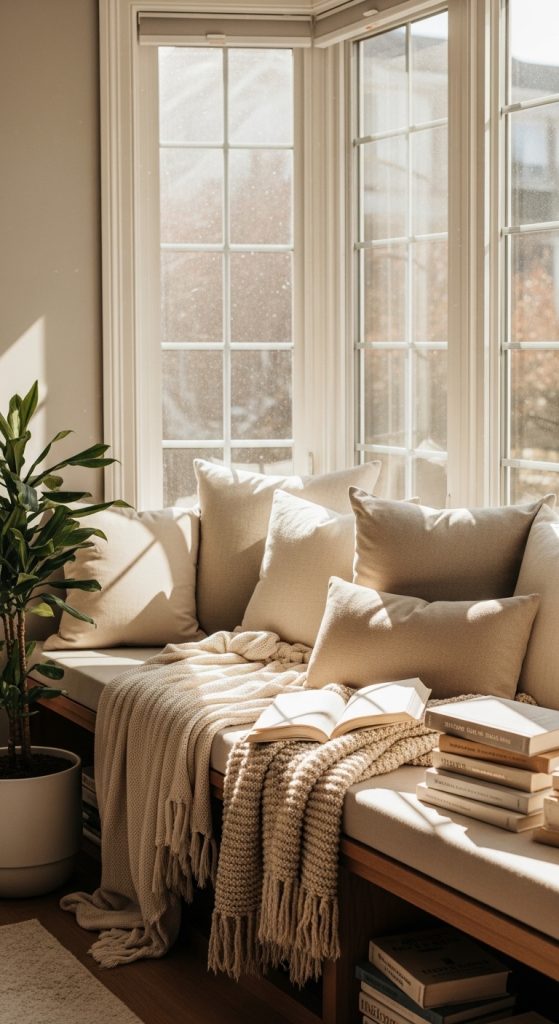
This concept works well in both small and large spaces because it uses the existing structure of the bay window. The extended ledge naturally accommodates seating, making it ideal for a functional yet aesthetic setup. Incorporating soft lighting such as a small lamp or wall fixture enhances usability during evening hours. This setup aligns with Pinterest ideas that prioritize comfort and simplicity in home decor.

Step-by-Step Guide
Begin by measuring the seating area and cutting a foam cushion to fit the space precisely. Cover the foam with durable fabric to create a comfortable seat. Secure the cushion in place or leave it removable for easy cleaning. Add decorative pillows to improve comfort and introduce visual variation.
Next, install a small shelf or side table if space allows, providing a place for books or personal items. Consider adding curtains to control light and maintain privacy. Ensure all elements are securely placed and proportionate to the window size. This easy project can be completed with basic materials and minimal tools, making it suitable for beginners seeking a practical DIY tutorial.
Idea 2: Built-In Storage Bench

How to Create
A built-in storage bench combines seating with hidden storage, making it a highly practical solution for organization. This idea is especially useful in homes where space is limited and efficient storage is needed. The design integrates a bench structure with compartments underneath, allowing items to be stored neatly out of sight.
The aesthetic can be adapted to match various styles, including modern design or traditional interiors. Clean lines and neutral finishes support a minimalist approach, while painted surfaces can add character. This design enhances both functionality and visual appeal, making it a popular creative project on Pinterest.

Execution Process
Construct a wooden frame that fits the dimensions of the bay window. Divide the interior into compartments and attach a hinged top or removable panels for access. Sand the surfaces and apply paint or finish for durability.
Add a cushion on top to create comfortable seating. Ensure the lid opens smoothly and that hinges are securely installed. Organize stored items using baskets or containers to maintain order. This project requires moderate effort but offers long-term benefits in both storage and usability.
Idea 3: Indoor Plant Display
How to Create
An indoor plant display utilizes the natural light of a bay window to create a vibrant and refreshing environment. This idea focuses on arranging plants in a way that enhances the aesthetic while maintaining accessibility for care.
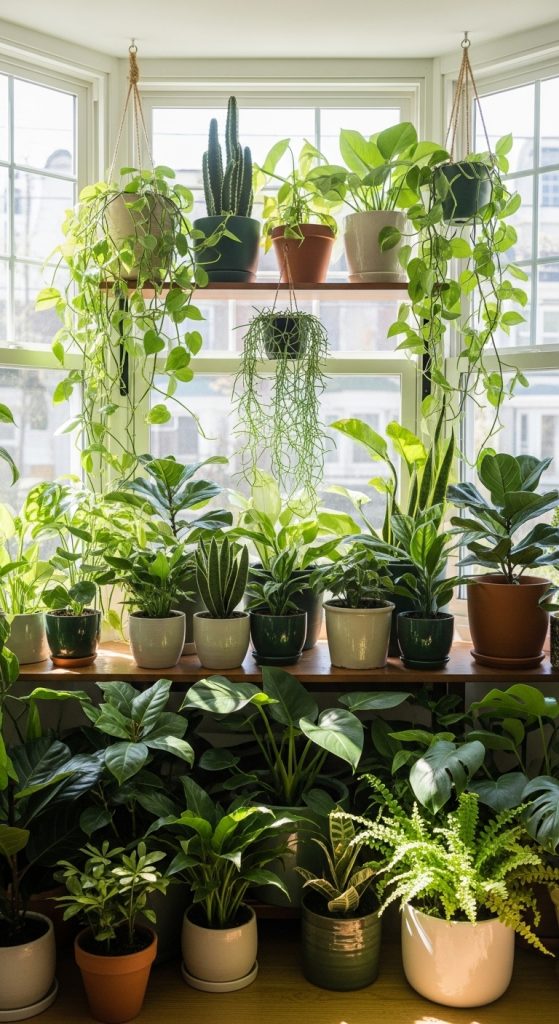
Different plant heights and textures create visual interest, while simple containers maintain a cohesive look. This approach aligns with trending ideas that emphasize nature and sustainable decor. The presence of greenery also improves air quality and contributes to a calming atmosphere.

Setup Method
Select plants that thrive in natural light and arrange them based on size and light requirements. Use shelves or stands to create layers and avoid overcrowding. Ensure proper drainage and place protective trays beneath pots.
Water and maintain plants regularly, adjusting placement as needed. This beginner friendly project requires minimal tools and offers immediate visual impact.
Idea 4: Minimalist Seating Area
How to Create
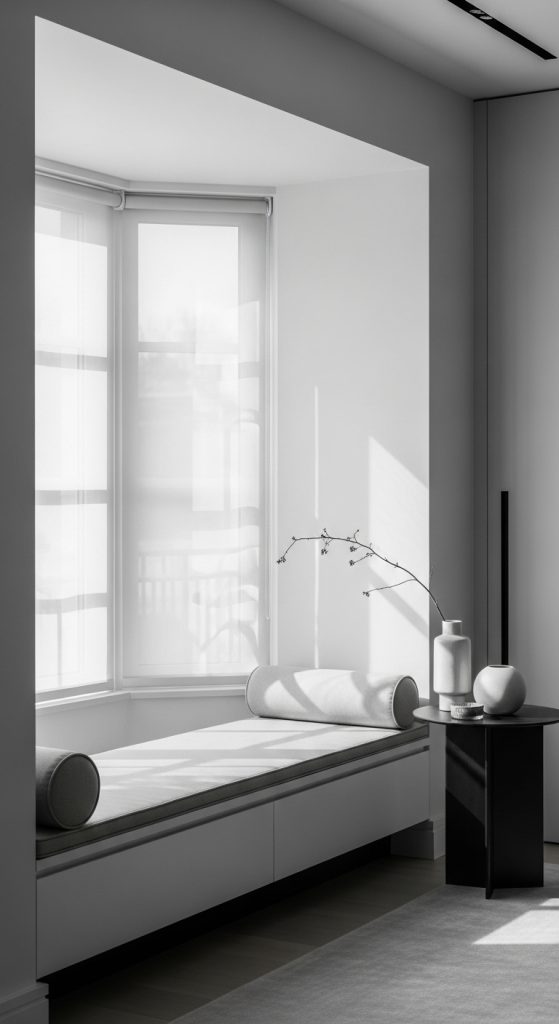
A minimalist seating area focuses on simplicity and clean design. The goal is to create a functional space without unnecessary elements, emphasizing clarity and balance. Neutral tones and streamlined furniture define this concept.
This idea supports modern design preferences and works well in contemporary homes. The absence of clutter enhances the visual appeal and makes the space feel more open and organized.

Step-by-Step Guide
Install a simple bench or seating platform with a smooth finish. Add a thin cushion for comfort while maintaining a clean look. Avoid excessive decoration and choose a limited color palette.
Position a small table or lamp if needed, ensuring each element serves a purpose. This approach is ideal for those seeking a structured and easy project.
Idea 5: Window Desk Workspace
How to Create
A bay window desk transforms the space into a productive work area. The natural light improves visibility and creates a pleasant working environment. This setup is practical for remote work or study.
The design should prioritize functionality, with enough surface area for essential items. Keeping the space organized ensures efficiency and reduces distractions.


Execution Process
Install a wooden or laminate surface across the window area to create a desk. Secure it with brackets for stability. Add a comfortable chair that fits the space.
Organize items using small containers or shelves. Ensure proper cable management if electronics are used. This DIY project supports productivity and efficient space use.
Idea 6: Decorative Display Corner
How to Create

A decorative display corner highlights personal items such as artwork, books, or collectibles. This idea focuses on visual presentation and arrangement.
The goal is to create a balanced display that enhances the room’s aesthetic. Careful selection and spacing prevent overcrowding.

Step-by-Step Guide
Arrange items based on size and theme. Use stands or frames to add variation. Maintain consistent spacing for a clean look.
Adjust placement until the arrangement feels balanced. This project allows creative expression while maintaining organization.
Idea 7: Breakfast Seating Area
How to Create

A breakfast seating area turns the bay window into a casual dining space. This setup is ideal for small meals or morning routines.
The design should be comfortable and easy to maintain, with durable materials suitable for daily use.

Execution Process
Install a bench or seating platform and pair it with a small table. Ensure sufficient space for movement. Use washable fabrics for cushions.
Keep the setup simple and functional. This idea supports both practicality and aesthetic appeal.
Idea 8: Kids’ Play Corner
How to Create
A kids’ play corner utilizes the bay window as a safe and engaging area for activities. This idea focuses on accessibility and organization.

Bright colors and soft materials create a welcoming environment for children.

Step-by-Step Guide
Add soft mats and storage bins for toys. Keep items within easy reach. Ensure all materials are safe and durable.
Maintain organization by categorizing toys. This beginner friendly project supports both play and cleanliness.
Idea 9: Relaxation Lounge Spot
How to Create
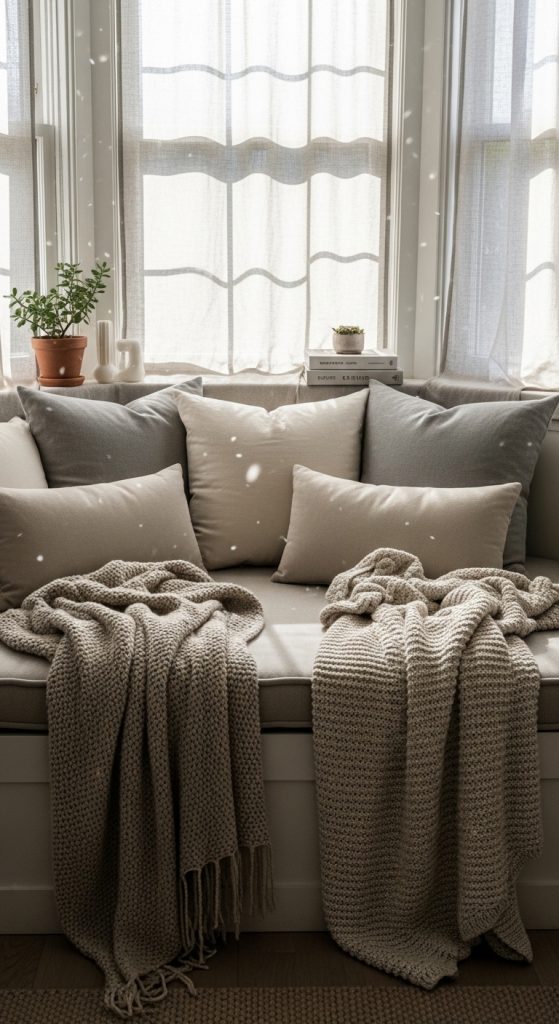
A relaxation lounge spot emphasizes comfort and calmness. This idea is suitable for unwinding after daily activities.
Soft textures and neutral tones create a soothing environment.

Execution Process
Add a thick cushion and soft blankets. Include minimal decorative elements to maintain a peaceful atmosphere.
Ensure proper lighting for evening use. This setup promotes relaxation and simplicity.
Idea 10: Seasonal Decoration Space
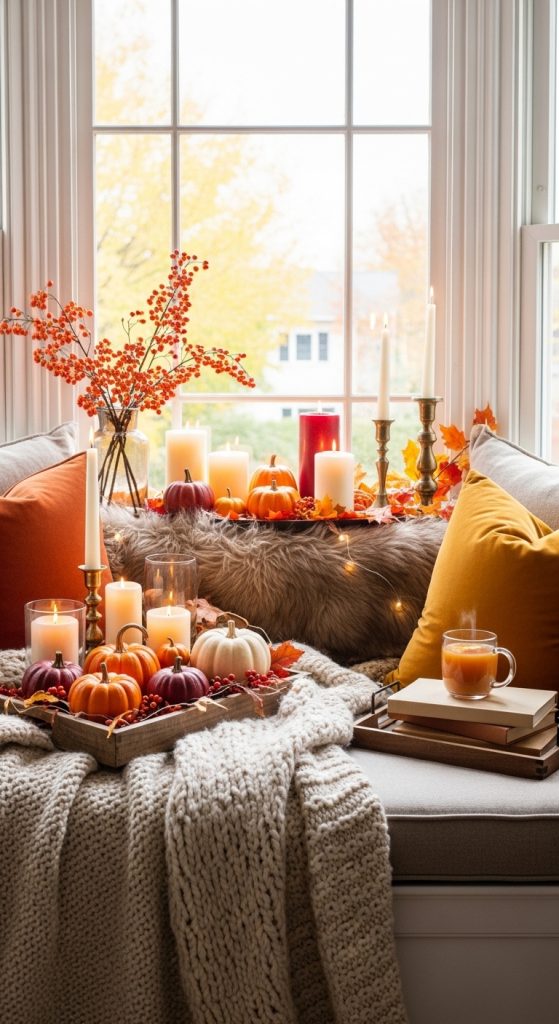
How to Create
A seasonal decoration space allows the bay window to reflect changing themes throughout the year. This idea keeps the decor dynamic and engaging.
Each season can introduce new colors and elements, maintaining visual interest.

Step-by-Step Guide
Rotate decorations based on the season. Use lightweight and reusable items. Keep the arrangement balanced.
Store unused decorations neatly. This project encourages creativity and adaptability.
Common Beginner Mistakes and How to Avoid Them
One common mistake is failing to measure the bay window accurately, leading to poorly fitted materials. Always double-check dimensions before cutting or purchasing materials. Another issue is overcrowding the space with too many elements, which reduces both functionality and aesthetic value. Maintaining balance is essential for a successful design.
Using unsuitable materials can also affect durability. For example, selecting low-quality wood or fabric may result in faster wear. Choosing appropriate materials ensures long-term usability. Additionally, neglecting proper planning often leads to delays and inconsistent results. Breaking the project into clear steps improves efficiency and reduces errors.

Practical Tips for Better Results
To achieve better results, focus on simplicity and functionality. Choose materials that are easy to work with and maintain. Prioritize comfort when designing seating areas and ensure all elements are securely installed.
Lighting plays a significant role in enhancing the final look. Utilizing natural light effectively improves both aesthetics and usability. Keeping the design cohesive with the rest of the room also ensures a harmonious appearance. Regular maintenance helps preserve the quality of the finished project.
Styling, Presentation, or Organization Ideas
Styling a bay window involves balancing decorative elements with practical use. Using coordinated colors and textures creates a unified look. Decorative pillows, plants, and small accessories can enhance the space without overwhelming it.
Organization is equally important. Storage solutions should be integrated seamlessly into the design. Keeping items neatly arranged maintains both functionality and visual appeal. This approach supports both minimalist style and more detailed decoration preferences.
Budget or Time Planning
Effective planning helps complete the project within budget and time constraints. Selecting affordable materials and reusing existing items can reduce costs. Prioritizing essential elements ensures resources are used efficiently.
Breaking the project into stages allows for gradual progress. This method is particularly useful for beginners who may need more time to complete each step. Setting realistic timelines prevents unnecessary pressure and improves overall results.
Creative Expansion and Advanced Inspiration
For those seeking advanced inspiration, bay window projects can be expanded into more complex designs. Adding built-in lighting, custom furniture, or layered storage systems enhances functionality. Combining multiple ideas, such as seating with storage and decoration, creates a multifunctional space.
Exploring different styles, including modern design or more traditional aesthetics, allows for personalization. Advanced projects may require additional tools or skills, but they offer greater customization and impact. Continuous experimentation leads to unique and refined results in home decor.
