
Designing a spare bedroom that also functions as a home office can feel like a challenge, but when done thoughtfully, it becomes one of the most rewarding spaces in the home. Adding a reading nook elevates this multifunctional room even further, transforming it into a place for productivity, creativity, and restoration. This type of room is especially appealing for modern lifestyles where remote work, side projects, and personal development often coexist under one roof.

An office spare bedroom with a reading nook is not simply about fitting extra furniture into a room. It is about creating zones that serve distinct purposes while still feeling cohesive and intentional. The workspace should encourage focus and efficiency, the guest area should feel welcoming and comfortable, and the reading nook should invite calm, reflection, and escape.
Below are ten thoughtfully developed ideas that explore different approaches to designing an office spare bedroom with a reading nook. Each idea focuses on layout, atmosphere, and functionality, offering inspiration for a wide range of tastes and living situations.
1. The Balanced Multi-Zone Layout
One of the most effective ways to design an office spare bedroom with a reading nook is to divide the room into clear, purposeful zones. This approach works especially well in medium to large rooms where space allows for separation without overcrowding.

In this layout, the bed typically anchors one side of the room, often against the longest wall. A desk and office storage are positioned on the opposite side, ideally near a window to benefit from natural light during working hours. The reading nook becomes the third zone, often tucked into a corner or near another window, creating a quiet retreat within the room.
The key to success with this idea lies in visual balance. Use consistent colors, materials, and finishes across all zones to ensure the room feels unified rather than fragmented. Rugs are especially helpful for defining each area without adding physical barriers. A soft rug beneath the reading chair, for example, immediately signals a transition from work to rest.
This type of layout appeals to those who value structure and clarity. Each activity has its place, reducing mental clutter and allowing the room to adapt seamlessly between workdays, guest stays, and quiet evenings with a book.

2. The Window-Centered Reading Nook
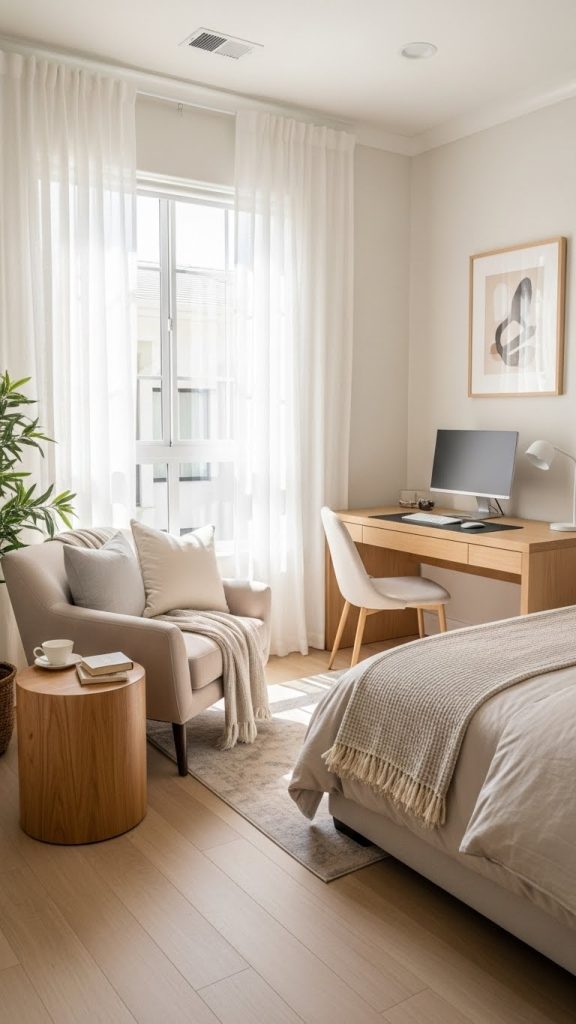
If the spare bedroom has a generous window or a pleasant view, centering the reading nook around that feature can instantly elevate the entire space. Natural light is one of the most important elements for a comfortable reading experience, and placing the nook near a window makes it both practical and visually appealing.

In this idea, the reading nook is treated as a design focal point rather than an afterthought. A comfortable armchair or built-in bench sits directly beside the window, paired with a small side table and a thoughtfully chosen reading lamp for evening use. Soft cushions and a throw blanket add layers of comfort without overwhelming the space.
The office area can be positioned nearby but angled slightly away from the window to minimize glare on screens. The bed remains simple and understated, allowing the reading nook to stand out as a feature rather than competing with it.
This design works beautifully for those who associate reading with relaxation and daylight. It also photographs exceptionally well, making it ideal for Pinterest-inspired interiors that emphasize calm, airy aesthetics.
3. The Minimalist Office Retreat
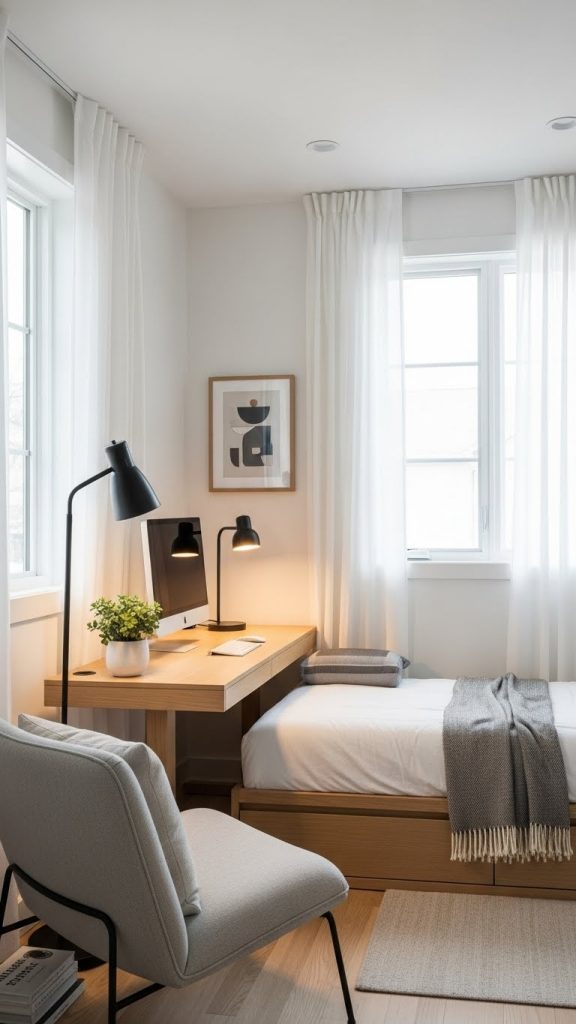
For those who prefer clean lines and uncluttered spaces, a minimalist approach to an office spare bedroom with a reading nook can be both calming and highly functional. In this concept, every piece of furniture serves a clear purpose, and visual noise is kept to a minimum.

The office setup is streamlined, often consisting of a simple desk, an ergonomic chair, and discreet storage solutions. The bed may feature a low-profile frame and neutral bedding to maintain a sense of openness. The reading nook, rather than being elaborate, relies on a single well-designed chair and a floor lamp.
Neutral color palettes dominate this style, with whites, soft grays, warm beiges, or muted earth tones creating a serene backdrop. Texture becomes more important than decoration, with linen, wood, and soft upholstery adding depth without clutter.
This idea is particularly effective in smaller rooms where excess furniture can quickly make the space feel cramped. By embracing simplicity, the room feels larger, more intentional, and easier to maintain, while still offering a dedicated spot for reading and reflection.
4. The Built-In Reading Nook Concept
A built-in reading nook can transform an ordinary spare bedroom into a custom-feeling space. This idea works especially well in rooms with alcoves, awkward corners, or unused wall recesses that might otherwise go unnoticed.

The built-in nook often takes the form of a window seat, wall bench, or recessed shelving unit with integrated seating. Cushions are tailored to fit the space, creating a cozy, enclosed feeling that naturally invites relaxation. Built-in shelves above or beside the seating provide storage for books and decorative accents.
The office area benefits from this approach because the reading nook feels contained and separate, even without walls. The bed remains straightforward, allowing the architectural detail of the nook to become the room’s standout feature.
This idea appeals to homeowners who enjoy a sense of permanence and craftsmanship. A built-in reading nook feels intentional and elevated, turning the spare bedroom into a thoughtfully designed retreat rather than a temporary or secondary space.

5. The Dual-Purpose Guest and Office Design
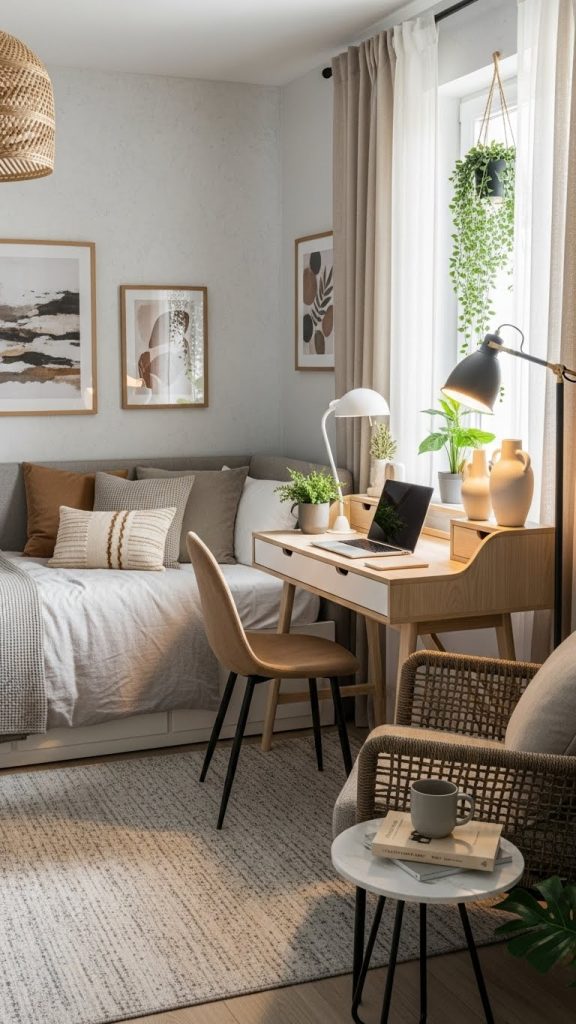
When a spare bedroom needs to function primarily as a guest room but still accommodate an office and reading nook, flexibility becomes the most important design principle. This idea focuses on adaptable furniture and subtle transitions between functions.

A sofa bed or daybed is often used instead of a traditional bed, allowing the room to shift easily between guest use and daily office work. The desk may double as a bedside table or console when guests are present. The reading nook becomes a shared feature that feels welcoming to both the homeowner and visitors.
Soft lighting, layered textiles, and neutral decor help the room feel comfortable rather than utilitarian. The reading nook, in particular, adds a sense of hospitality, offering guests a quiet place to unwind without feeling confined to the bed.
This design is ideal for homes where guests visit regularly but do not occupy the room full-time. It ensures the space remains useful every day while still feeling prepared for overnight stays.
6. The Creative Professional Workspace
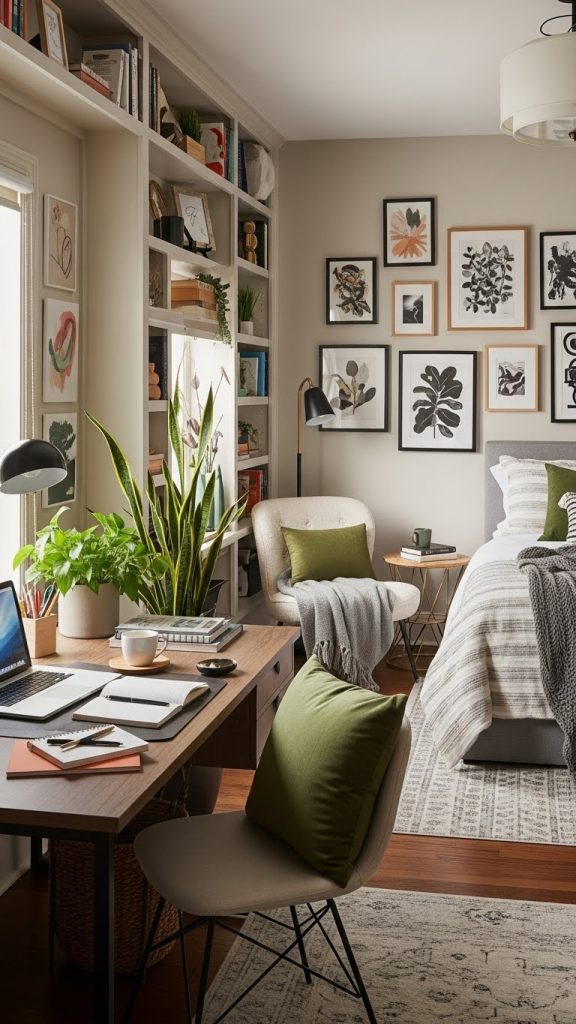
For writers, designers, or creatives, an office spare bedroom with a reading nook can become a deeply personal and inspiring environment. This idea emphasizes self-expression while still maintaining comfort and order.

The office area may feature open shelving with books, materials, or meaningful objects that spark ideas. The desk is positioned to encourage long working sessions, often near natural light. The reading nook serves as a secondary thinking space, ideal for brainstorming, research, or simply stepping away from the desk.
Color plays a more prominent role in this concept. Rich tones, layered patterns, or artwork can be introduced to reflect personality and creative energy. The reading nook, in particular, can be slightly more expressive, using bold upholstery or textured fabrics.
This idea demonstrates that a multifunctional room does not have to feel generic. When designed with intention, it can support both productivity and creativity while still functioning as a welcoming spare bedroom.
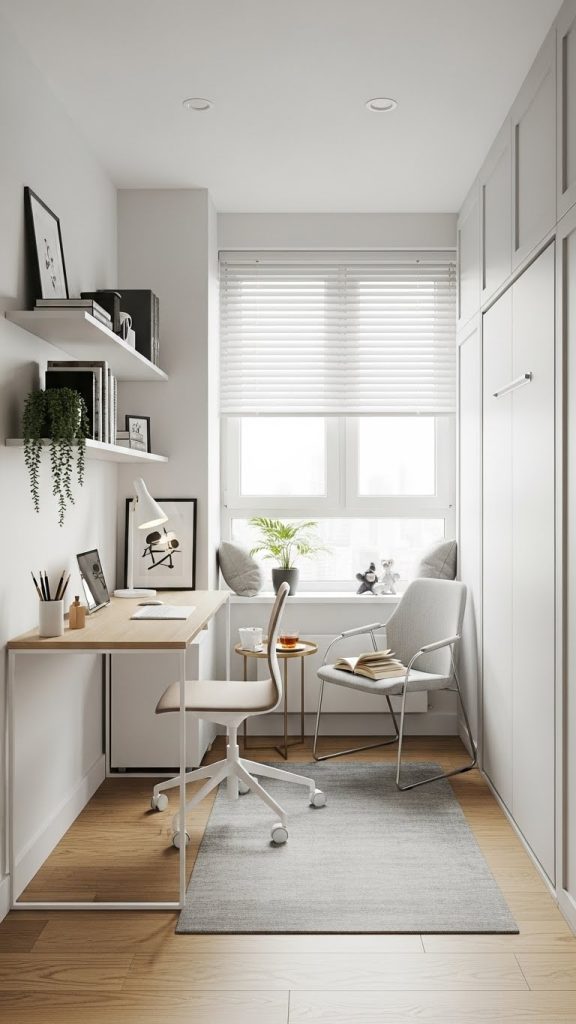
7. The Small Space Solution
In compact homes or apartments, spare bedrooms are often limited in size, making it challenging to incorporate an office and reading nook without overcrowding. This idea focuses on smart space planning and multifunctional elements.

The reading nook may consist of a compact chair or even a cushioned window ledge rather than a full armchair. Wall-mounted desks or floating shelves free up floor space and keep the room feeling open. Vertical storage becomes essential, allowing books and office supplies to be stored efficiently.
Light colors, mirrors, and minimal window treatments help maximize the sense of space. The bed may be positioned against the wall or corner to create room for the office and nook without compromising comfort.
This approach proves that even the smallest spare bedroom can support multiple functions when every design decision is made with purpose and restraint.
8. The Warm and Cozy Library Feel
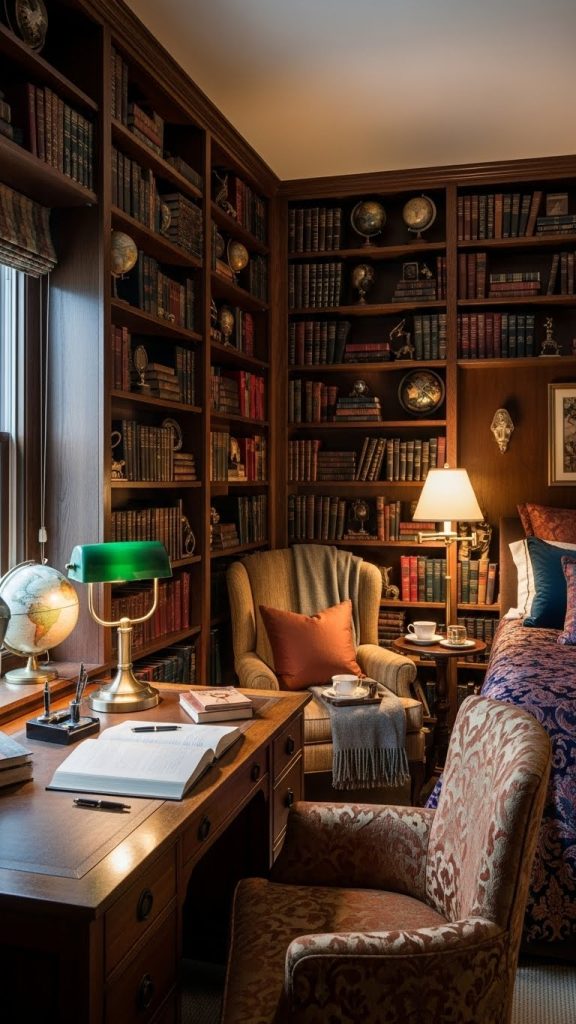
For those who love the idea of being surrounded by books, this concept leans into a library-inspired aesthetic. The reading nook becomes the heart of the room, with shelves, warm lighting, and inviting textures creating a sense of escape.

The office area blends into this theme, often using wooden furniture and classic silhouettes. The bed is styled with layered bedding and soft lighting to maintain the cozy atmosphere. The overall effect is a room that feels timeless and comforting rather than purely functional.
This idea works especially well for readers who see books as part of their identity. The room becomes a sanctuary for quiet work, thoughtful reading, and restful sleep, all within a unified design narrative.
9. The Modern Elegant Hybrid
A modern elegant approach balances clean design with subtle luxury. In this idea, the office spare bedroom with reading nook feels polished and intentional, suitable for both daily use and hosting guests.
Furniture features refined lines and high-quality materials. The reading nook may include a sculptural chair or a carefully chosen lamp that doubles as a design statement. The office area remains streamlined, avoiding visual clutter.

Color palettes often include soft neutrals with darker accents for contrast. The reading nook is styled to feel indulgent but not overly decorative, reinforcing the idea that comfort and sophistication can coexist.
This design is ideal for homeowners who want a space that feels elevated without sacrificing practicality.

10. The Personal Retreat Concept
The final idea centers on emotional comfort and personal well-being. In this approach, the office spare bedroom with reading nook is designed as a retreat from daily demands rather than a purely functional space.
The reading nook becomes a place of intentional rest, featuring deeply comfortable seating, calming colors, and soft lighting. The office area is designed to support focus without dominating the room. The bed is styled simply, emphasizing rest and restoration.

Personal touches play a significant role here, from favorite books to meaningful artwork or objects. The goal is to create a room that feels nurturing and grounding, supporting both work and relaxation in equal measure.
This concept resonates strongly with Pinterest audiences who seek spaces that reflect balance, mindfulness, and intentional living.

Conclusion
An office spare bedroom with a reading nook is one of the most versatile and rewarding rooms to design. It reflects modern living, where work, rest, and personal growth often intersect. By thoughtfully considering layout, furniture, lighting, and atmosphere, this type of space can support productivity while still offering comfort and escape.

Whether the design leans minimalist, cozy, creative, or elegant, the key lies in intentionality. When each element serves a purpose and contributes to a cohesive vision, the result is a room that feels complete, adaptable, and deeply personal.
These ten ideas demonstrate that with thoughtful planning, a spare bedroom can become far more than a secondary space. It can be a place where work feels focused, reading feels indulgent, and guests feel genuinely welcome.