

A well-organized garage transforms a cluttered storage space into a functional extension of the home. Many households use garages for multiple purposes, including storage, DIY projects, and even workspace activities. Without a structured system, items quickly become difficult to locate, and usable space is reduced. This article presents practical Pinterest ideas focused on improving garage organization through clear planning and efficient use of available space. Readers will learn how to implement structured layouts, apply beginner friendly organization techniques, and use simple materials to create long-lasting systems. Each idea is explained in a step by step format, making it accessible for different skill levels. These creative ideas are designed to support modern design preferences, including minimalist style and functional aesthetics. The goal is to provide practical inspiration that helps improve accessibility, safety, and overall usability. Whether working with a small or large garage, these ideas focus on achievable solutions that require manageable effort and planning.
Why This Idea Is Trending or Useful
Garage organization has become a widely shared topic in Pinterest inspiration due to its direct impact on daily efficiency and home functionality. As more people focus on optimizing their living spaces, garages are no longer treated as neglected storage areas but as valuable extensions of home decor and organization systems. These ideas are trending because they combine practicality with aesthetic appeal, offering solutions that are both functional and visually structured. DIY garage organization allows homeowners to customize layouts according to their specific needs without requiring complex installations. Many of these systems are beginner friendly and rely on accessible materials, making them suitable for a wide audience. The rise of minimalist style and modern design has also influenced garage setups, encouraging decluttered layouts and clearly defined storage zones. These ideas support better planning, improve safety by reducing hazards, and increase efficiency by making tools and items easy to locate. This combination of practicality and creativity makes garage organization a highly valuable and shareable topic.
Materials and Preparation
Before starting any garage organization project, proper planning and preparation are essential to ensure efficient results. Begin by assessing the current state of the garage and categorizing items into groups such as tools, seasonal items, sports equipment, and miscellaneous storage. This helps define storage priorities and space allocation. Common materials include storage bins, wall-mounted racks, hooks, shelving units, pegboards, and labeling supplies. Tools such as drills, measuring tapes, screws, and mounting brackets are often required for installation. Cleaning the garage thoroughly before starting is an important step, as it creates a clear workspace and improves visibility. Planning should also include measuring available wall and floor space to determine the best layout. Consider accessibility, ensuring frequently used items are easy to reach. Safety should be part of preparation, especially when installing heavy storage systems. A well-thought-out plan reduces errors during execution and ensures that the final setup is both functional and visually organized.
Idea 1: Wall-Mounted Tool Storage System
How to Create

A wall-mounted tool storage system uses vertical space to keep tools organized and easily accessible. This method prevents clutter on floors and work surfaces while allowing clear visibility of all items. The concept focuses on arranging tools systematically based on size and frequency of use. Pegboards are commonly used for this setup because they allow flexible placement of hooks and holders. Tools such as hammers, screwdrivers, and pliers can be grouped logically, making retrieval quick and efficient. This system supports a minimalist style by reducing visual clutter and keeping everything in designated positions. It also improves safety by preventing tools from being scattered across the garage. Wall-mounted storage is especially useful in smaller garages where floor space is limited. The design can be adjusted over time as storage needs change, making it a practical long-term solution.

The process begins by selecting a suitable wall and measuring the available space. Install a pegboard securely using mounting brackets and ensure it is level. Attach hooks and holders according to the types of tools being stored. Arrange tools by category, placing frequently used items at eye level for easy access. Use labels if necessary to maintain organization over time. Additional shelves can be installed above or below the pegboard for storing smaller containers. Regular maintenance involves returning tools to their designated spots after use. This step by step setup creates a functional and visually structured system that enhances efficiency and supports daily tasks.
Idea 2: Overhead Storage Racks
How to Create
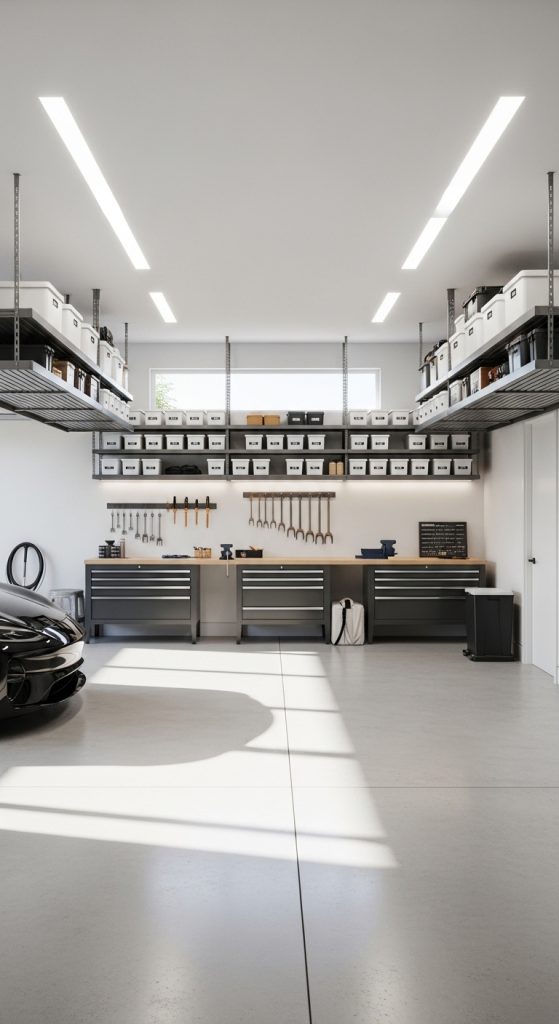
Overhead storage racks utilize unused ceiling space to store items that are not needed frequently. This approach is ideal for seasonal items, storage bins, and bulky equipment. By moving these items off the floor, the garage becomes more open and easier to navigate. This system supports modern design principles by maintaining a clean and uncluttered floor area. Overhead storage is particularly effective in garages with high ceilings, where vertical space is often underutilized. It also helps protect items from potential floor-level damage such as moisture or spills. Proper weight distribution and secure installation are essential to ensure safety.
To create this system, begin by identifying ceiling joists that can support the weight of the racks. Use heavy-duty brackets and mounting hardware to secure the structure firmly. Choose durable storage bins that can be easily lifted and placed on the racks. Label each bin clearly to identify contents without needing to bring them down. Arrange items based on usage frequency, placing less frequently used items further back. Ensure there is enough clearance for safe access. A stable ladder may be required for reaching the storage area. This setup method maximizes space efficiency while maintaining accessibility and organization.
Idea 3: Clear Storage Bin Organization
How to Create

Clear storage bins provide a simple and effective way to organize smaller items while maintaining visibility. This method is particularly useful for grouping similar items such as hardware, cleaning supplies, and seasonal decorations. The transparency of the bins eliminates the need to open each container to find specific items. This system supports efficient organization and reduces time spent searching. It also contributes to a neat and uniform appearance, aligning with minimalist and modern design aesthetics. Clear bins can be stacked or placed on shelves, making them versatile for different garage layouts.

Begin by sorting items into categories and selecting appropriately sized clear bins. Label each bin for additional clarity, especially if items are densely packed. Arrange bins on shelves or stack them carefully to avoid instability. Heavier items should be placed at the bottom to maintain balance. Consider using uniform bin sizes to create a cohesive look. Regularly review the contents to remove unnecessary items and maintain organization. This easy project is beginner friendly and requires minimal tools, making it accessible for quick implementation. The result is a structured and visually organized storage system.
Idea 4: Modular Shelving Units
How to Create

Modular shelving units offer flexible storage solutions that can be adjusted according to changing needs. These units consist of multiple shelves that can be repositioned or expanded over time. This adaptability makes them suitable for storing a wide range of items, from tools to larger equipment. Modular shelving supports efficient organization by creating clearly defined storage zones. It also allows for customization based on available space and storage requirements. This system aligns with modern design trends by providing clean lines and structured layouts.
To set up modular shelving, start by measuring the available wall space and selecting a unit that fits comfortably. Assemble the shelving according to instructions and secure it to the wall for stability. Arrange items based on size and frequency of use, placing heavier items on lower shelves. Use bins or containers to group smaller items and maintain order. Adjust shelf heights as needed to accommodate different items. Regular maintenance includes reorganizing shelves as storage needs change. This setup method provides a durable and adaptable storage solution that improves overall garage organization.
Idea 5: Magnetic Tool Strips
How to Create
Magnetic tool strips provide a compact and efficient way to store metal tools. These strips hold items securely while keeping them easily accessible. This method is ideal for tools such as screwdrivers, wrenches, and small metal accessories. Magnetic storage reduces clutter and allows tools to be displayed in a neat and organized manner. It also supports quick access, improving workflow efficiency. This system is particularly useful for work areas within the garage where tools are used frequently.


To install magnetic strips, select a suitable wall area near the workspace. Secure the strips using screws and ensure they are firmly attached. Arrange tools along the strip, grouping similar items together. Ensure that heavier tools are supported properly and do not exceed the strip’s weight capacity. Regularly check the stability of the installation to maintain safety. This easy project requires minimal materials and provides an effective solution for organizing frequently used tools.
Idea 6: Labeled Drawer System
How to Create

A labeled drawer system helps organize small items that are often difficult to manage. This includes screws, nails, bolts, and other hardware. By assigning each item a designated drawer, this system prevents mixing and makes retrieval easier. Labeling ensures that items can be identified quickly, reducing time spent searching. This approach supports efficient organization and maintains a clean workspace.
Start by selecting a drawer unit with multiple compartments. Sort items into categories and assign each category to a specific drawer. Label each drawer clearly using consistent labeling methods. Arrange the unit in a convenient location within the garage. Regularly review the contents to ensure items remain organized. This step by step method creates a structured system that improves accessibility and reduces clutter.
Idea 7: Foldable Workbench Setup
How to Create
A foldable workbench provides a functional workspace that can be stored when not in use. This is ideal for garages with limited space. The design allows the bench to be mounted on a wall and folded down when needed. This system supports efficient use of space while maintaining functionality. It is suitable for various tasks, including DIY projects and repairs.


To create this setup, install a sturdy wall-mounted frame and attach a foldable surface. Ensure the structure is securely anchored to support weight during use. When not in use, fold the bench back against the wall to free up space. This setup method provides a practical and space-saving solution for garage work areas.
Idea 8: Vertical Bike Storage

How to Create
Vertical bike storage helps free up floor space by storing bicycles upright against a wall. This method is particularly useful for households with multiple bikes. It keeps the garage organized and prevents bikes from obstructing pathways. This system supports efficient use of vertical space and improves accessibility.
Install wall-mounted hooks or racks designed for bicycles. Secure them at appropriate heights to ensure stability. Lift and hang the bikes carefully, ensuring they are balanced. This setup method provides a clean and organized solution for storing bicycles.
Idea 9: Rolling Storage Carts
How to Create
Rolling storage carts offer mobility and flexibility in garage organization. These carts can be moved easily, allowing tools and materials to be transported as needed. This system is ideal for tasks that require multiple tools in different areas of the garage. It supports efficient workflow and organization.


Choose a sturdy cart with multiple tiers and arrange items based on usage. Keep frequently used tools on the top level for easy access. Move the cart as needed and store it in a designated area when not in use. This setup provides a practical and adaptable storage solution.
Idea 10: Zone-Based Organization System
How to Create

A zone-based organization system divides the garage into specific areas based on function. Common zones include tool storage, sports equipment, gardening supplies, and general storage. This method improves efficiency by ensuring each item has a designated location. It also supports a structured and organized layout.
Begin by identifying categories and assigning zones accordingly. Use shelves, bins, and labels to define each area clearly. Arrange items within each zone based on frequency of use. Maintain the system by returning items to their designated zones after use. This approach creates a highly organized and functional garage layout.
Common Beginner Mistakes and How to Avoid Them
One common mistake is starting organization without proper planning, which often leads to inefficient layouts. Failing to categorize items can result in clutter returning quickly. Another issue is overloading storage systems, which can compromise safety and durability. Ignoring vertical space also limits storage potential. To avoid these mistakes, begin with clear planning and sorting. Use appropriate materials and ensure installations are secure. Maintain consistency by returning items to their designated places.

Practical Tips for Better Results
Use consistent labeling systems to improve organization. Regularly declutter to prevent accumulation of unnecessary items. Place frequently used items within easy reach. Combine different storage methods for better efficiency. Maintain a routine for checking and reorganizing the garage to ensure long-term functionality.
Styling, Presentation, or Organization Ideas
Use uniform storage containers to create a clean visual appearance. Arrange items symmetrically for a structured look. Incorporate neutral colors to support a minimalist style. Keep open spaces clear to enhance accessibility and visual balance.
Budget or Time Planning
Start with essential organization systems and expand gradually. Use affordable materials and repurpose existing items where possible. Plan projects in stages to manage time effectively. Focus on high-impact changes first to see immediate improvement.
Creative Expansion and Advanced Inspiration
Expand organization systems by integrating smart storage solutions such as adjustable racks and multi-functional units. Combine aesthetics with functionality by designing visually appealing layouts. Explore advanced DIY projects to customize storage further. Continuous improvement ensures the garage remains efficient and adaptable.