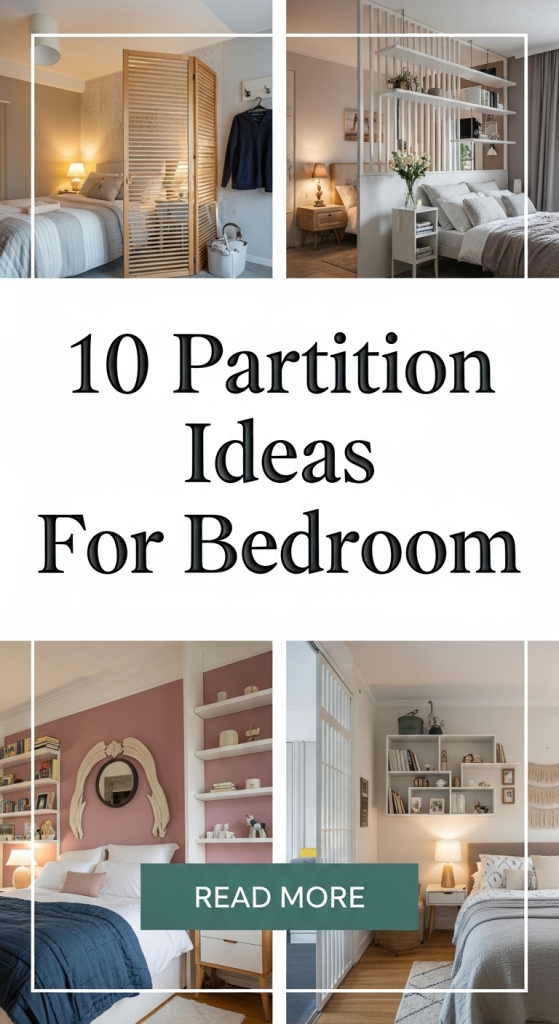
Bedroom partitions are practical design solutions that divide space without permanent construction. These ideas are widely shared across Pinterest ideas because they improve organization while maintaining visual openness. In modern homes, especially small apartments or shared rooms, partitions help define functional zones such as sleeping, working, or dressing areas. They also contribute to privacy without requiring structural changes.
This article explains ten creative ideas for bedroom partitions that are suitable for different layouts and needs. Readers will learn how to select materials, plan placement, and execute each idea step by step. The focus remains on DIY-friendly methods that are simple to implement and require minimal tools. Each concept supports modern design and minimalist style while maintaining efficiency and practicality. These partition solutions are useful for improving room functionality, enhancing home decor, and creating a more structured environment. With clear instructions and practical guidance, this article provides a complete approach to designing bedroom partitions as an easy project.
Why This Idea Is Trending or Useful
Bedroom partition ideas are trending due to the increasing need for multifunctional spaces. Many people now work, relax, and sleep in the same room. This requires better organization and separation of activities. Partitions provide a flexible solution that allows one room to serve multiple purposes without overcrowding.
From a design perspective, partitions add depth and structure to interiors. They support modern design by creating defined zones while maintaining an open feel. This approach aligns with minimalist style, where every element serves a functional purpose. These ideas are also popular because they are adaptable to different room sizes and layouts.
The DIY appeal makes these projects accessible to beginners. Most partition solutions use simple materials such as wood, fabric, or shelves. This reduces cost and complexity, making them suitable budget ideas. Additionally, partitions can be adjusted or removed easily, allowing flexibility in future changes. These factors contribute to their popularity as practical and creative ideas in Pinterest inspiration.
Materials and Preparation
Before creating a bedroom partition, proper planning ensures effective results. Common materials include wooden panels, curtains, shelving units, glass panels, folding screens, and metal frames. The choice of materials depends on the desired level of privacy, durability, and aesthetic appearance. Tools such as measuring tape, drill, screws, brackets, and level are typically required.
Preparation begins with measuring the space to determine the size and placement of the partition. Identify the purpose of the partition, such as separating a workspace or creating a dressing area. This step helps in selecting the right design and materials. Cleaning the area and removing unnecessary items ensures a clear working space.
Planning includes deciding whether the partition should be fixed or movable. Fixed partitions provide stability, while movable ones offer flexibility. Testing placement using temporary markers helps visualize the final layout. Gathering all materials before starting reduces interruptions during the process. This structured approach makes the project beginner friendly and ensures a smooth workflow for creating effective bedroom partitions.

Idea 1: Curtain Divider Partition
How to Create
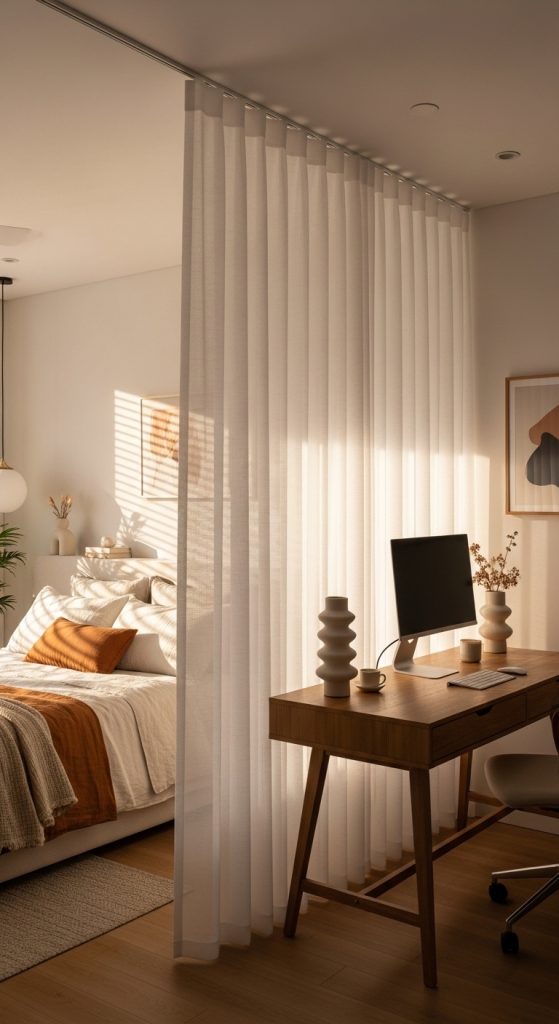
Curtain divider partitions are one of the simplest and most flexible solutions for separating bedroom spaces. This method uses fabric panels suspended from a rod or ceiling track to create a soft barrier. Curtains provide privacy while maintaining airflow and light distribution. They are suitable for dividing sleeping areas from workspaces or dressing sections.
This design supports minimalist style because it does not require bulky structures. It also allows easy adjustment based on changing needs. Curtains can be opened or closed depending on the desired level of separation. The choice of fabric affects both functionality and appearance. Lightweight materials create a soft aesthetic, while thicker fabrics provide more privacy.
To create this partition, install a curtain rod or ceiling track in the desired location. Measure the width and height carefully to ensure proper coverage. Attach curtains using hooks or rings for smooth movement. Ensure the rod is securely fixed to support the weight. This step by step method provides a simple and effective DIY solution for bedroom organization.
Idea 2: Wooden Slat Divider
How to Create
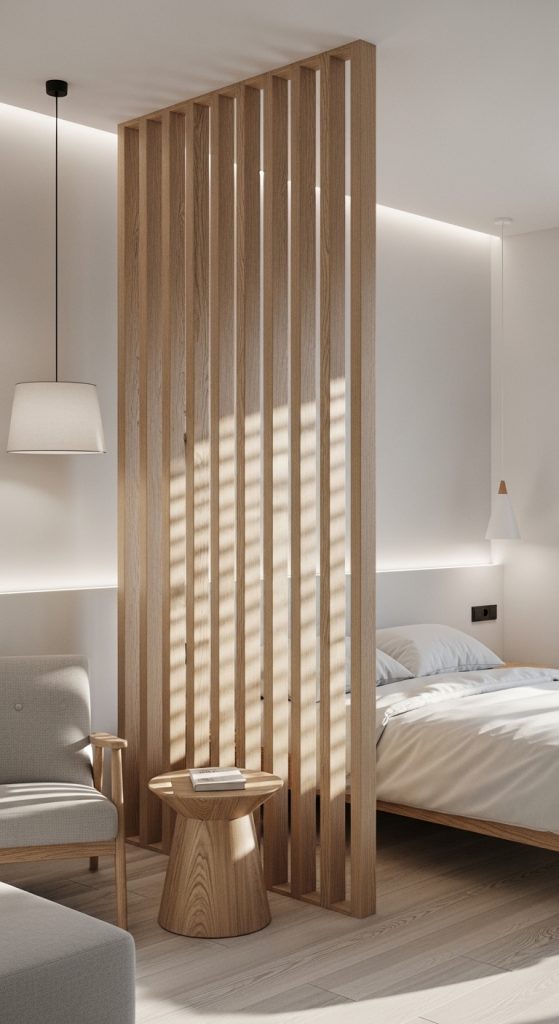
Wooden slat partitions use evenly spaced vertical or horizontal wooden panels to divide space while allowing light to pass through. This design creates a structured look and adds texture to the room. It is commonly used in modern design for its balance between openness and separation.

The spacing between slats determines the level of privacy. Wider gaps maintain visibility, while closer spacing provides more coverage. Wooden slats also enhance aesthetic appeal by introducing natural materials into the space. This approach works well in both small and large bedrooms.
To build this partition, measure the area and cut wooden slats to the required size. Secure them to a frame or directly to the floor and ceiling using brackets. Ensure even spacing for a consistent appearance. Sand and finish the wood for a smooth surface. This execution process creates a durable and visually appealing partition.
Idea 3: Open Shelving Partition
How to Create
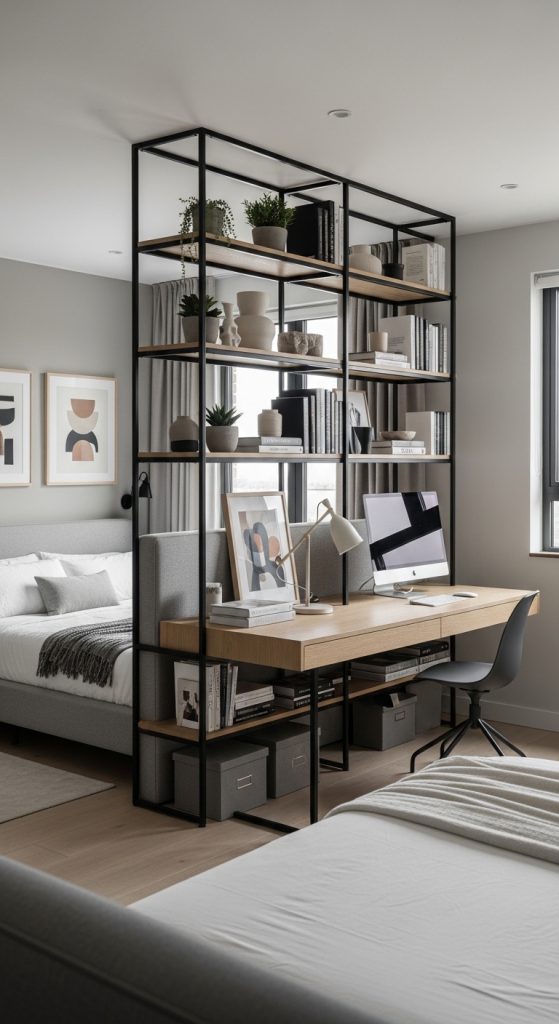
Open shelving partitions combine storage and separation in a single structure. This design uses shelves to divide the room while providing space for books, decor, or daily items. It improves organization and reduces clutter.
This type of partition is practical because it serves multiple functions. It allows light to pass through while creating defined zones. Open shelving also enhances accessibility, making items easy to reach. This idea supports creative project planning by combining functionality with design.

To set up this partition, choose a shelving unit that matches the room dimensions. Position it between the areas you want to separate. Secure it to prevent movement. Arrange items evenly to maintain balance. This setup method creates a functional and organized partition.
Idea 4: Folding Screen Divider
How to Create
Folding screens are portable partitions that can be adjusted or removed easily. They consist of multiple panels connected by hinges. This design is suitable for temporary separation and flexible layouts.
Folding screens are beginner friendly because they require no installation. They can be repositioned based on changing needs. This makes them ideal for rented spaces or shared rooms. They also add decorative value to the room.
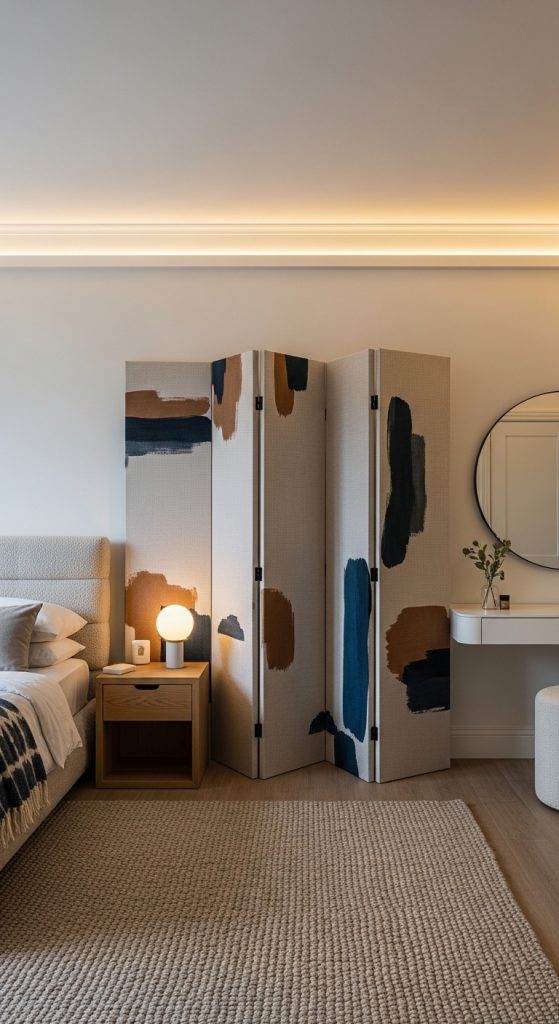
To use this partition, place the screen in the desired location. Adjust the panels to create the required shape. Ensure stability by positioning it on a flat surface. This simple process provides an effective and flexible solution.

Idea 5: Glass Panel Partition
How to Create
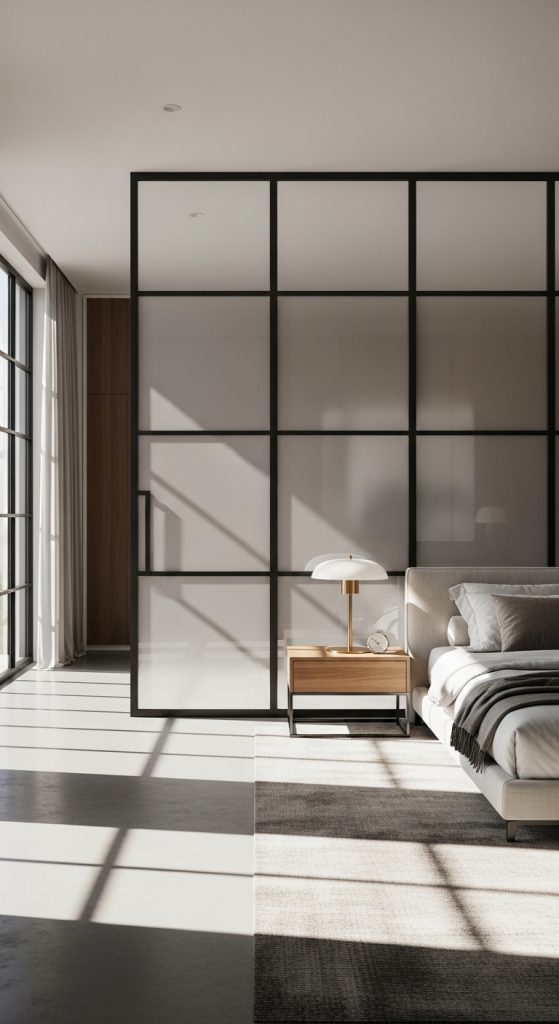
Glass panel partitions create separation while maintaining full light flow. This design is suitable for modern interiors where brightness is important. Frosted or textured glass can be used for added privacy.
Glass partitions provide a clean and structured appearance. They enhance the sense of space and prevent the room from feeling enclosed. This approach aligns with modern design principles.
To install, measure the area and secure glass panels using metal or wooden frames. Ensure proper support and alignment. This method creates a durable and elegant partition.
Idea 6: Sliding Door Partition
How to Create
Sliding door partitions use panels that move along a track to open or close spaces. This design saves space and provides adjustable separation. It is suitable for bedrooms with limited area.

Sliding doors allow full closure when privacy is needed and open space when not required. This flexibility makes them practical for multifunctional rooms.
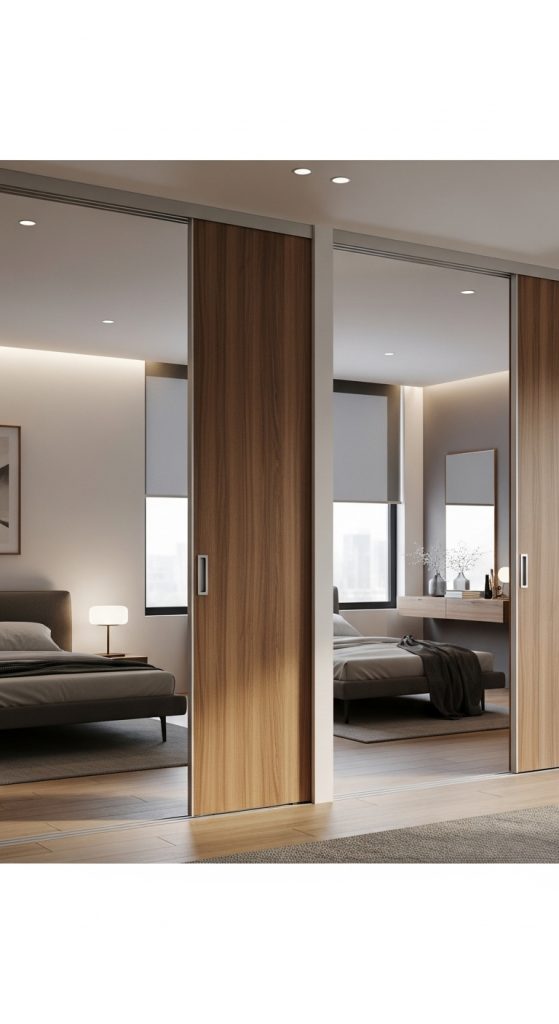
To create this partition, install a sliding track on the ceiling or wall. Attach panels and ensure smooth movement. This step by step approach ensures functionality and ease of use.
Idea 7: Fabric Panel Divider
How to Create
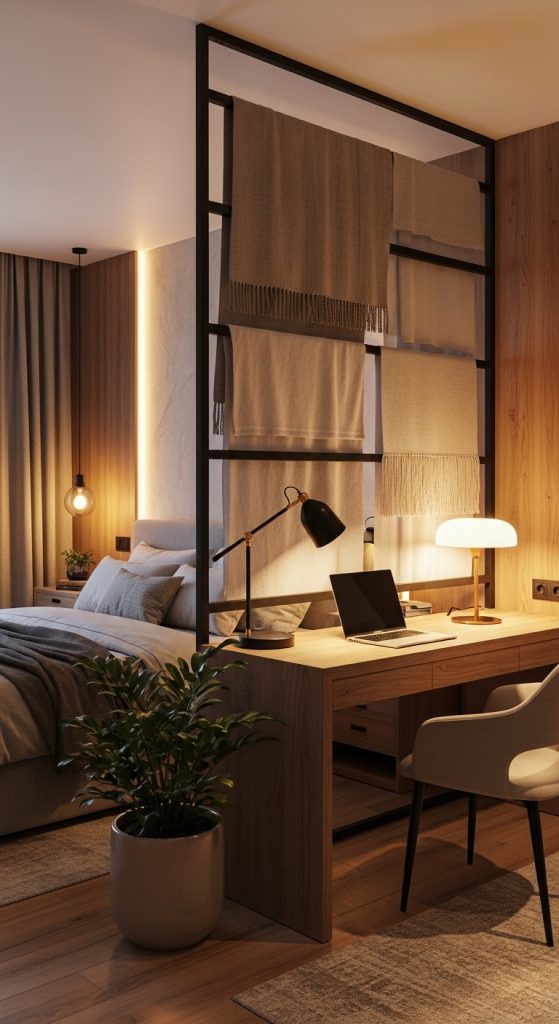
Fabric panel partitions use stretched fabric within a frame to create a soft divider. This design is lightweight and easy to install. It adds texture and warmth to the room.
Fabric panels can be customized in color and pattern to match home decor. They provide moderate privacy and maintain airflow.
To set up, build a frame and attach fabric securely. Position the panel in the desired area. This execution process creates a simple and aesthetic partition.
Idea 8: Metal Frame Partition
How to Create
Metal frame partitions provide a strong and structured solution. They can include open grids or combined materials such as glass or wood. This design supports modern and industrial styles.
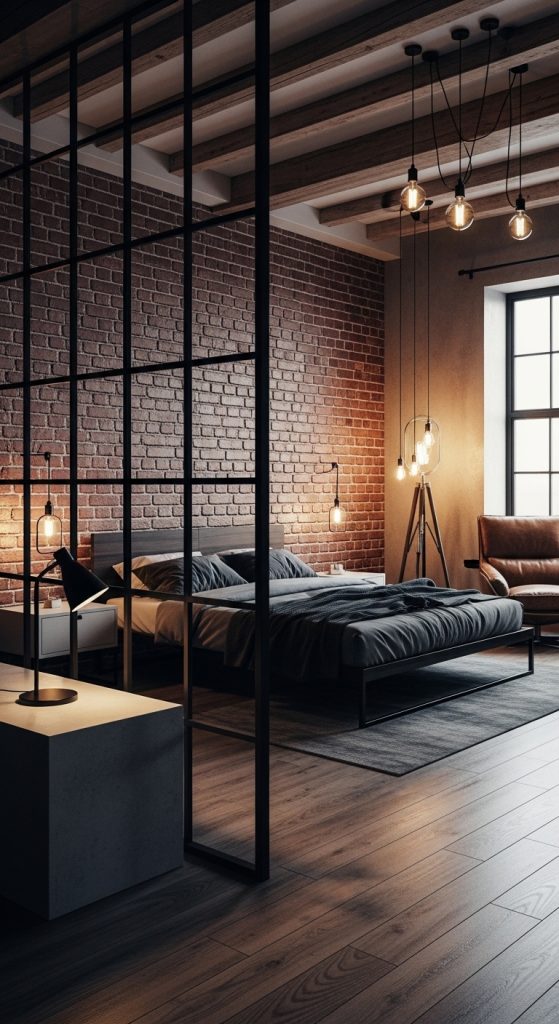
Metal frames are durable and require minimal maintenance. They create clear boundaries while maintaining openness.
To install, secure the frame to the floor and ceiling. Ensure alignment and stability. This setup method provides a long-lasting partition.

Idea 9: Hanging Plant Divider
How to Create
Hanging plant partitions use suspended greenery to divide space. This design adds natural elements and improves air quality. It creates a soft and organic separation.
Plants enhance the aesthetic and provide a calming environment. This approach aligns with creative ideas in home decor.
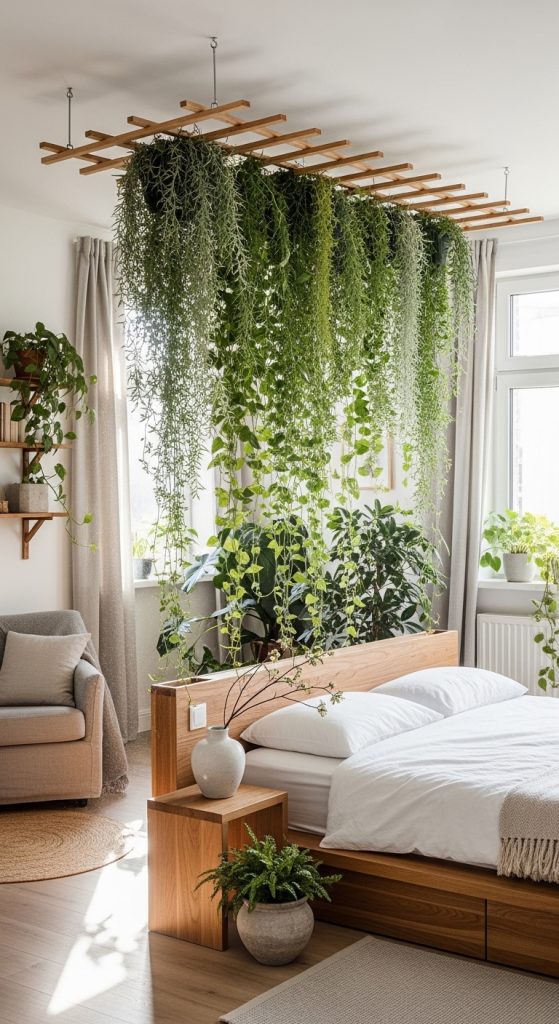
To create, install hooks or rods and hang planters at equal spacing. Ensure proper support and watering access. This method creates a unique and refreshing partition.
Idea 10: Bookshelf Divider Wall
How to Create
Bookshelf partitions use large shelving units as a full divider. This design provides storage and complete separation. It is suitable for larger bedrooms.

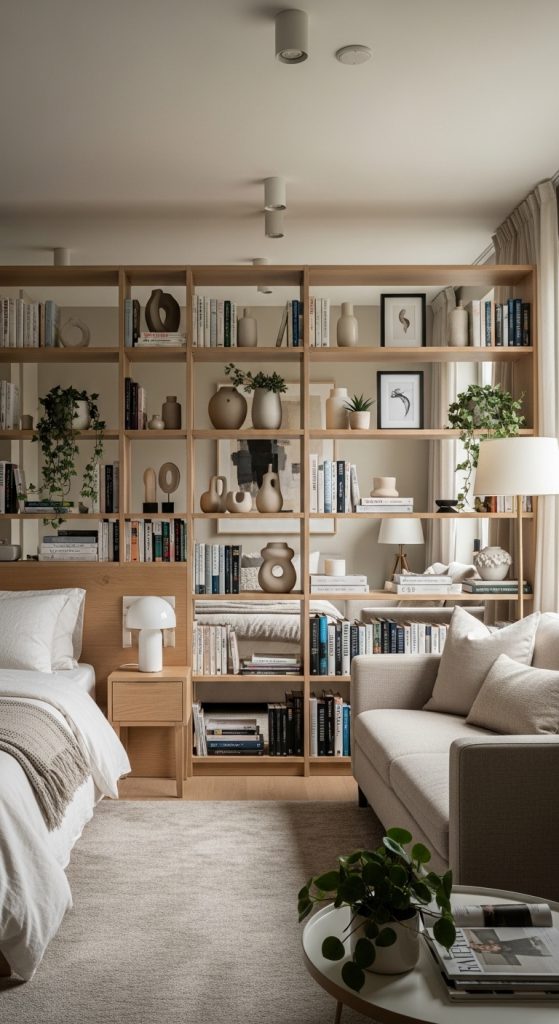
This approach improves organization and maximizes space usage. It also adds visual interest through displayed items.
To set up, place a sturdy bookshelf in the desired location. Secure it to prevent tipping. Arrange items evenly for balance. This process creates a functional and structured partition.
Common Beginner Mistakes and How to Avoid Them
One common mistake is choosing partitions that are too large for the room, which reduces space and movement. Selecting appropriately sized designs ensures balance. Another issue is improper measurement, leading to poor fit and alignment. Accurate planning prevents these problems.
Ignoring stability can result in unsafe installations. Always secure partitions properly. Using unsuitable materials may reduce durability. Choose materials based on function and environment.

Practical Tips for Better Results
Work with clear measurements and layout planning. Use lightweight materials for flexibility. Maintain consistency in design to match the overall room style.
Test placement before final installation. Keep pathways clear to ensure accessibility. These tips improve efficiency and final results.
Styling, Presentation, or Organization Ideas
Use partitions to display decorative items or plants. Maintain color coordination with existing decor. Arrange elements to enhance visual balance.
Keep partitions clean and organized. This improves overall presentation and aesthetic quality.

Budget or Time Planning
Most partition projects can be completed within a short timeframe. Choose materials based on budget and availability. Simple designs reduce cost and effort.
Plan tasks in stages to maintain efficiency. This ensures a manageable and cost-effective project.
Creative Expansion and Advanced Inspiration
Combine multiple partition types for layered design. Use lighting to highlight partition features. Experiment with textures and materials for unique effects.
Advanced designs may include custom-built structures. These ideas expand basic partitions into more complex and personalized solutions.