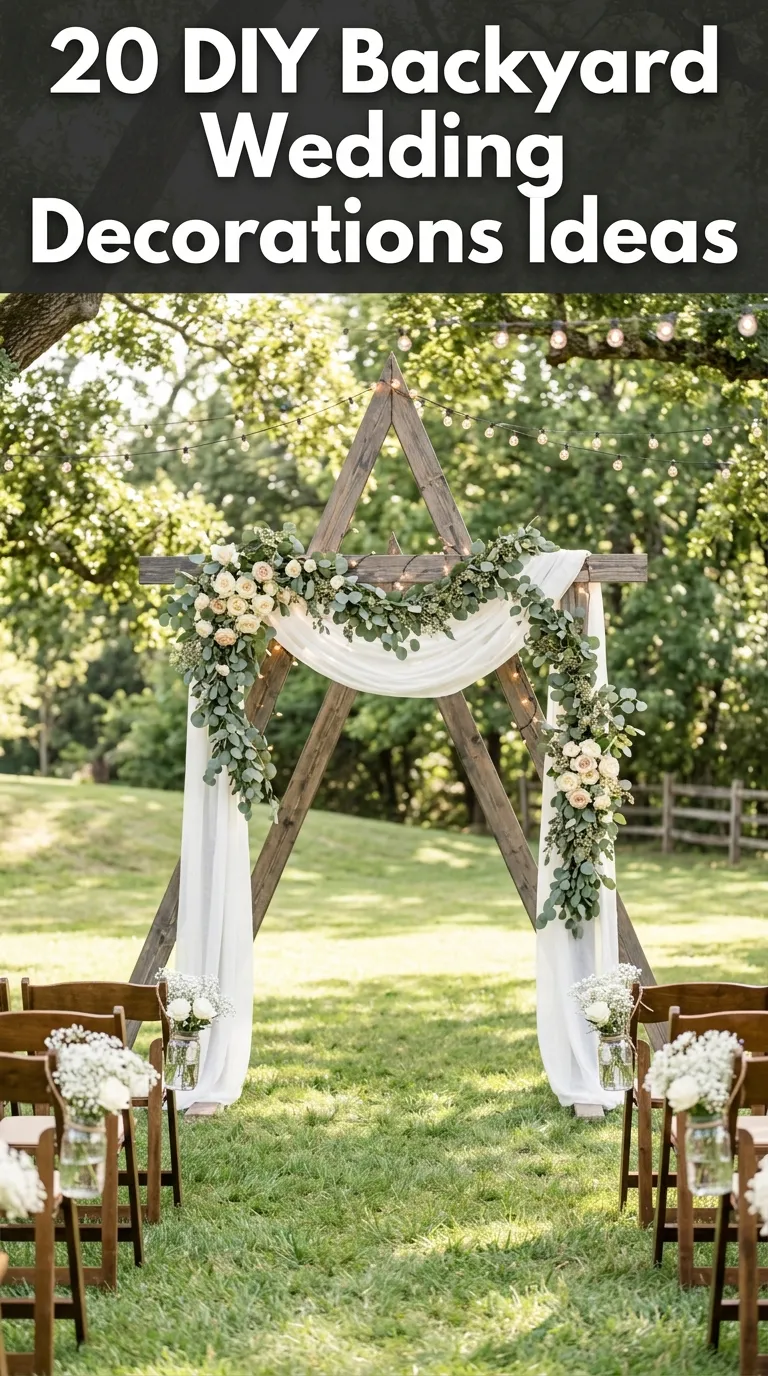
20 Redecorate Bedroom ideas
Redecorating a bedroom is one of the most satisfying home projects you can take on. Unlike a full renovation, redecorating allows you to dramatically transform your space without tearing down walls or spending a fortune. A bedroom should feel personal, calming, and functional — a place where your style meets comfort. Whether your current room feels outdated, cluttered, or simply uninspiring, small intentional changes can completely reshape the mood and energy of the space. The beauty of redecorating is that it’s accessible to beginners: you don’t need advanced design skills, only a clear vision and a few smart strategies.
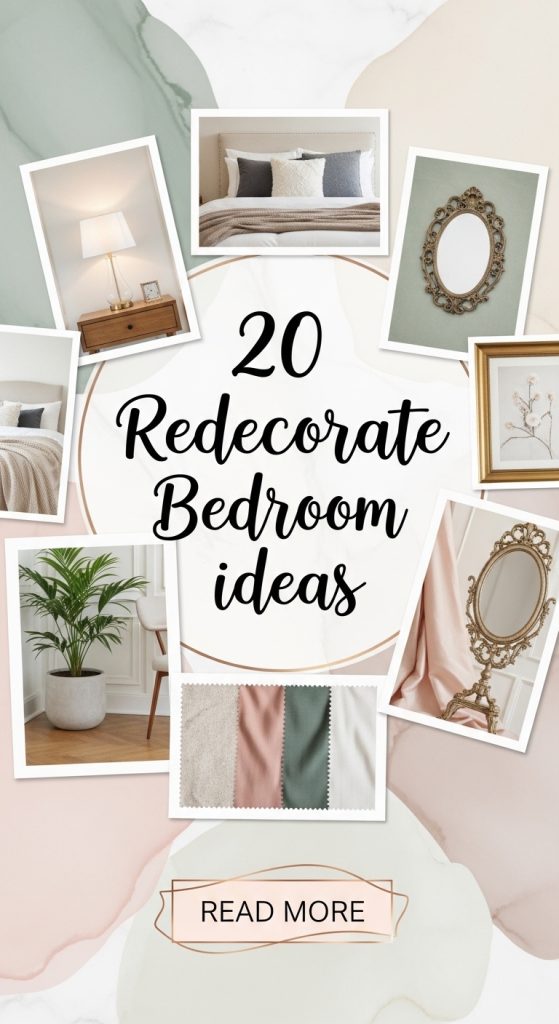
Many people assume redecorating requires replacing everything at once. In reality, the most beautiful bedrooms are built layer by layer. Color, lighting, texture, layout, and décor work together to create an atmosphere. A new paint palette can make a room feel larger. Rearranging furniture can improve flow. Textiles like curtains, bedding, and rugs soften the space and add personality. Even minor details — such as wall art or bedside styling — can elevate the entire aesthetic. The goal is not perfection; it’s cohesion.
Pinterest-worthy bedrooms share a few core principles: intentional color choices, balanced proportions, thoughtful lighting, and curated accents. When you redecorate with these in mind, your room becomes both photogenic and livable. This guide is designed to give you actionable ideas that you can realistically execute, even if you’re starting from scratch. Each idea below focuses on a specific transformation strategy that enhances comfort, style, and functionality.
Think of this as a design toolkit. You don’t need to implement every idea at once. You can choose one approach and build around it, or combine several ideas to create a fully refreshed bedroom. Every section includes clear explanations, beginner-friendly steps, and a practical materials list so you can move from inspiration to action. The emphasis is on achievable upgrades — no complicated construction, no professional-only techniques, and no unrealistic budgets.
Redecorating is also an opportunity to reflect your lifestyle. A bedroom should support how you rest, read, work, or unwind. The right décor can reduce stress, improve sleep quality, and make daily routines more enjoyable. By focusing on intentional design rather than random decoration, you’ll create a space that feels harmonious and deeply personal.
Below are the first 10 redecorating ideas. Each one is structured to help you visualize the transformation and execute it step by step. Save your favorites, mix and match styles, and adapt them to your taste. A bedroom refresh is not about trends — it’s about creating a sanctuary that feels like home.
1. Create a Statement Accent Wall
An accent wall instantly changes the character of a bedroom without overwhelming the space. It acts as a visual anchor and draws attention to the bed area, making the room feel intentionally designed. Accent walls are perfect for beginners because they require minimal materials but deliver maximum impact. You can achieve the look through paint, wallpaper, wood panels, or textured finishes. The key is choosing a wall that naturally becomes the focal point — typically the wall behind the headboard.

A well-designed accent wall introduces depth and contrast. Dark colors create drama and coziness, while lighter tones maintain openness. Patterns, geometric designs, or textured wallpaper can add personality without clutter. When styled correctly, the accent wall elevates the entire bedroom and reduces the need for excessive décor.
How to Create It Step by Step
Start by clearing the chosen wall and repairing any imperfections. Clean the surface thoroughly so paint or wallpaper adheres properly. If painting, apply a primer first to ensure even color. Tape off edges to create crisp lines and protect adjacent surfaces. Apply paint in smooth, even coats and allow proper drying time between layers. For wallpaper, measure carefully and align patterns before adhering. Work slowly to avoid bubbles.
After finishing, style the wall minimally. A centered headboard, symmetrical lamps, or framed art enhances the statement effect without overcrowding.
Materials Needed
- Paint or wallpaper
- Primer
- Painter’s tape
- Roller or brush
- Measuring tape
- Drop cloth
- Wallpaper adhesive (if needed)
- Level
2. Upgrade Bedding for a Luxury Hotel Look

Bedding is the visual centerpiece of any bedroom. Upgrading it is one of the fastest ways to make a room feel luxurious and intentional. A hotel-inspired bed uses layered textures, neutral palettes, and high-quality fabrics to create comfort and elegance. Crisp sheets, a plush duvet, and decorative pillows add dimension while maintaining a clean aesthetic.
The secret lies in layering. Start with a fitted sheet, add a flat sheet, a duvet or comforter, and finish with throws or pillows. Stick to a cohesive color scheme — whites, creams, grays, or soft earth tones work beautifully. Texture replaces clutter in a refined bedroom design.
How to Style the Bed Step by Step
Choose breathable cotton or linen sheets as your base. Add a duvet insert that suits your climate. Use a duvet cover that complements the room’s palette. Fold the top sheet neatly and layer a throw blanket across the lower third of the bed. Arrange pillows symmetrically: sleeping pillows in back, decorative ones in front. Fluff regularly to maintain volume.
Materials Needed
- Sheet set
- Duvet and cover
- Throw blanket
- Decorative pillows
- Mattress topper (optional)
3. Rearrange Furniture for Better Flow
Sometimes the best redecorating idea costs nothing. Rearranging furniture can dramatically improve how a bedroom feels and functions. A good layout promotes easy movement, natural light flow, and visual balance. Beds should not block windows, and pathways should remain clear.
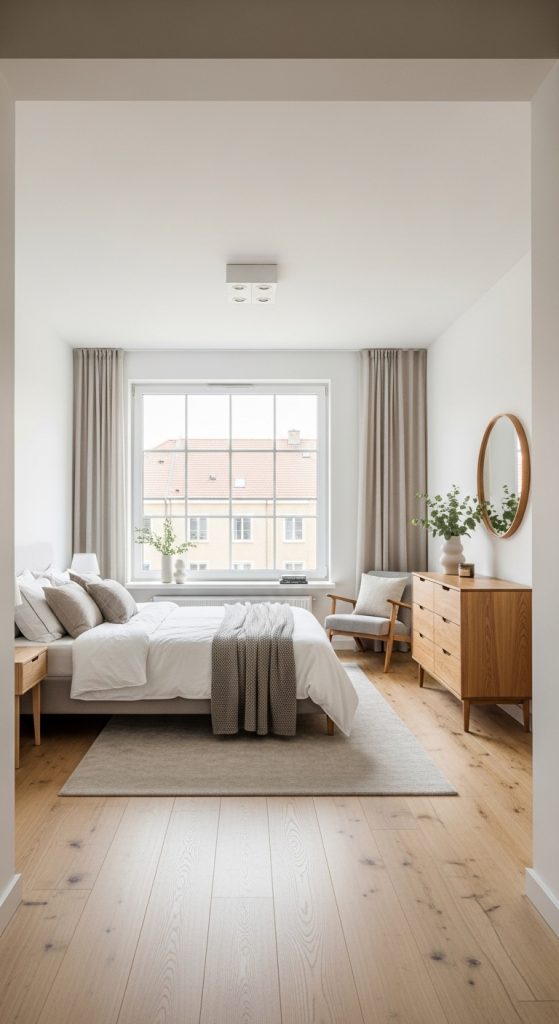
This idea focuses on maximizing space efficiency while enhancing comfort. A thoughtful layout can make even a small bedroom feel larger.
How to Rearrange Step by Step
Remove smaller décor items first. Identify the focal wall for the bed. Position the bed where it feels grounded and accessible from both sides if possible. Move bulky furniture to corners to open central space. Ensure walking paths remain clear. Test arrangements before committing.
Materials Needed
- Floor plan sketch
- Measuring tape
- Furniture sliders
4. Introduce Layered Lighting
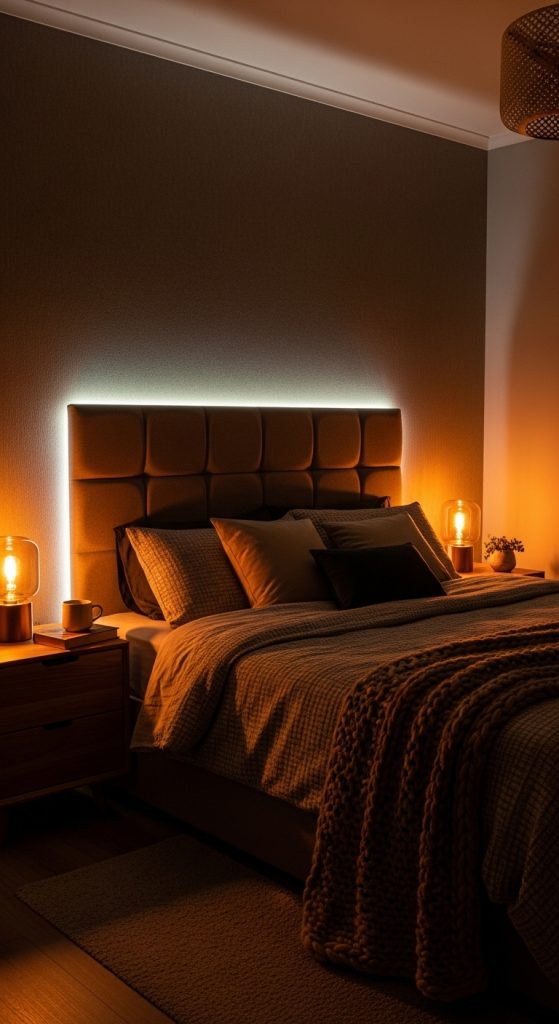
Lighting shapes mood more than any other element. Layered lighting combines ambient, task, and accent lighting to create a warm, adaptable environment. Overhead lights alone feel harsh; bedside lamps and soft glows add intimacy.
How to Layer Lighting Step by Step
Keep the main ceiling light for brightness. Add table lamps for reading. Use warm bulbs for a cozy tone. Install LED strips behind the headboard or under furniture for subtle glow. Dimmer switches allow control over brightness.
Materials Needed
- Bedside lamps
- Warm LED bulbs
- LED strip lights
- Extension cords
- Dimmer switch
5. Add a Cozy Area Rug
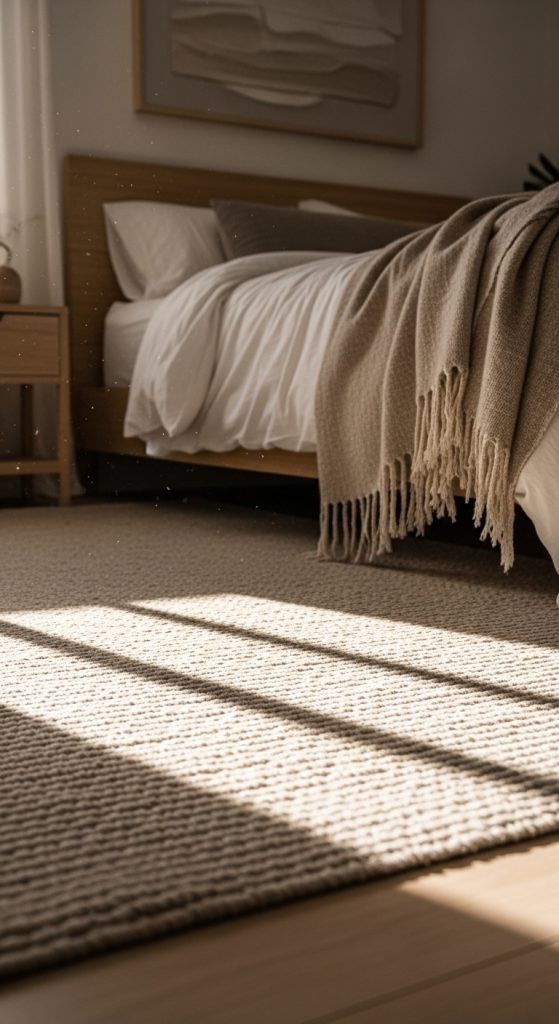
A rug softens hard flooring and visually anchors the bed. It adds warmth, texture, and sound absorption. Even in carpeted rooms, a layered rug enhances style.
How to Place a Rug Step by Step
Choose a rug large enough to extend beyond the bed. Center it under the frame, leaving equal exposure on both sides. Neutral tones blend easily; patterned rugs add personality.
Materials Needed
- Area rug
- Rug pad
6. Install Floating Shelves
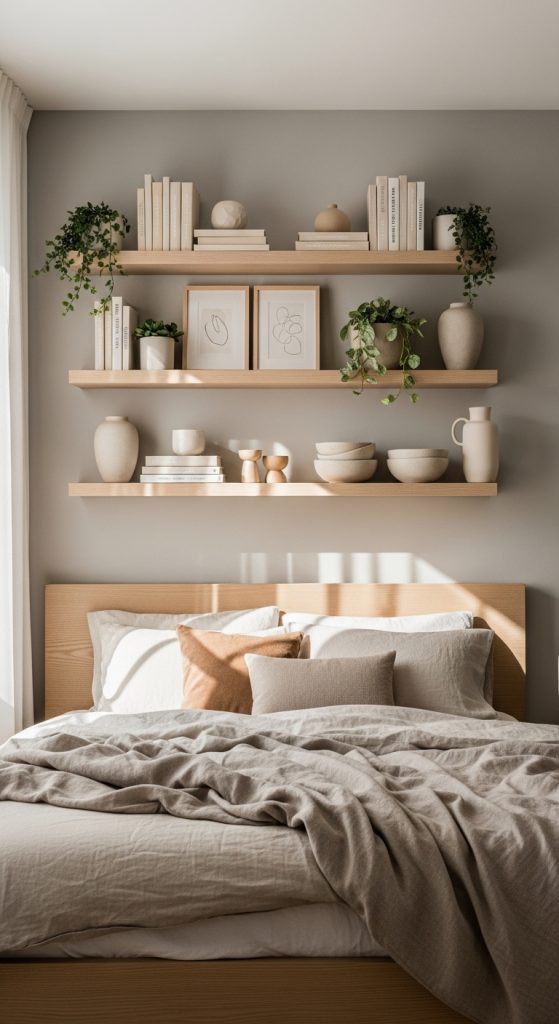
Floating shelves provide vertical storage without cluttering the floor. They display books, plants, and décor while adding architectural interest.
How to Install Step by Step
Mark shelf height evenly. Use anchors for stability. Install brackets securely. Style with balanced items — avoid overcrowding.
Materials Needed
- Floating shelves
- Wall anchors
- Drill
- Level
7. Refresh Walls with Art Gallery Styling

A curated gallery wall adds personality and fills empty space. Consistent frames create cohesion.
How to Create Step by Step
Lay frames on the floor first. Arrange until balanced. Transfer spacing to the wall using paper templates. Hang evenly.
Materials Needed
- Frames
- Artwork or prints
- Nails or hooks
- Level
8. Introduce Indoor Plants
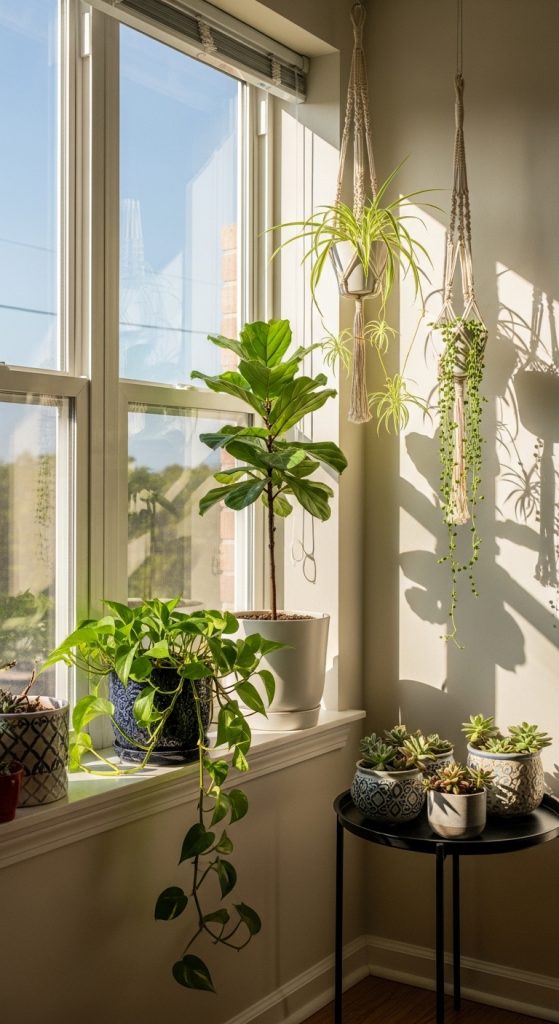
Plants bring life and freshness. They improve air quality and soften décor.
How to Style Plants Step by Step
Choose low-maintenance plants. Place near natural light. Vary heights for dimension.
Materials Needed
- Indoor plants
- Planters
- Watering can
9. Upgrade Curtains for Height and Drama
High-hung curtains make ceilings appear taller and windows larger.

How to Hang Step by Step
Install curtain rods near the ceiling. Use long panels that touch the floor.
Materials Needed
- Curtain rod
- Curtains
- Wall anchors
10. Create a Minimalist Nightstand Setup
A clutter-free nightstand improves calmness and function.
How to Style Step by Step

Keep essentials only: lamp, book, small tray. Add one decorative accent.
Materials Needed
- Nightstand tray
- Lamp
- Small décor item
11. Design a Calming Color Palette Reset
A full color reset is one of the most transformative ways to redecorate a bedroom. Color affects mood, perception of space, and emotional comfort. Many bedrooms feel chaotic simply because too many unrelated tones compete for attention. A calming palette simplifies the visual environment and creates harmony. Think of this idea as editing your room rather than adding more to it. The goal is to establish 2–3 main colors and repeat them intentionally across bedding, walls, décor, and textiles.
Soft neutrals, muted greens, dusty blues, warm beiges, and creamy whites are ideal for restful spaces. A consistent palette helps your eye relax, making the bedroom feel larger and more cohesive. This approach is beginner-friendly because you can refresh gradually — repaint one wall, swap pillow covers, or change curtains without replacing everything at once. The palette becomes your guiding framework for future purchases.

How to Reset Your Color Palette Step by Step
Start by identifying colors already in the room. Remove items that clash. Choose a base color (walls or bedding), a secondary tone (textiles), and an accent color (decor). Replace mismatched items with palette-friendly alternatives. Repeat colors in small details to reinforce harmony. Avoid introducing random shades outside your chosen scheme.
Materials Needed
- Paint or wall touch-up supplies
- New pillow covers
- Throw blanket
- Coordinated décor accents
- Curtains or bedding
12. Add a Reading Nook Corner
A reading nook transforms unused bedroom space into a functional retreat. It adds personality and encourages relaxation. Even small rooms can accommodate a cozy corner with the right scale of furniture. A nook signals intentional design — it turns empty square footage into an experience.
The key elements are comfort, lighting, and softness. A small chair, floor lamp, and layered textiles create a mini sanctuary inside your bedroom. This idea works especially well near windows, where natural light enhances the atmosphere. A reading nook doesn’t need to be elaborate; simplicity makes it more inviting.
How to Create a Reading Nook Step by Step
Choose a quiet corner with good lighting. Place a compact chair or floor cushion. Add a soft throw and pillow. Position a lamp for focused light. Include a small side table or crate for books. Keep styling minimal to preserve calmness.
Materials Needed

- Accent chair or cushion
- Throw blanket
- Floor lamp
- Small side table
- Decorative pillow
13. Update Hardware and Small Fixtures
Tiny details can modernize a bedroom instantly. Swapping outdated hardware — drawer pulls, lamp bases, curtain rods, or knobs — refreshes the room without major cost. Hardware acts like jewelry for furniture. Clean lines, matte finishes, or brushed metals create a polished aesthetic.
This idea is perfect for renters or beginners who want visible improvement without construction. Coordinated finishes across the room create cohesion. Even changing lampshades can elevate the space dramatically.
How to Upgrade Fixtures Step by Step
Identify mismatched finishes. Choose one metal tone to repeat. Remove old hardware with a screwdriver. Install new pieces evenly. Replace lampshades or curtain rods to match. Step back and check visual consistency.
Materials Needed
- Replacement drawer pulls
- Screwdriver
- Curtain rod
- Lampshade
- Matching hardware set
14. Introduce Texture Through Textiles

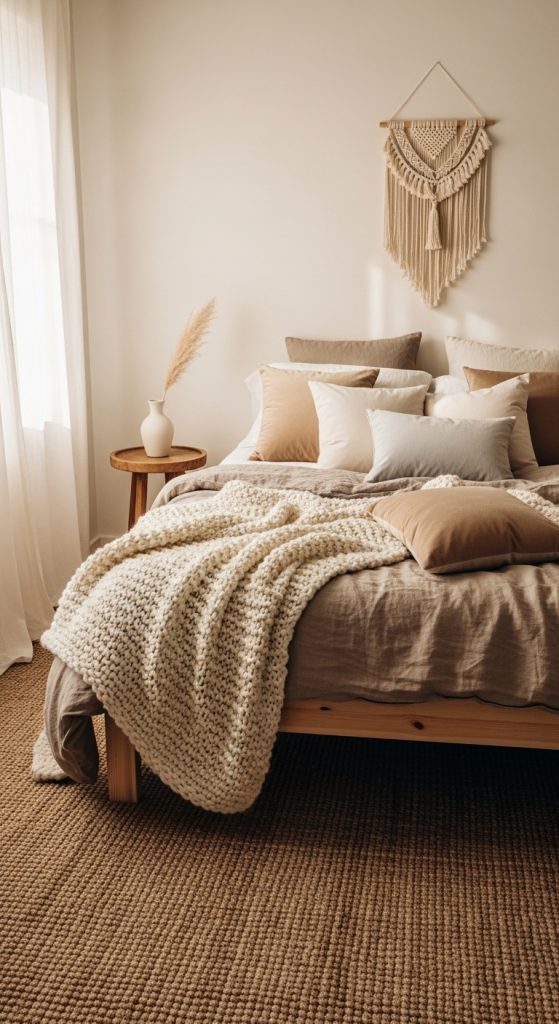
Texture adds depth without clutter. Bedrooms feel richer when different materials interact — linen, cotton, wool, velvet, knit, or woven fibers. This idea focuses on tactile layering rather than color changes. A textured bedroom feels warm and intentionally styled.
You can achieve this by mixing throws, cushions, rugs, and curtains. The goal is contrast: smooth against soft, thick against light. Texture photographs beautifully, which is why Pinterest bedrooms often emphasize fabric layering.
How to Add Texture Step by Step
Choose a base fabric (like cotton bedding). Add a chunky knit throw. Introduce velvet or woven pillows. Layer a textured rug. Keep colors cohesive so texture becomes the highlight. Spread textures evenly around the room.
Materials Needed
- Knit throw blanket
- Textured pillows
- Area rug
- Fabric curtains
- Bedding set
15. Create Symmetry Around the Bed
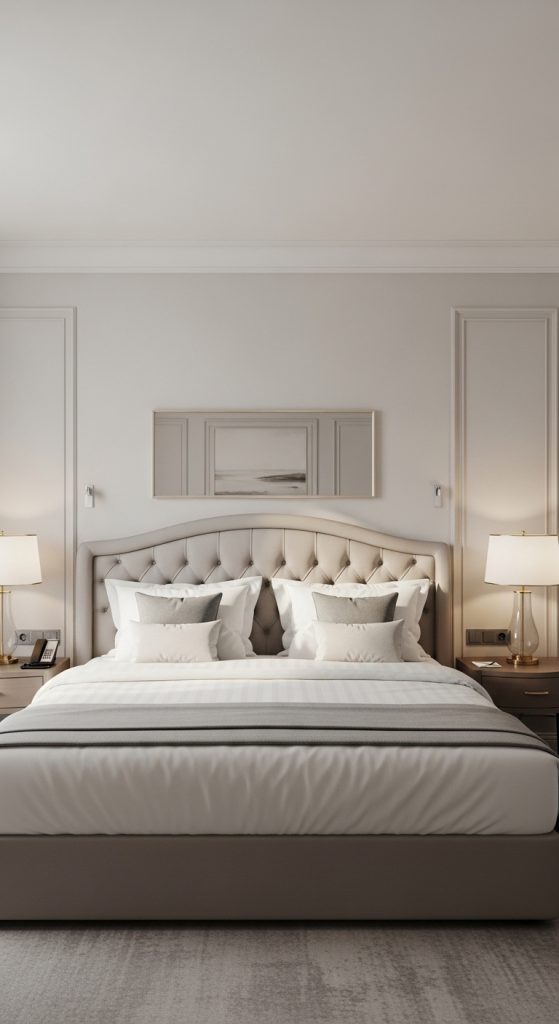
Symmetry brings visual calm. Balanced bedside tables, lamps, and décor create a hotel-like aesthetic. Even if furniture isn’t identical, visual weight should feel equal on both sides. Symmetry anchors the bed and makes the room feel intentional.
This design trick is powerful because humans naturally respond to balance. A symmetrical setup reduces visual noise and makes styling easier.
How to Build Symmetry Step by Step
Place matching nightstands on both sides. Add equal-height lamps. Center the bed against the wall. Hang art evenly above. Keep accessories mirrored in scale. Avoid clutter that disrupts balance.
Materials Needed
- Two nightstands
- Matching lamps
- Wall art
- Decorative trays
16. Add a Soft Neutral Headboard Upgrade
A headboard defines the sleeping area and elevates the room instantly. Upholstered neutral headboards feel luxurious and soften the visual lines of the bed. If replacing the frame isn’t possible, a DIY headboard panel can achieve the same effect.

Neutral tones blend easily with future décor changes, making this a smart long-term investment.
How to Upgrade the Headboard Step by Step
Measure bed width. Choose a fabric that complements the palette. Install a purchased headboard or mount a DIY panel. Center carefully. Style bedding to highlight the headboard shape.
Materials Needed
- Upholstered headboard or panel
- Mounting brackets
- Measuring tape
- Fabric (for DIY)
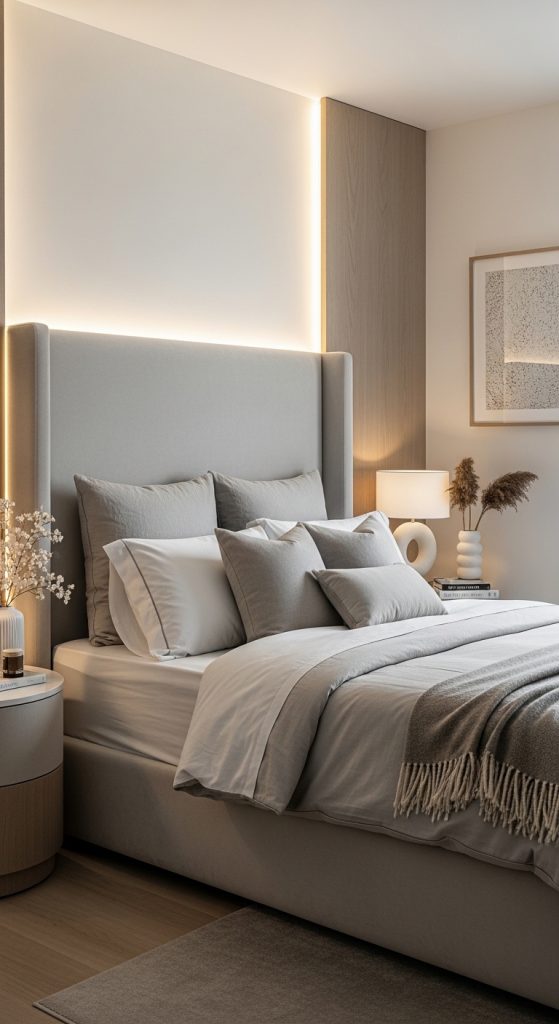
17. Use Mirrors to Expand Space
Mirrors reflect light and make bedrooms appear larger. They also add elegance and brightness. A large floor mirror or wall-mounted piece doubles visual depth and enhances natural light.
Mirrors are especially effective in small or dim rooms. Placement matters — reflect windows or lamps to amplify brightness.
How to Place Mirrors Step by Step
Choose a mirror proportional to the wall. Position across from a light source. Secure safely. Keep surrounding décor minimal so the mirror remains the focal point.
Materials Needed
- Full-length mirror
- Wall anchors
- Mounting hardware
18. Declutter with Hidden Storage Styling
Clutter disrupts calm. Hidden storage solutions keep essentials accessible while maintaining a clean aesthetic. Storage benches, under-bed bins, and decorative baskets combine function with style.
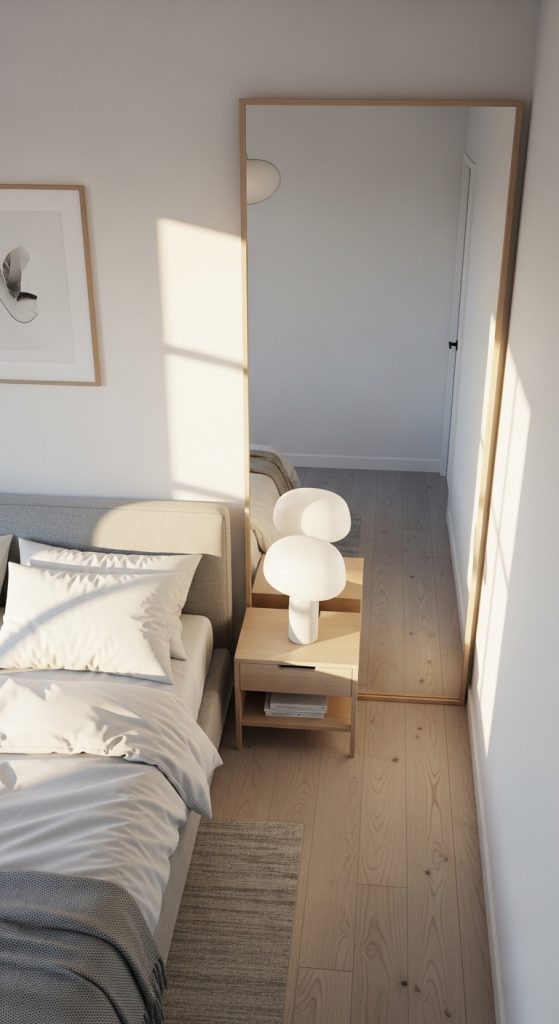
A redecorated bedroom should feel breathable. Smart storage ensures surfaces stay clear.
How to Add Hidden Storage Step by Step
Sort items into keep/donate/store. Use under-bed bins for seasonal items. Add a storage bench at the foot of the bed. Use baskets for soft items. Label discreetly for easy access.
Materials Needed
- Under-bed storage bins
- Storage bench
- Decorative baskets
- Labels
19. Add Scent and Sensory Elements
Redecoration isn’t only visual — scent shapes atmosphere. Candles, diffusers, and linen sprays create a calming sensory layer. A bedroom that smells inviting feels instantly more luxurious.
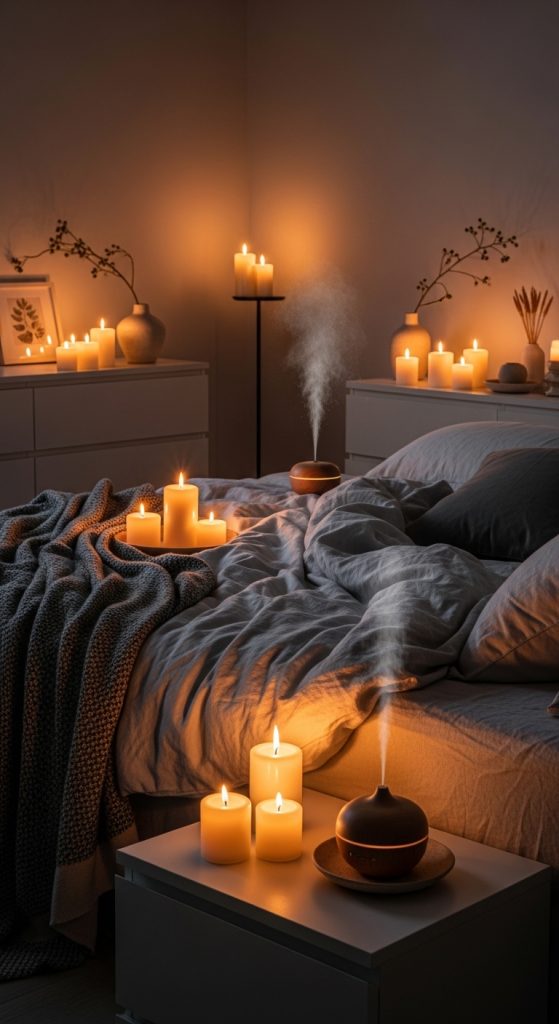
Choose relaxing fragrances like lavender, sandalwood, or vanilla. Consistency matters; repeat the same scent family for cohesion.
How to Add Sensory Elements Step by Step
Select one signature scent. Place candles safely on trays. Use a diffuser near the bed. Spray linens lightly. Refresh weekly.
Materials Needed
- Candle or diffuser
- Essential oils
- Decorative tray
- Linen spray
20. Style the Foot of the Bed
The foot of the bed is often overlooked but offers prime styling opportunity. A bench, folded throw, or decorative trunk adds structure and polish. This area visually completes the bed arrangement.

Styling the foot balances the headboard and grounds the room. It’s a finishing touch that makes the bedroom look professionally styled.
How to Style Step by Step
Choose a bench or trunk proportional to the bed. Place centered. Fold a throw neatly across. Add a small decorative item if space allows. Keep the area tidy.
Materials Needed
- Bed bench or trunk
- Throw blanket
- Decorative accent