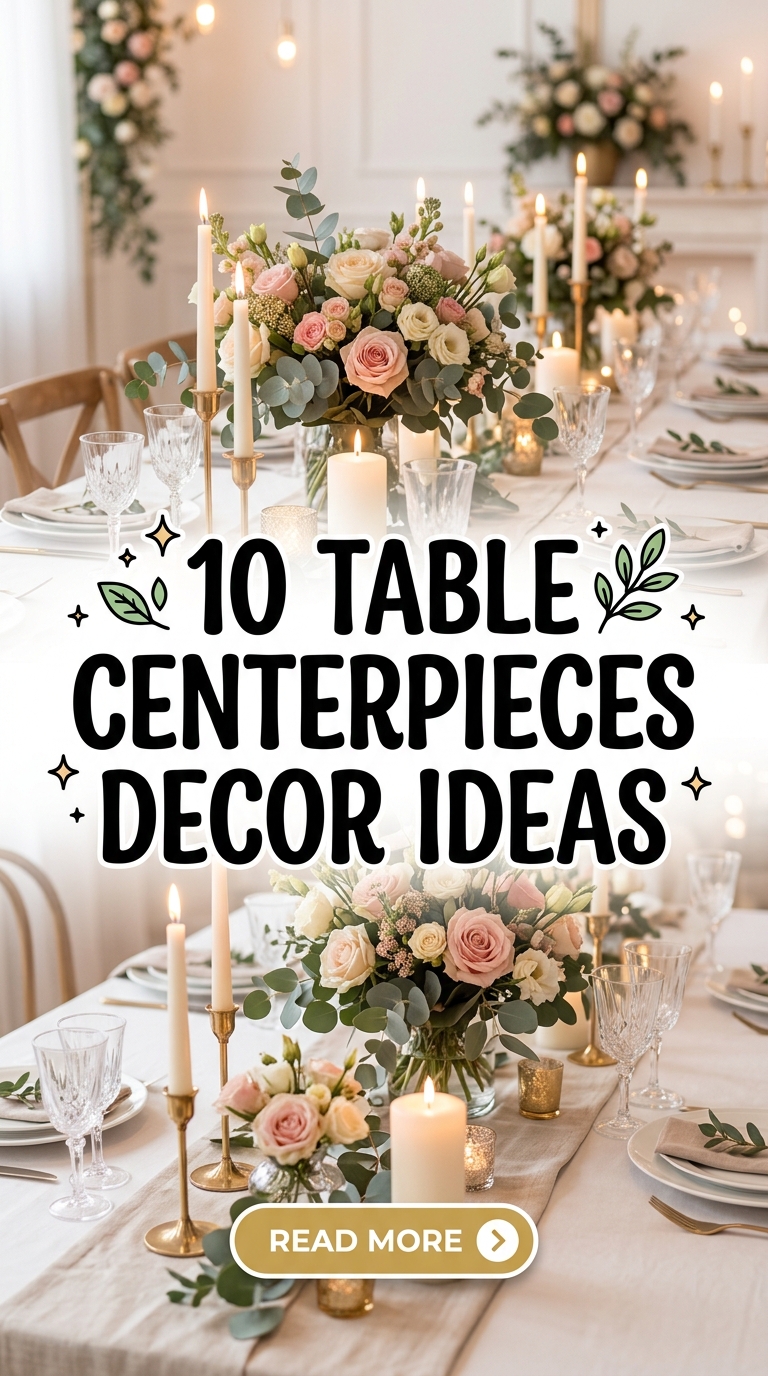
10 Table Centerpieces Decor Ideas

Table centerpieces are a foundational element in modern home decor, especially within Pinterest ideas where visual balance and intentional styling define the overall aesthetic of a space. A well-designed centerpiece acts as a focal point that connects furniture, color schemes, and decorative accents into a cohesive arrangement. This article presents ten practical and creative ideas for table centerpieces that can be applied to dining tables, coffee tables, or console surfaces. Readers will learn how to plan, assemble, and style centerpieces using accessible materials and clear step-by-step methods. Each idea focuses on combining functionality with visual appeal, ensuring that the final result enhances the space without creating clutter. These concepts are useful because they provide adaptable solutions for everyday decoration as well as special occasions. The approaches outlined here are beginner friendly and align with modern design principles, making them suitable for a wide range of interior styles. By following this guide, readers can create structured and aesthetically balanced centerpieces using simple DIY techniques and organized planning.
Why This Idea Is Trending or Useful
Table centerpiece decor ideas continue to trend because they offer a simple way to refresh a space without requiring major changes. In Pinterest inspiration, there is a strong focus on creating visually appealing yet functional environments, and centerpieces play a key role in achieving that balance. They provide practical value by organizing decorative elements into a defined area, reducing visual clutter while enhancing the table’s appearance. From a design perspective, centerpieces support modern design and minimalist style trends by adding structure without overwhelming the space. The DIY appeal is significant, as most centerpieces can be created using readily available materials such as glass containers, candles, and natural elements. This makes them accessible to beginners and suitable as an easy project. Additionally, centerpieces are flexible and can be updated based on seasons, events, or personal preferences. This adaptability ensures they remain relevant and useful in maintaining a fresh and organized home decor setup.
Materials and Preparation
Preparing to create a table centerpiece involves selecting appropriate materials and organizing the workspace effectively. Common materials include trays, vases, candles, greenery, decorative bowls, and fabric runners. Additional items such as stones, beads, or small ornaments can be used to add texture and variation. Basic tools may include scissors, measuring tape, and adhesive materials for minor adjustments. Preparation begins by clearing the table surface and assessing its size and shape to determine the appropriate scale of the centerpiece. Planning is essential to ensure that the arrangement complements the surrounding decor, including color palette and lighting conditions. It is helpful to gather all materials in advance and experiment with different layouts before final placement. This step-by-step preparation process ensures a balanced and cohesive result. Proper organization also simplifies adjustments and allows for easy updates, making the project efficient and beginner friendly.
Idea 1: Neutral Tray-Based Centerpiece
How to Create

A neutral tray-based centerpiece provides a structured foundation for organizing decorative elements in a clean and balanced way. This concept focuses on grouping items within a defined boundary, which prevents the table from appearing cluttered. The neutral color palette ensures compatibility with various interior styles, including minimalist and modern design. Common elements include a candle, a small vase, and a decorative object, arranged with equal spacing to maintain visual harmony. The tray acts as both a functional and aesthetic component, helping to unify the arrangement. This approach is widely used in Pinterest ideas because it offers a simple yet effective way to enhance a table without requiring complex design skills.
To create this centerpiece, start by selecting a tray that fits the table proportion. Place a medium-sized candle at the center, then add a small vase with greenery or flowers. Include one additional decorative item to complete the arrangement. Adjust spacing to ensure balance and avoid overcrowding. This step-by-step method allows flexibility while maintaining structure. The result is a clean, organized centerpiece that is easy to assemble and suitable for everyday use.
Idea 2: Greenery and Natural Elements Arrangement
How to Create

A greenery centerpiece uses natural elements to introduce texture and freshness into the space. This design emphasizes organic shapes and natural tones, making it suitable for a wide range of home decor styles. The arrangement typically includes leaves, branches, or small plants placed in a low container to maintain visibility across the table. This concept aligns with trending ideas that focus on incorporating nature into interior design. It provides a calming effect while remaining visually engaging and easy to maintain.
To execute this idea, gather greenery and arrange it evenly in a shallow container. Ensure the height remains low to avoid obstructing sightlines. Adjust the placement of each element to create a balanced composition. This process is simple and beginner friendly, requiring minimal materials and preparation. The final result is a natural and cohesive centerpiece that enhances the table without overwhelming it.
Idea 3: Candle Cluster Display

How to Create
A candle cluster centerpiece creates a warm and inviting atmosphere by combining multiple light sources. This concept involves grouping candles of different heights to add depth and dimension. The arrangement focuses on repetition and variation, ensuring a structured yet dynamic appearance. This style is particularly effective for evening settings and formal occasions, where lighting plays a significant role in creating ambiance.
To create this arrangement, select candles in varying sizes and place them in a cluster at the center of the table. Use a tray or base to keep the setup organized. Maintain equal spacing between candles to prevent overcrowding. This step-by-step approach results in a visually appealing centerpiece that enhances the overall atmosphere while remaining simple to assemble.
Idea 4: Decorative Bowl with Layered Fillers
How to Create

A decorative bowl centerpiece offers flexibility by allowing different materials to be layered داخل a single container. This concept focuses on combining textures such as stones, beads, or seasonal items to create visual interest. The bowl serves as a focal point while keeping all elements contained and organized. This approach is adaptable and can be updated easily to reflect changing themes or preferences.
To create this centerpiece, select a bowl that complements the table and fill it with chosen materials. Arrange the contents evenly to maintain balance. Adjust colors and textures to match the surrounding decor. This method provides a structured yet flexible solution for table decoration.
Idea 5: Classic Floral Vase Centerpiece
How to Create

A floral vase centerpiece provides a timeless and structured design that works in both casual and formal settings. This idea focuses on arranging flowers in a vase to create a balanced composition. The height and color of the flowers should complement the table and surrounding decor, ensuring harmony within the space.
To execute this idea, select flowers and arrange them evenly in a vase. Trim stems to achieve the desired height and ensure the arrangement remains proportional. Place the vase at the center of the table and adjust positioning for symmetry. This step-by-step method results in a polished and visually appealing centerpiece.
Idea 6: Fabric Runner with Accents
How to Create
A fabric runner centerpiece uses a textile base to anchor decorative elements. This concept emphasizes layering and texture, creating a cohesive visual flow along the table. The runner defines the centerpiece area and provides a foundation for additional items such as candles or small vases.
To create this arrangement, place a runner along the table length and add decorative elements evenly spaced across it. Ensure the items align with the table’s center for balance. This approach is simple and adaptable, making it suitable for various styles and occasions.
Idea 7: Glass Container DIY Setup
How to Create
Glass containers offer a versatile and accessible option for DIY centerpieces. This idea focuses on using jars or bowls to hold decorative materials such as lights, stones, or flowers. The transparency of the glass allows the contents to become part of the visual design, adding depth and texture.
To create this centerpiece, prepare the containers and fill them with selected materials. Arrange the containers in a group at the center of the table. Adjust spacing to ensure balance and cohesion. This method is cost-effective and beginner friendly.
Idea 8: Symmetrical Dual Arrangement
How to Create
A symmetrical centerpiece uses two identical elements to create a balanced and structured design. This concept focuses on placing matching items on either side of the table’s center, creating visual harmony. This approach is effective in modern and minimalist interiors.
To execute this idea, position two identical vases or decorative objects evenly across the table. Ensure alignment and consistency in height and content. This step-by-step method results in a clean and organized appearance.
Idea 9: Rustic Wooden Base Display
How to Create
A rustic centerpiece incorporates wooden elements to add warmth and texture. This concept uses a wooden base as the foundation for additional decorative items such as candles or greenery. The natural material creates a cohesive and grounded aesthetic.
To create this arrangement, place a wooden base at the center of the table and add complementary items evenly. Adjust placement to maintain balance. This approach provides a natural and structured centerpiece.
Idea 10: Mixed Texture Layered Design
How to Create
A mixed texture centerpiece combines different materials to create a dynamic visual effect. This concept focuses on layering textures such as glass, metal, and fabric to add depth and interest. The arrangement should remain balanced to avoid overwhelming the table.
To execute this idea, select a variety of materials and arrange them in a cohesive composition. Ensure that no single element dominates the design. This step-by-step process results in a visually engaging and well-balanced centerpiece.
Common Beginner Mistakes and How to Avoid Them
A common mistake when creating table centerpieces is overcrowding the arrangement with too many elements. This disrupts balance and reduces visual clarity. Another issue is incorrect scaling, where the centerpiece does not match the size of the table. To avoid these problems, focus on simplicity and proportion. Select a limited number of items and arrange them with intentional spacing. Planning the layout before final placement ensures a cohesive and functional result.
Practical Tips for Better Results
For improved results, maintain consistency in color and material selection. Use layering techniques to add depth without cluttering the design. Test different arrangements before finalizing the centerpiece. Keeping the design simple ensures it remains functional and visually appealing.
Styling, Presentation, or Organization Ideas
Styling involves arranging elements in a way that enhances the table’s appearance. Use trays or runners to define the centerpiece area. Keep surrounding areas clear to maintain focus. Organized layouts improve both functionality and aesthetic appeal.
Budget or Time Planning
Budget-friendly centerpieces can be created using everyday materials. Plan the project in advance to reduce unnecessary expenses. Reusing items allows flexibility while maintaining efficiency. This approach ensures the project remains practical and accessible.
Creative Expansion and Advanced Inspiration
Advanced ideas include combining multiple centerpiece styles or experimenting with new materials. Seasonal updates and creative variations allow continuous refreshment of the space. This approach supports long-term use and adaptability in home decor.