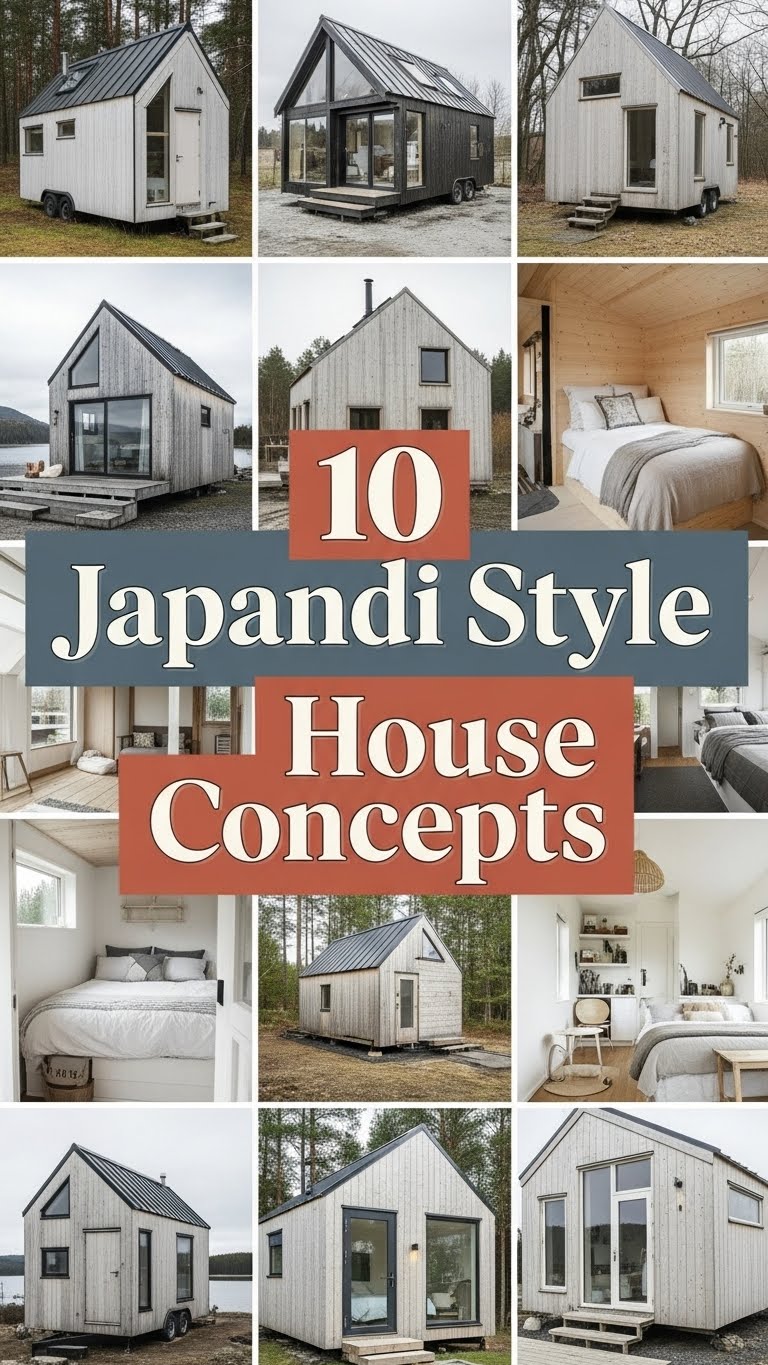
Japandi style has quietly become one of the most influential interior and architectural movements of recent years. It blends the warmth and craftsmanship of Scandinavian design with the calm, intentional minimalism of Japanese aesthetics. When applied to tiny houses, Japandi becomes more than a style choice; it becomes a philosophy of living well with less.
Tiny houses already demand thoughtful design. Every square foot must serve a purpose. Japandi elevates this necessity into an art form, emphasizing simplicity, natural materials, balance, and mindfulness. Instead of feeling restrictive, Japandi tiny homes feel spacious, grounded, and deeply comfortable.

This article explores ten distinct Japandi style tiny house concepts, each offering a unique interpretation of this harmonious design language. These concepts are ideal for Pinterest readers seeking inspiration for architecture, interiors, and lifestyle-driven design.
1. The Earth-Toned Minimal Retreat
This Japandi tiny house concept is rooted in nature-inspired neutrality. The palette revolves around warm beige, soft taupe, muted clay, and gentle greige tones. These colors are not chosen for decoration but for emotional impact, creating a sense of calm and groundedness.

The structure itself is simple, often rectangular, with clean rooflines and minimal ornamentation. Exterior cladding may include untreated wood or light-toned plaster that weathers gracefully over time. Inside, walls are kept uncluttered, allowing negative space to become part of the design.
Furniture is low-profile and purposeful. A simple wooden platform bed, a compact dining table with rounded edges, and built-in seating reduce visual noise. Textures carry the design instead of patterns, with linen curtains, woven floor mats, and matte-finished wood surfaces.
This concept suits individuals who value quiet living and want their home to feel like a retreat from overstimulation. It embodies Japandi’s core principle: serenity through simplicity.

2. The Light-Filled Scandinavian-Japanese Hybrid
This concept leans more heavily into Scandinavian brightness while maintaining Japanese restraint. Large windows, often floor-to-ceiling, are a defining feature. They invite natural light to flood the interior, making the tiny house feel open and expansive.

White or off-white walls form the base, balanced by pale wood floors and ceilings. Unlike traditional Scandinavian interiors that may add playful accents, this Japandi version remains subdued. Decoration is minimal, with carefully selected ceramics, a single wall scroll, or a handcrafted vase.
Storage is integrated seamlessly into walls and furniture. Cabinets have flat fronts without handles, maintaining visual continuity. The kitchen often features open shelving with a few functional items displayed intentionally.
This tiny house concept is ideal for cold or temperate climates where light is precious. It celebrates clarity, cleanliness, and the beauty of simplicity without feeling sterile.

3. The Zen-Inspired Micro Pavilion
This concept draws heavily from traditional Japanese architecture and philosophy. The layout is often open-plan, with sliding partitions instead of permanent walls. Shoji-style screens or modern interpretations using frosted glass allow flexibility without sacrificing privacy.

The floor plan prioritizes flow rather than fixed zones. A central living space transforms throughout the day, serving as a lounge, dining area, and sleeping space. Furniture is minimal and often foldable or stackable.
Materials are natural and honest. Bamboo, solid wood, stone, and paper-based textures dominate. The color palette remains subdued, focusing on soft browns, charcoal, and natural wood hues.
This Japandi tiny house concept emphasizes mindfulness and intentional living. It encourages slower routines, daily rituals, and a deep connection between space and occupant.

4. The Dark Wood Contemporary Sanctuary
While Japandi is often associated with light tones, darker palettes can be equally powerful. This concept uses rich wood finishes such as walnut or stained oak to create a cocoon-like atmosphere.

Walls may feature dark wood paneling balanced with light stone or plaster surfaces. Lighting plays a crucial role, using warm, indirect sources to soften the darker elements. Recessed lighting, paper lantern-inspired fixtures, and concealed LED strips enhance depth and mood.
Furniture remains simple in form but substantial in presence. A solid wood dining table or bench becomes a focal point rather than an accessory. Decorative elements are sparse, allowing material quality to speak for itself.
This concept is ideal for those who want their tiny house to feel intimate, sophisticated, and deeply comforting without appearing heavy or overcrowded.

5. The Nature-Integrated Tiny Home
This Japandi concept is designed to blur the line between indoors and outdoors. Large openings, sliding glass doors, and covered terraces extend the living space beyond the walls of the tiny house.

Interior materials echo the surrounding environment. If the house is placed in a forest, wood tones are deeper and more organic. In coastal settings, lighter woods and stone textures dominate. Plants are used sparingly but intentionally, often focusing on a few sculptural indoor trees or bonsai-style greenery.
The layout prioritizes views and natural airflow. Windows are placed strategically rather than symmetrically, framing specific scenes like a tree canopy or horizon line.
This concept reflects Japandi’s respect for nature and the belief that a home should coexist with its environment rather than dominate it.

6. The Functional Artisan Cabin
This concept highlights craftsmanship and hand-made details. While still minimalist, it celebrates imperfections and tactile qualities. Joinery is visible, wood grain is left expressive, and handmade tiles or ceramics add subtle character.

The tiny house layout is highly efficient, with every element designed for daily use. Built-in benches double as storage, staircases incorporate shelving, and kitchen counters are compact but thoughtfully arranged.
Colors remain neutral, but textures add warmth and depth. Linen upholstery, wool throws, and handwoven rugs soften the space without cluttering it.
This Japandi tiny house concept appeals to those who value quality over quantity and appreciate the story behind each object in their home.

7. The Monochrome Balance House
This concept explores a restrained monochrome palette, often built around shades of white, gray, and black. The key to success lies in balance and proportion rather than contrast.

Walls are typically light, while flooring or cabinetry introduces darker tones. Black metal accents may appear in lighting fixtures or window frames, adding subtle structure without dominating the space.
Furniture forms are simple and geometric. Rounded edges soften the minimalism, preventing the space from feeling cold. Textiles remain neutral, focusing on texture rather than color.
This Japandi tiny house concept demonstrates that minimalism does not have to feel empty. Through careful balance, even a limited palette can create warmth and elegance.

8. The Lofted Serenity Home
Lofted layouts are common in tiny houses, but Japandi design refines them with intention. Instead of cramming extra features, this concept prioritizes breathing room and visual flow.

The loft sleeping area is kept minimal, often featuring just a mattress platform and soft lighting. Railings are replaced with low partitions or open edges to maintain visual continuity.
Below, the living space remains uncluttered. Storage is concealed, and furniture is scaled appropriately to avoid overcrowding. Vertical lines in wood paneling or shelving emphasize height without distraction.
This concept works well for those who want functionality without sacrificing calmness or aesthetic clarity.

9. The Sustainable Mindful Dwelling
Sustainability is a natural extension of Japandi philosophy. This tiny house concept focuses on eco-conscious materials and energy efficiency while maintaining refined design.
Reclaimed wood, natural insulation, and non-toxic finishes are prioritized. Solar panels, rainwater collection, and passive ventilation are integrated discreetly rather than showcased.
The interior design reflects restraint and purpose. Objects are chosen for longevity rather than trend appeal. Furniture is often custom-built to reduce waste and ensure perfect fit.
This Japandi tiny house concept aligns deeply with intentional living, encouraging occupants to consume less and live more thoughtfully.

10. The Timeless Calm Residence
The final concept focuses on longevity and emotional resonance. Rather than following trends, this Japandi tiny house is designed to age gracefully.

Materials are chosen for durability and patina. Wood darkens over time, fabrics soften, and surfaces gain character. The design avoids overly specific styles, ensuring relevance for decades rather than seasons.
The layout supports daily rituals, such as morning tea by a window, evening reading nooks, or quiet meditation spaces. The home feels personal without being personalized through excess decoration.
This concept embodies the heart of Japandi: a life of balance, calm, and enduring beauty.

Final Thoughts
Japandi style and tiny house living are a natural match. Both prioritize intentionality, simplicity, and respect for space. Together, they create homes that feel peaceful, functional, and deeply human.

These ten Japandi tiny house concepts demonstrate that small spaces do not limit creativity. Instead, they refine it. By focusing on balance, natural materials, and thoughtful design, Japandi tiny homes offer not just shelter, but a way of living with clarity and purpose.
For Pinterest readers seeking timeless inspiration, Japandi tiny houses represent more than an aesthetic. They represent a quieter, more meaningful way to live.