In Animal Crossing: New Horizons, Nook’s Cranny is more than just a shop. It is a social anchor, a visual landmark, and often one of the first permanent buildings that defines the character of an island. For players drawn to fairycore aesthetics, Nook’s Cranny offers a unique opportunity to blend functionality with whimsy. Fairycore is rooted in softness, nature, fantasy, and storybook charm, and when applied thoughtfully, it can transform the shop into a magical destination rather than a purely commercial space.
This article explores ten detailed fairycore Nook’s Cranny design ideas. Each concept focuses on atmosphere, landscaping, placement, and storytelling, allowing the shop to feel organically woven into a dreamlike environment. These ideas are adaptable, meaning they can be scaled for both small and large islands while remaining cohesive with a fairycore theme.
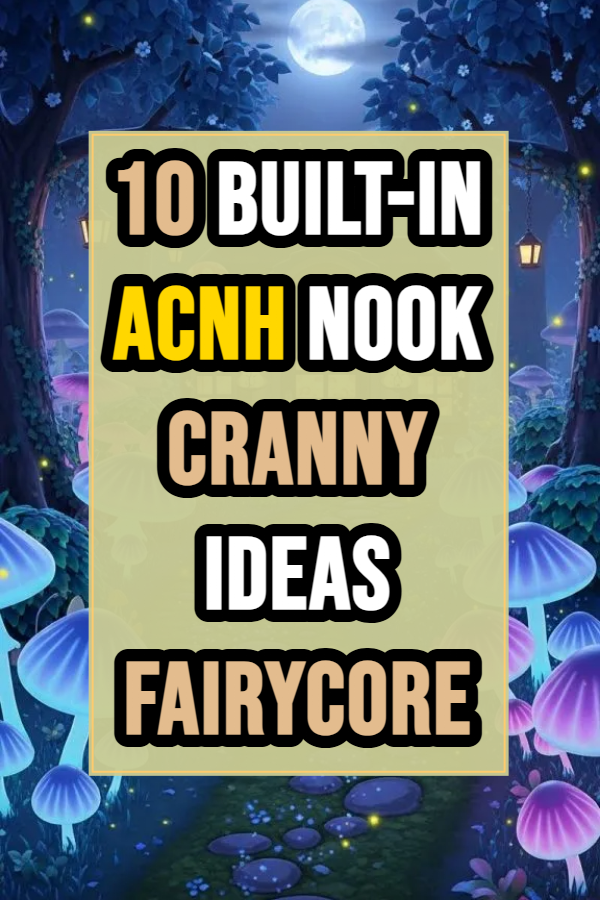
1. Enchanted Forest Clearing Nook’s Cranny
One of the most timeless fairycore concepts is placing Nook’s Cranny within a forest clearing. Instead of positioning the shop along a straight path or plaza, it is surrounded by dense trees that open slightly around the building, creating the impression that the shop was discovered rather than built.
The clearing should feel intentional but unstructured. Trees can be planted asymmetrically, with cedar and hardwood trees mixed to avoid uniformity. Mushrooms, weeds, and glowing moss can be scattered lightly to soften the ground and add texture. The idea is not to overcrowd the space but to suggest age and quiet magic.
Pathing should be minimal. Instead of a full stone or brick path, a few worn dirt tiles or custom forest paths can lead to the entrance, as though villagers have naturally walked the same route over time. The shop itself becomes a woodland trading post, a place where forest creatures gather to exchange goods. This concept works especially well for islands that prioritize natural landscapes over urban layouts.

2. Fairy Market Nook’s Cranny
In fairycore design, commerce often feels communal rather than corporate. A fairy market-inspired Nook’s Cranny reframes the shop as the heart of a small open-air trading area.

Around the building, place wooden stalls, barrels, crates, and simple furniture to suggest outdoor vendors and shared resources. Even though the stalls are decorative, they help sell the illusion that Nook’s Cranny is part of a larger market culture. Lanterns, candles, and soft lighting create a warm glow, especially during evening hours.
Flowers play a crucial role here. Use pastel-toned blooms arranged loosely, as if they grew naturally around the market rather than being planted in strict rows. The space should feel lively yet gentle, with room for villagers to wander and linger. This idea is ideal for players who want their island to feel socially active while still maintaining a fairycore softness.

3. Overgrown Cottage Shop
This idea leans heavily into the notion that Nook’s Cranny is an old cottage that has been reclaimed by nature. The focus is on overgrowth and subtle neglect, without appearing messy or abandoned.

Vines, shrubs, and tall plants can be placed close to the building to give the impression that the shop has existed for years. Trees positioned behind and to the sides of the shop help frame it and make it feel nestled into the land. Custom designs resembling ivy shadows or mossy stone can be used sparingly to enhance the illusion of age.
The surrounding area should remain quiet and intimate. Small seating areas, perhaps a single bench or log stool, encourage the feeling that this is a peaceful stop for villagers on long walks. This version of Nook’s Cranny feels less like a store and more like a fairy-tale cottage that happens to sell goods.

4. Moonlit Fairy Path Shop
Lighting is one of the most powerful tools in fairycore design, and this concept uses it as the primary storytelling element. The shop is positioned along a softly glowing path that feels magical at night and subtle during the day.

Mushroom lamps, nova lights, or lanterns can be spaced unevenly along the path, guiding players toward the shop without overwhelming the space. The key is restraint. Too much light breaks the illusion, while carefully placed glowing elements enhance it.
Surround the path with darker foliage or muted flowers so the light stands out naturally. The shop becomes a beacon rather than a focal point, suggesting that it exists to serve travelers who wander the island after sunset. This design works particularly well for players who enjoy nighttime gameplay and want their island to feel alive after dark.

5. Storybook Village Nook’s Cranny
In this interpretation, Nook’s Cranny is part of a tiny fairy village rather than a standalone structure. The scale of the surroundings is intentionally small and charming, making the shop feel like one building among many.

Dollhouses, miniature furniture, and decorative items help reinforce the idea of a village built for fairy-sized residents. Paths can be narrow, and spaces slightly compressed, giving the impression that the world is cozy and intimate.
The shop should not dominate the area. Instead, it blends into the village, serving as a background piece rather than the star. This approach is ideal for players who want their island to feel like a living storybook rather than a player-centric environment.

6. Riverside Fairy Trading Post
Water is a natural fit for fairycore aesthetics, symbolizing calm, mystery, and life. Placing Nook’s Cranny near a river or pond allows the shop to feel like a trading post where goods arrive by water.

The riverbank can be softened with reeds, flowers, and stones, avoiding harsh edges. Wooden bridges or stepping stones add charm and functionality. The shop itself feels more connected to nature, as though it depends on the surrounding landscape rather than dominating it.
This design is particularly effective when paired with gentle soundscapes, such as waterfalls or flowing rivers. It creates a sense of tranquility and makes visiting the shop feel like a peaceful ritual rather than a task.

7. Hidden Fairy Shop Behind the Woods
Some fairycore islands thrive on secrecy and discovery. In this concept, Nook’s Cranny is intentionally hidden, tucked behind dense trees or cliffs so that it is not immediately visible.

The path leading to the shop can wind gently, with subtle visual cues like flowers or mushrooms guiding the player forward. The reveal of the shop should feel rewarding, as though the player has stumbled upon something special.
This design encourages exploration and makes the shop feel like a well-kept secret among villagers. It works best for islands that value immersion and nonlinear layouts.

8. Seasonal Fairycore Nook’s Cranny
Fairycore design adapts beautifully to seasonal changes. Instead of locking Nook’s Cranny into one static look, this idea embraces transformation.

In spring, the shop might be surrounded by blossoms and fresh greenery. In summer, it becomes lush and vibrant. Autumn brings muted tones, fallen leaves, and warm lighting, while winter adds quiet, frosted charm.
The structure remains the same, but the surrounding details evolve. This approach keeps the shop feeling alive and responsive to time, reinforcing the idea that it exists as part of a living world.

9. Woodland Crossroads Shop
Positioning Nook’s Cranny at the intersection of multiple natural paths gives it narrative importance. It becomes a meeting point for villagers traveling between different parts of the island.

The crossroads should feel organic rather than symmetrical. Paths can curve slightly, and landmarks like trees or stones can mark each direction. The shop sits calmly at the center, serving everyone without demanding attention.
This design emphasizes community and balance, two core fairycore values. The shop feels essential yet humble, integrated into daily island life.

10. Fairycore Ruins-Inspired Shop
The final idea leans into fantasy and history. Here, Nook’s Cranny is framed as a surviving structure among gentle ruins, suggesting a long-forgotten fairy settlement.

Broken-looking stone paths, mossy textures, and uneven landscaping help sell the illusion. The shop becomes a preserved relic, still functioning while the world around it has slowly changed.
This concept is especially effective for players who enjoy storytelling through environment. It invites interpretation and adds depth to the island’s lore without requiring dialogue or exposition.

Conclusion
Fairycore Nook’s Cranny designs are about more than decoration. They are about intention, atmosphere, and storytelling. By considering how the shop fits into the surrounding world, players can transform a functional building into a magical landmark that enhances the entire island experience.

Whether nestled in a forest, glowing under moonlight, or hidden behind winding paths, Nook’s Cranny can become a place of wonder. With thoughtful design choices and a focus on harmony with nature, it can embody the heart of a fairycore island and elevate Animal Crossing: New Horizons into something truly enchanting.