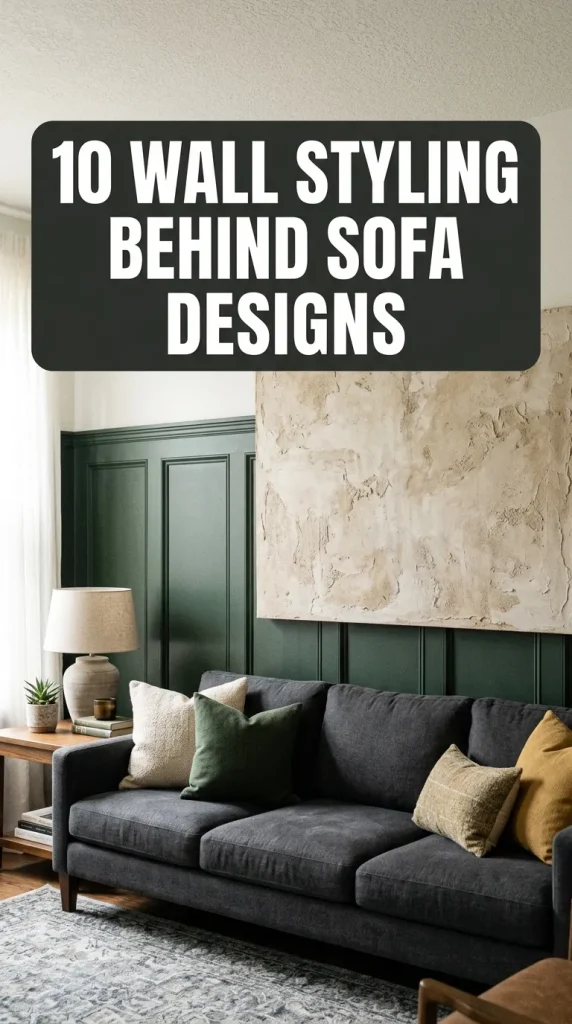
10 Wall styling behind sofa
Introduction
The wall behind your sofa is one of the most visually powerful areas in your living room, yet it’s often overlooked or decorated as an afterthought. Many people push the sofa against a wall, hang a random piece of art above it, and move on—only to feel like the space still looks unfinished. The truth is, wall styling behind the sofa can completely transform the mood, balance, and personality of your living room when done thoughtfully.
This wall acts as a backdrop for daily life. It’s what you see when you walk into the room, what appears in photos, and what subconsciously defines whether your living space feels cozy, modern, luxurious, or cluttered. The good news? Styling this wall doesn’t require a full renovation or an interior designer’s budget. With the right approach, materials, and layout, you can create a high-end look that feels intentional and timeless.
In this blog post, we’ll explore 10 wall styling ideas behind the sofa that work across different interior styles—from modern minimal to cozy contemporary. Each idea includes what materials are needed, step-by-step how-to guidance, and design tips to help you avoid common mistakes. Whether you live in a small apartment or a spacious home, these ideas are adaptable and practical, while still being Pinterest-worthy and visually striking.

1. Gallery Wall Behind the Sofa
A gallery wall is one of the most versatile and expressive ways to style the wall behind your sofa. It allows you to showcase personality, art preferences, photography, and design taste all in one cohesive display.
Materials Used

- Picture frames (wood, metal, or acrylic)
- Art prints, photography, illustrations, or typography
- Measuring tape
- Painter’s tape
- Nails or wall hooks
- Level
How to Style a Gallery Wall Behind the Sofa
Start by deciding on a cohesive theme. This could be a color palette, a frame style, or a subject matter. Consistency is key to preventing visual chaos. Choose frames that match or complement your sofa and room decor.
Lay all frames on the floor and arrange them until the composition feels balanced. Keep spacing between frames consistent—typically 2 to 3 inches. Once satisfied, mark the layout on the wall using painter’s tape. This step helps visualize the final look before committing.
Hang the center piece first, aligning it with the center of the sofa. Work outward from there, using a level to ensure straight lines. Step back frequently to assess balance.
Design Tips
- Keep the gallery wall width roughly two-thirds the width of the sofa.
- Avoid hanging too high; the bottom of the frames should sit 6–8 inches above the sofa back.
- Mix vertical and horizontal frames for interest while keeping a visual rhythm.
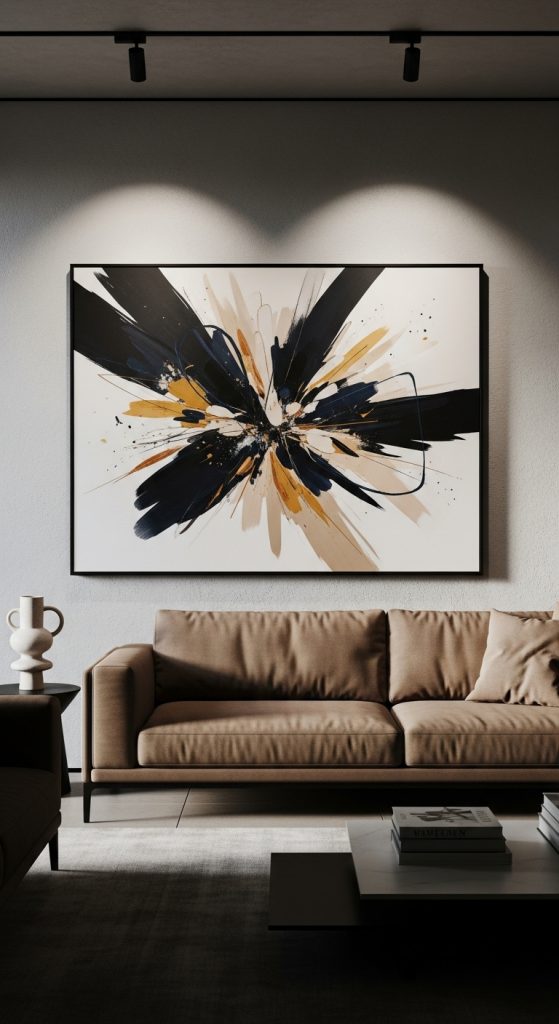
2. Oversized Statement Artwork
If you prefer a cleaner, more sophisticated look, a single oversized artwork can make a powerful statement. This approach works particularly well in modern and minimalist interiors.
Materials Used
- Large canvas or framed artwork
- Heavy-duty wall anchors (if needed)
- Measuring tape
- Level
How to Use Oversized Art Behind the Sofa
Select artwork that complements your sofa color and overall room palette. Abstract art, muted landscapes, or textured pieces are especially effective.
Measure the sofa width and choose art that spans about two-thirds to three-quarters of that width. Hang the artwork so its center aligns with eye level when seated, not standing.
Ensure proper wall support, especially for heavier pieces. Secure anchors properly to avoid wall damage.
Design Tips
- Neutral sofas pair well with bold art; colorful sofas work best with subtle art.
- Avoid tiny art—it will feel lost above a large sofa.
- Let the artwork breathe; avoid cluttering nearby walls.
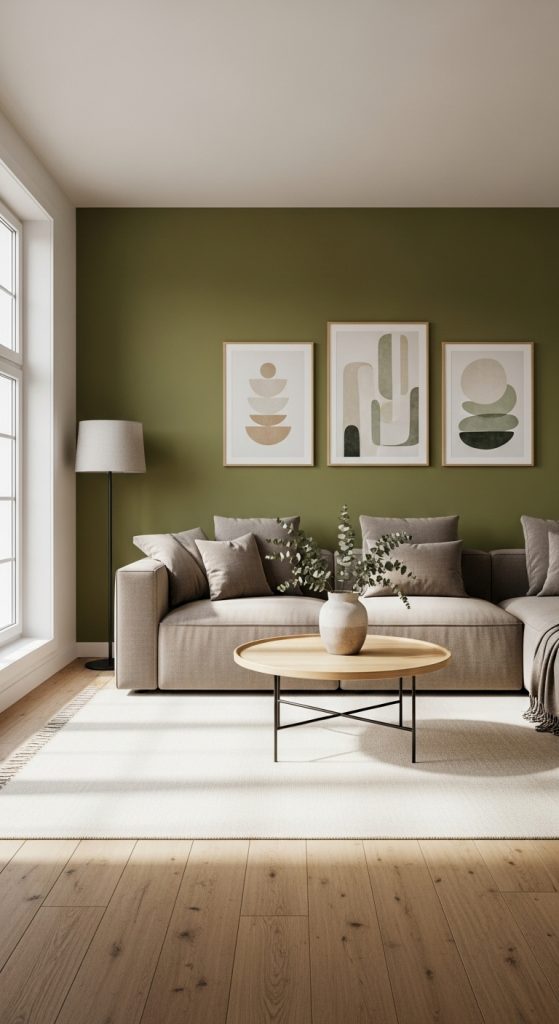
3. Accent Paint Wall Behind the Sofa
An accent wall behind the sofa can redefine the entire living room without adding physical decor. Paint is one of the most budget-friendly yet impactful tools in interior design.
Materials Used
- Interior wall paint
- Paint rollers and brushes
- Painter’s tape
- Drop cloth
- Paint tray
How to Create an Accent Wall
Choose a color that contrasts slightly with the rest of the room while still staying cohesive. Clean and prep the wall before painting. Use painter’s tape to protect edges and trim.
Apply two coats for even coverage, allowing sufficient drying time between coats. Once dry, remove tape carefully.
Design Tips
- Earthy tones like taupe, olive, or terracotta add warmth.
- Dark colors make large rooms feel intimate.
- Matte or eggshell finishes reduce glare behind sofas.
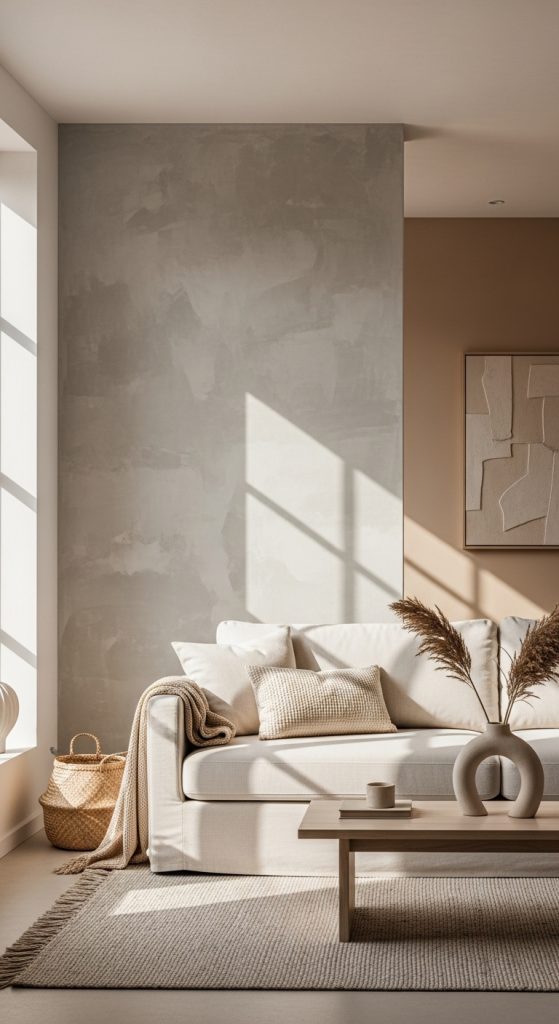
4. Limewash or Textured Paint Finish
Limewash and textured paint finishes add depth and organic movement to the wall behind the sofa, creating a soft, lived-in feel.
Materials Used
- Limewash or textured paint
- Large masonry brush
- Water bucket
- Drop cloth

How to Apply Limewash
Prep the wall thoroughly. Apply limewash in crisscross motions using a brush. Work in sections to avoid visible seams. Allow layers to dry naturally.
Design Tips
- Best suited for neutral and warm interiors.
- Looks stunning behind linen or boucle sofas.
- Avoid over-accessorizing; let texture shine.
5. Wood Slat Feature Wall
Wood slat walls bring warmth, rhythm, and architectural interest. They are especially popular in modern and Scandinavian-inspired interiors.
Materials Used
- Wooden slats or panels
- Adhesive or mounting system
- Saw (if cutting needed)
- Level
- Measuring tape
How to Install a Wood Slat Wall
Measure the wall and pre-cut slats to height. Start installation from one side, ensuring each slat is level. Maintain even spacing throughout.
Design Tips
- Vertical slats make ceilings appear taller.
- Light wood keeps the space airy; dark wood adds drama.
- Pair with neutral upholstery for balance.
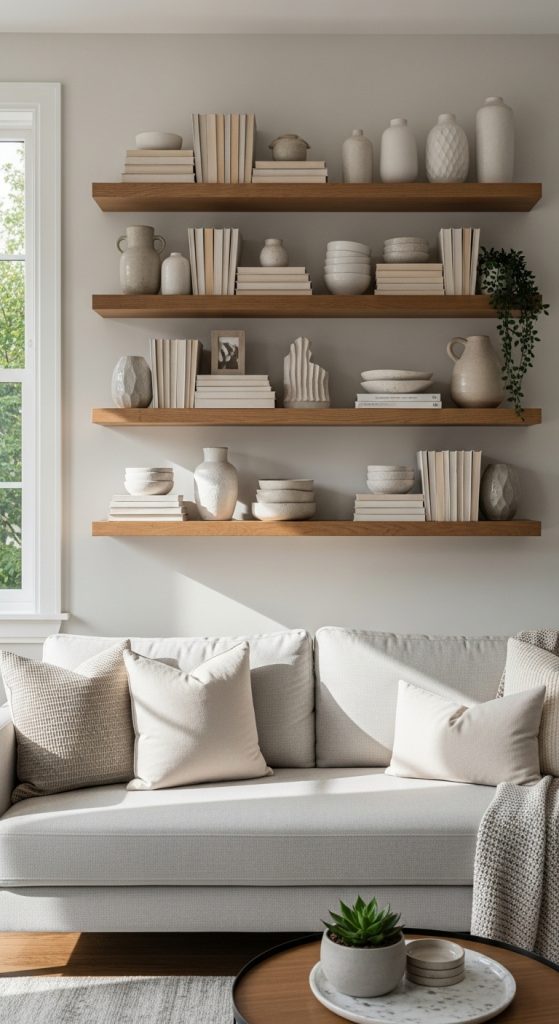
6. Floating Shelves Behind the Sofa
Floating shelves add both function and style, allowing you to display curated decor without overwhelming the space.
Materials Used
- Floating shelves
- Wall anchors
- Drill
- Level
How to Style Floating Shelves
Install shelves evenly spaced above the sofa. Style them with restraint: books, plants, ceramics, and small art objects.
Design Tips
- Stick to 2–3 shelves max.
- Leave negative space.
- Avoid overcrowding with small items.
7. Large Decorative Mirror
Mirrors behind the sofa can visually expand the room and enhance natural light.
Materials Used

- Large mirror
- Wall hooks or anchors
- Measuring tape
How to Hang a Mirror
Center the mirror above the sofa and hang it securely. Ensure it reflects light or an appealing view, not clutter.
Design Tips
- Arched mirrors soften boxy rooms.
- Thin frames feel modern and light.
- Avoid mirrors that are too small.
8. Wall Molding or Paneling
Wall molding adds elegance and depth without relying on art.
Materials Used

- MDF molding
- Adhesive or nails
- Paint
- Level
How to Install Wall Molding
Plan the layout carefully. Install molding in geometric or rectangular patterns. Paint the molding the same color as the wall for subtle sophistication.
Design Tips
- Works beautifully in neutral palettes.
- Adds architectural interest to plain walls.
- Avoid mixing with busy art.
9. Textile Wall Decor
Textiles soften the wall behind the sofa and introduce warmth, especially in minimal interiors.
Materials Used
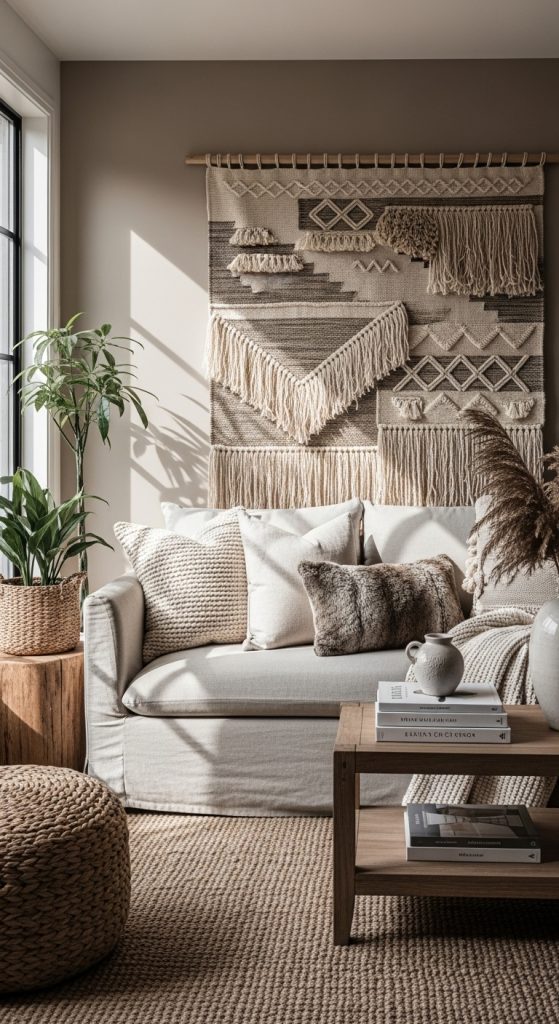
- Tapestry, fabric panel, or woven textile
- Curtain rod or hooks
How to Style Textile Wall Decor
Hang textiles centered above the sofa. Ensure fabric doesn’t overwhelm the space.
Design Tips
- Choose neutral or earthy tones.
- Natural fibers feel more timeless.
- Keep surrounding decor minimal.
10. Sculptural Wall Art
Sculptural decor adds dimension and artistry without relying on frames.
Materials Used

- Wall-mounted sculptures
- Anchors or hooks
How to Use Sculptural Art
Arrange pieces symmetrically or in organic clusters. Maintain breathing room around each piece.
Design Tips
- Works best in modern or artistic spaces.
- Stick to one material type.
- Let lighting enhance texture.
Conclusion
Styling the wall behind your sofa is about intention, proportion, and cohesion. Whether you choose a bold statement or subtle texture, the right approach can elevate your entire living room. By selecting one of these ten ideas and executing it thoughtfully, you transform not just a wall—but the way the room feels and functions every day.