
Animal Crossing: New Horizons has always been more than a life-simulation game. It is a creative playground where personal style, atmosphere, and storytelling come together. Among all the island structures, Nook’s Cranny holds a unique position. It is not just a shop; it is a daily destination, a social hub, and often the heart of an island’s economy. When designing a cottagecore island, Nook’s Cranny deserves special attention because it can visually anchor the entire theme.
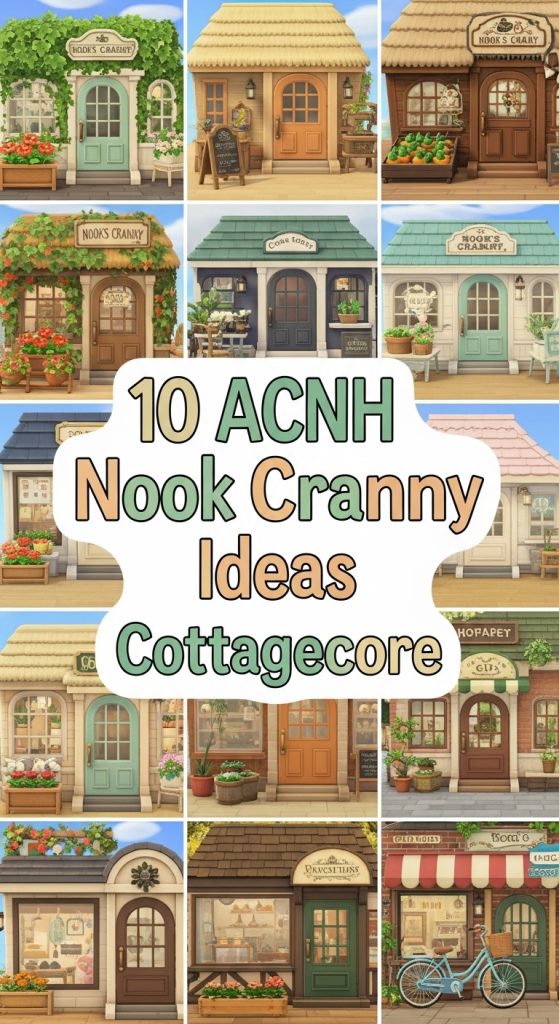
Cottagecore design in ACNH focuses on warmth, nostalgia, simplicity, and a gentle connection to nature. It is inspired by countryside living, handmade charm, and the idea of slowing down. Applying this aesthetic to Nook’s Cranny transforms the shop from a functional building into a charming village storefront that feels lived-in and loved.
This article explores ten detailed cottagecore Nook’s Cranny ideas, each designed to spark inspiration and help you create a cohesive, cozy shopping area that feels like it belongs in a pastoral storybook world.
1. Forest Market Nook’s Cranny
A forest-embedded Nook’s Cranny is one of the most natural ways to introduce cottagecore charm. Instead of placing the shop in an open plaza, surround it with dense trees, bushes, and natural paths to make it feel like a hidden woodland market.
Use hardwood and cedar trees placed irregularly to avoid symmetry. Add mushrooms, leaf piles, and log stakes to create texture around the building. A dirt or custom forest path leading to the entrance enhances the idea that villagers discovered this shop while wandering through the woods.
Decorative items such as stacked firewood, wooden barrels, and simple crates placed near the shop make it feel like supplies arrive by cart rather than truck. Lanterns or low garden lights help guide visitors without breaking the rustic atmosphere.
This design works especially well in autumn or spring, when natural colors are softer and more muted. The result is a Nook’s Cranny that feels deeply rooted in nature, as if it has always existed there.

2. Countryside Village Center
In traditional cottagecore storytelling, the village shop is often the heart of the community. Recreating this feeling around Nook’s Cranny involves placing it within a small, walkable village space rather than isolating it.
Surround the shop with villager homes, small farms, or outdoor seating areas. Use simple fencing, such as wooden or country fencing, to define the village boundaries without making the space feel closed off. Stone or dirt paths connecting homes to the shop reinforce the idea of daily routines.
Adding details like a bulletin board, a shared well, or a tiny flower garden nearby suggests that villagers gather here for more than just shopping. Keep decorations minimal but intentional, focusing on everyday life rather than grand visuals.
This approach makes Nook’s Cranny feel like a genuine part of island life, supporting the slow, communal values at the core of cottagecore design.

3. Old-World General Store Look
Cottagecore thrives on nostalgia, and turning Nook’s Cranny into an old-world general store is a perfect way to embrace that feeling. This idea focuses on making the shop appear older and well-established, as if generations of villagers have traded there.
Use muted color palettes around the building, such as browns, creams, and faded greens. Brick or stone paths work well here, giving the impression of a long-used walkway. Add stacked sacks, wooden signs, and vintage-style furniture items to imply storage and trade.
Positioning a handcart or wheelbarrow near the entrance helps suggest that goods are manually transported. Keep the surrounding area slightly imperfect, avoiding clean lines or symmetry, to reinforce the aged and authentic look.
This design tells a quiet story of tradition and reliability, turning Nook’s Cranny into a trusted landmark rather than a modern retail space.
4. Garden Shop Hybrid
Blending Nook’s Cranny with a garden-inspired setting creates a soft, welcoming atmosphere that feels deeply cottagecore. In this concept, the shop appears to double as a place where villagers gather seeds, tools, and plants.
Surround the building with flower beds, vegetable patches, and potted plants. Use a mix of flower types and colors rather than arranging them in strict patterns. Wooden stools, small tables, or plant displays placed nearby enhance the idea of a gardening hub.
Custom designs resembling seed packets or garden signage can add subtle storytelling without overwhelming the space. Dirt paths or worn stone walkways help keep the area grounded and natural.
This idea works particularly well if gardening plays a major role in your island’s identity, allowing Nook’s Cranny to feel purpose-built for rural life.
5. Riverside Cottage Shop
Placing Nook’s Cranny beside a river instantly adds calmness and charm. Water features naturally align with cottagecore aesthetics, creating peaceful scenery and gentle movement.
Design a curved riverbank with natural inclines rather than straight edges. Wooden bridges or stepping stones can connect the shop to other areas of the island. Adding reeds, flowers, and small trees along the water softens the transition between land and river.
A small fishing or picnic area nearby suggests that villagers linger after shopping. Simple benches or blankets placed thoughtfully can make the area feel relaxed and lived-in.
This layout emphasizes tranquility and slow living, key values of cottagecore design.
6. Rural Market Square
A rural market square approach gives Nook’s Cranny a sense of purpose within a wider trading area. Instead of focusing solely on the building, design the surrounding space as if it hosts small markets or seasonal gatherings.
Use wooden stalls, crates, and tables to simulate temporary vendor spaces. Keep the scale small and intimate to avoid turning it into a busy plaza. Dirt paths or cobblestone patterns help define the square without making it feel urban.
Decorate sparingly, allowing open space for villagers to walk and gather. Seasonal decorations can be rotated to keep the area fresh while maintaining its rustic identity.
This idea works well for players who enjoy subtle role-play and storytelling through environmental design.
7. Hidden Pathway Shop
A hidden Nook’s Cranny tucked behind cliffs, trees, or winding paths adds an element of discovery. Cottagecore design often celebrates the joy of stumbling upon cozy places rather than showcasing everything upfront.
Create a narrow, meandering path leading to the shop, bordered by tall grass, flowers, or fencing. Avoid direct lines of sight from major island entrances. The goal is to make reaching the shop feel like a small journey.
Once players arrive, keep the space compact and intimate. A few carefully chosen decorations are more effective than clutter. The sense of privacy and quiet enhances the charm.
This concept suits islands that prioritize exploration and layered design.
8. Farm-Adjacent Nook’s Cranny
Placing Nook’s Cranny next to a farm area strengthens its role in daily island life. This design implies that the shop supplies tools, seeds, and necessities for agricultural work.
Use crop fields, hay beds, and farm fencing nearby. Keep the terrain natural, avoiding heavy terraforming. Dirt paths connecting fields to the shop reinforce the idea of routine movement.
Small details like watering cans, barrels, or storage items make the space feel functional rather than decorative. The shop becomes a working part of the island rather than a standalone attraction.
This idea aligns perfectly with cottagecore’s focus on self-sufficiency and rural simplicity.
9. Seasonal Cottagecore Transformation
One of the strengths of ACNH is its seasonal changes, and a cottagecore Nook’s Cranny can evolve throughout the year while maintaining a consistent aesthetic.
In spring, focus on flowers, fresh greenery, and lighter colors. In summer, add picnic details and lush foliage. Autumn allows for warm tones, mushrooms, and fallen leaves, while winter brings a cozy, snow-covered charm.
The key is to adjust decorations without altering the core layout. Paths, trees, and major design elements should remain constant, providing continuity. Seasonal changes then feel natural rather than disruptive.
This approach keeps the shop visually engaging while honoring the slow rhythm of cottagecore life.
10. Storybook Entrance Design
The final idea focuses on presentation. Creating a storybook-style entrance for Nook’s Cranny sets the tone before visitors even reach the shop.
Design an entryway using arching trees, fences, or cliffs that frame the building. Paths should curve gently, guiding the eye forward. Keep the entrance narrow enough to feel intentional but open enough to remain welcoming.
Use lighting, flowers, or subtle elevation changes to draw attention to the shop naturally. Avoid excessive decoration, allowing the structure itself to shine.
This idea works well as a finishing touch, enhancing any of the previous concepts by adding narrative depth and visual focus.
Conclusion
Designing a cottagecore Nook’s Cranny in Animal Crossing: New Horizons is about more than aesthetics. It is about creating a space that feels warm, meaningful, and integrated into island life. Whether nestled in a forest, placed beside a river, or surrounded by farms and villagers, the shop can become a cornerstone of your island’s story.
Cottagecore design rewards patience and intentionality. Small details, natural layouts, and thoughtful placement matter more than grand displays. By approaching Nook’s Cranny as a living part of your island rather than a static building, you create an environment that feels comforting and timeless.
These ten ideas are meant to inspire, not restrict. Mix elements, adapt them to your island’s layout, and let your creativity guide you. In doing so, Nook’s Cranny can become one of the most charming and memorable spaces on your cottagecore island.


